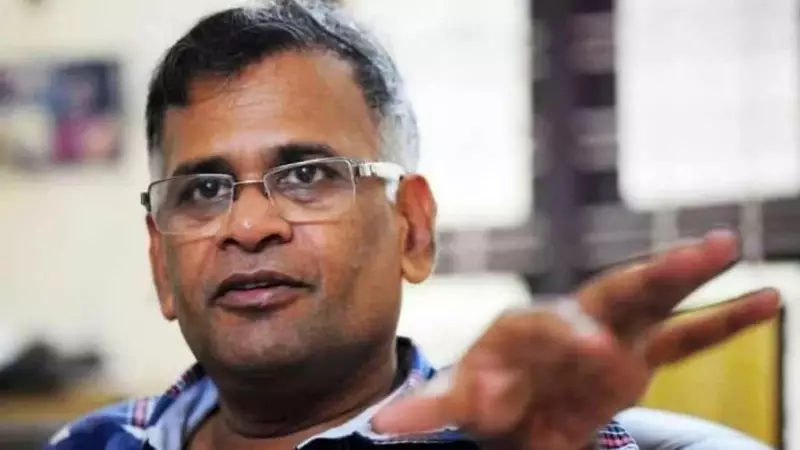
B Jeyamohan Decries Modern Filmmakers' Reliance on Films Over Literature
In a thought-provoking address at the Vijay Tendulkar Memorial Lecture, held as part of the Pune International Film Festival (PIFF) at PVR, The Pavillion, on January 22, 2026, the acclaimed writer and scriptwriter B Jeyamohan voiced his concerns about a disturbing trend in contemporary filmmaking. Jeyamohan, known for his literary masterpieces like Venmurasu and his work on hit commercial films, delivered a lecture titled "Novel to Script", where he highlighted how today's art filmmakers are increasingly turning to other movies for inspiration rather than drawing from rich literary sources.
The Loss of Originality in Modern Cinema
Jeyamohan pointed out that the present generation of filmmakers is no longer relying on literature to craft their stories. Instead, they are watching film festival movies and creating derivative works from them. "They are watching film festival movies and creating another movie out of it. So, there is a very common level of themes. I can see the loss in their films," he remarked. This practice, according to him, has led to a scarcity of fresh themes in modern art movies, with filmmakers often recycling politically correct themes from world cinema.
He emphasized the need for filmmakers to explore diverse literary traditions to inject originality into their work. "If you want to create something fresh, you have to go to literature. There is a lot of good writing in Kannada, Marathi, Urdu, Bengali, Malayalam, and Tamil literature," Jeyamohan advised, underscoring the vast untapped potential that regional literatures offer for cinematic adaptation.

Jeyamohan's Personal Journey and Insights
The lecture, which captivated a hall filled with young filmmakers and students, was not just a critique but also a reflection of Jeyamohan's own life and career. He shared personal anecdotes, including his parents' suicide and his two-year journey across India as a beggar, which inspired his novel Yelam Ulgam and the film Naan Kadaul. His dry humor and candidness about his linguistic challenges—being a Tamil writer with Malayalam as his mother tongue—added a relatable touch to his profound insights.
Jeyamohan also discussed his collaborations with renowned filmmakers like Mani Ratnam, noting the mixed outcomes of their projects. He mentioned Kadal, a film he wrote that initially flopped but is now celebrated as a classic in Tamil cinema. "Mani Ratnam lost nearly Rs 20 crores, but today, after 15 years, intellectuals are celebrating it as a classic," he shared, highlighting the evolving reception of artistic works.
Practical Advice for Screenwriters
Towards the end of his lecture, Jeyamohan offered valuable tips to aspiring screenwriters, including some counter-intuitive advice. He warned against blindly following a novel's storyline, dialogues, or philosophical discourse in a film adaptation. "A movie is not a medium of discourse. While watching a movie, you have no time to discuss that movie," he explained, stressing the importance of adapting literary elements to suit the cinematic medium.
Dismissing the AI Threat in Filmmaking
In a post-lecture interaction with The Indian Express, Jeyamohan addressed the rising influence of artificial intelligence in the film industry. He dismissed AI as a significant threat, noting that while it can provide standardized outputs, true creativity requires innovation. "AI can give you a standard that people are already accustomed to. You have to create something new, only then will people appreciate your film. So, we are not using AI except to create a storyboard," he stated, reaffirming the irreplaceable role of human creativity in filmmaking.
Jeyamohan's lecture served as a powerful reminder of the enduring value of literature in cinema and the need for filmmakers to seek inspiration beyond the screen to preserve artistic originality.