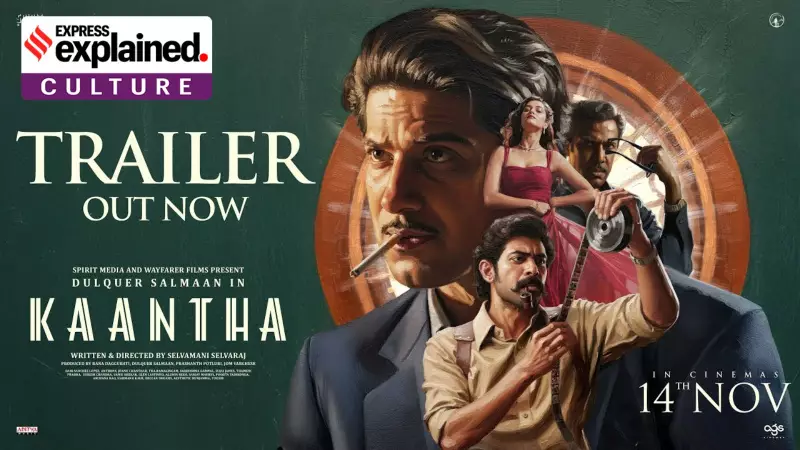
The upcoming period drama Kaantha, starring Dulquer Salmaan, has generated significant buzz and speculation in Tamil cinema circles. Despite producers firmly stating that the film is entirely fictional, many industry observers and fans believe it draws heavily from the life of M K Thyagaraja Bhagavathar, widely regarded as Tamil cinema's first superstar.
Scheduled for worldwide release on November 14, 2025, the film will be available in Tamil, Telugu, Malayalam, and Kannada languages. The production comes with a reported budget of approximately Rs 35 crore and represents a collaboration between Rana Daggubati's Spirit Media and Dulquer Salmaan's Wayfarer Films.
The Speculation Behind Kaantha
Multiple factors have contributed to the widespread belief that Kaantha might be based on Bhagavathar's life. The film's setting in 1950s Madras, its musical atmosphere, and Dulquer Salmaan's appearance featuring costumes and hairstyles reminiscent of the legendary star have all fueled these assumptions.

At the recent trailer launch event, producer-actor Rana Daggubati addressed these rumors directly. He clarified that Kaantha "is not targeted to hurt anyone but explores the universal theme of dark ego and emotional conflict" within the movie industry context. The film is directed by Selvamani Selvaraj and features cinematography by Spanish cinematographer Dani Sanchez-Lopez, known for his work on Mahanati.
Understanding the Historical Context
The fascination with Kaantha's potential connection to Bhagavathar stems from the dramatic arc of the historical figure's career. M K Thyagaraja Bhagavathar experienced one of the most spectacular rises and falls in Tamil cinema history.
Beginning his career with Pavalakkodi in 1934, Bhagavathar delivered nine consecutive hits over a single decade. His collaboration with lyricist Papanasam Sivan produced iconic songs like Unai Alaal, Neelakanta, and Vasantha Ruthu that became household favorites across Tamil Nadu.
His film Haridas (1944) achieved an unprecedented milestone by running continuously in a Chennai theater for three years, setting new standards for box office success in that era. Bhagavathar's golden voice and distinctive appearance made him a cultural phenomenon, with anecdotal accounts describing young women traveling to Madras hoping to marry him without their parents' knowledge.
The Tragic Turn and Lasting Legacy
Bhagavathar's spectacular career faced a dramatic downturn following his involvement in the Lakshmikanthan murder case in 1944. Though he was later acquitted, the legal battle and public scandal significantly damaged his standing in the industry.
Film historian Theodore Bhaskaran provides important context about Bhagavathar's legacy. "He had a big career and is remembered for his character, songs, and scenes," Bhaskaran noted. "He sang well — it was an era without playback singing. He was a singing star, a man who could both sing and act."
According to industry sources, several prominent filmmakers, including Mani Ratnam and Vijay Sethupathi, had previously considered projects about Bhagavathar's life. However, these efforts often focused disproportionately on the criminal case rather than celebrating his substantial contributions to Tamil cinema.
Production Details and Technical Excellence
Kaantha began principal photography in August 2024 at Hyderabad's Rama Naidu Studios, where elaborate sets recreated the atmosphere of 1950s Madras. The production brings together a talented technical team including editor Llewellyn Anthony Gonsalvez and art director Ramalingam.
Music director Jhanu Chanthar has composed both period-appropriate melodies and a background score that reportedly conveys psychological tension. The film features a strong supporting cast including Samuthirakani, Bhagyashri Borse, and Rana Daggubati alongside Dulquer Salmaan in the lead role.

The timing of Kaantha's release coincides with renewed discussions about fan culture in Tamil cinema, particularly surrounding contemporary star Vijay. This parallel makes the film's exploration of stardom, devotion, and downfall particularly relevant to current industry conversations.
Whether Kaantha intentionally echoes Bhagavathar's story or simply explores universal themes common to many stars' experiences, the film promises to offer a compelling look at the psychological complexities of fame and the dark side of public adoration in Indian cinema.