Kangana Ranaut Revisits Explosive Koffee With Karan Moment That Shook Bollywood
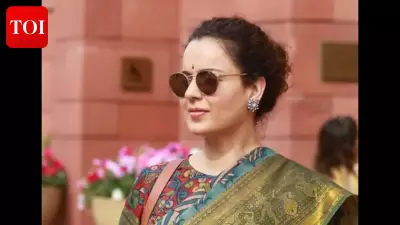
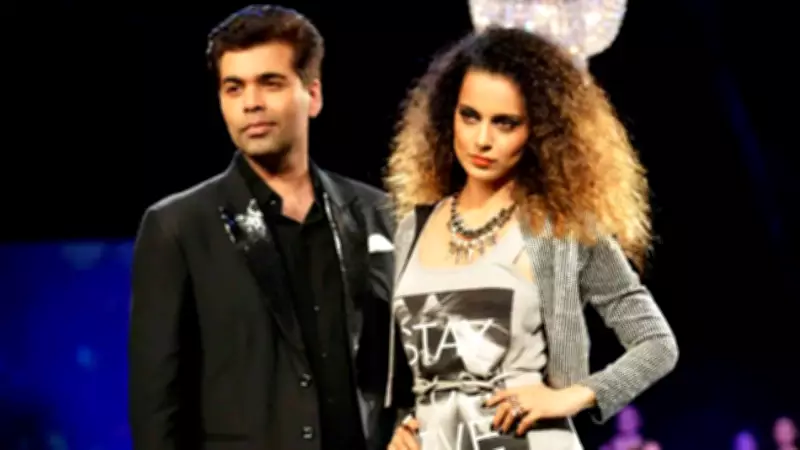
Nearly a decade after her unforgettable appearance on Koffee With Karan, Kangana Ranaut has opened up about the moment that left host Karan Johar stunned and ignited one of Bollywood's most persistent debates about nepotism and insider culture. In a candid conversation with ANI, the actress delved into the background of her iconic remarks, including labeling Johar as the "flagbearer of nepotism," and shared her evolving perspective on the industry dynamics.
'There Was a Time I Wanted to Fit In': Kangana's Journey from Outsider to Iconoclast
Kangana revealed that her comments on the show were not scripted but born from a deep-seated frustration with repeated experiences of being marginalized. "I think, listen. What happens is that there is a time when you feel like you want to fit in. And then there is a time when you are standing out. You are already standing out, so why do you want to fit in then?" she explained, reflecting on her early struggles in the film industry.
She recounted instances where she felt targeted and dismissed, even before the infamous episode. "People who kept dismissing me. You saw that show, but before that, in the show, they made fun of my face, my clothes, my English. I had even done a film with them where I was given a completely sidelined role in the story," Kangana stated, highlighting the cumulative effect of these experiences on her public stance.

'They Would Wipe Me from the Face of the Earth': The Breaking Point
The actress described a turning point where she realized that her efforts to conform were one-sided and ultimately futile. "In a way, the experiences we have make us think that, to some extent, we should get along with everyone. But when it's always one-sided, when your efforts are constant, then a time comes when you think my house is not running because of this. I am not successful because of them. If they had their way, I can tell that, they will wipe me from the face of the earth, totally, you should not exist only," she asserted.
Kangana pointed to what she perceived as coordinated efforts against her, including negative PR campaigns, legal cases, and industry ganging up. "That kind of PR, that kind of maligning, those kind of cases they put on me, those kind of ganging up happened. So when that kind of situation happened, why should I pretend? Why should I pretend and make them look good?" she added, justifying her blunt approach on the talk show.
'I Don't Think Karan Johar Is a Bad Person': A Softer Stance Today
Despite the frosty relationship that followed her comments, Kangana now expresses a more nuanced view of Karan Johar. "I don't think Karan Johar is a bad person. You know, I think he's very proudly just superficial, flaky, flashy. He likes that. He's very proud of that, and I think he has an amazing sense of humour. So I don't think I have a problem with Karan Johar as such," she said, indicating a shift from her earlier harsh criticism.
The 2017 Episode: A Catalyst for Bollywood's Nepotism Debate
The 2017 episode of Koffee With Karan became a landmark moment in Indian entertainment history. Kangana famously called Karan Johar the "movie mafia" and a "stereotypical villain" in her career journey, sparking a widespread conversation about nepotism and the divide between insiders and outsiders in Bollywood. This debate continues to resonate in the industry, influencing discussions about opportunity and fairness.
Interestingly, prior to the controversy, Kangana and Karan had collaborated on the film Ungli, directed by Rensil D'Silva and produced under Dharma Productions by Hiroo Yash Johar and Karan Johar. The movie featured an ensemble cast including Emraan Hashmi, Randeep Hooda, Neha Dhupia, Angad Bedi, Neil Bhoopalam, Sanjay Dutt, and Mahesh Manjrekar in a negative role, showcasing their professional relationship before the public fallout.
Kangana's reflections offer a deeper insight into the personal and professional struggles that fueled one of Bollywood's most talked-about moments, while also hinting at a possible mellowing of tensions over time.