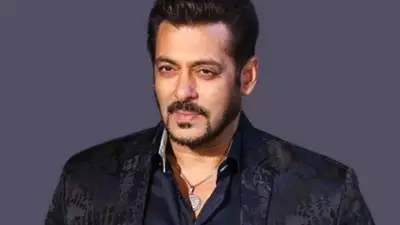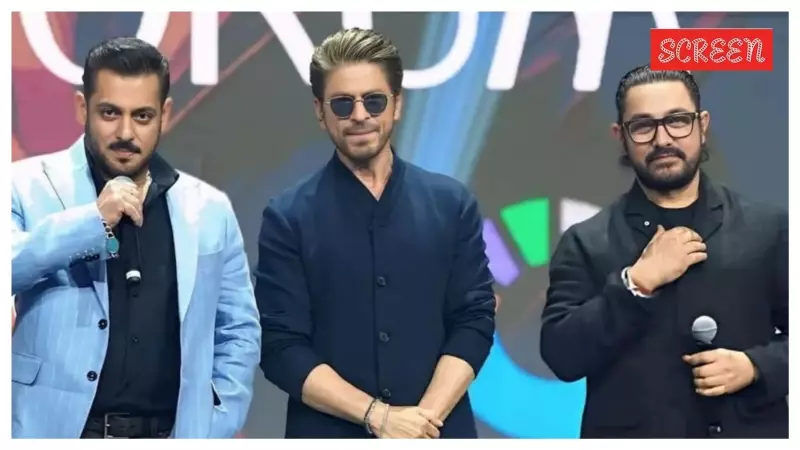
The year 2025 marks a significant milestone in Hindi cinema, as its three reigning monarchs – Shah Rukh Khan, Salman Khan, and Aamir Khan – all celebrated their 60th birthdays. Born in 1965, a landmark year for films like Waqt and Guide, the trio arrived in Bollywood around 1990 and, 35 years later, show no signs of relinquishing their throne. In an industry where age often dictates a shift to character roles, the Khans continue to headline blockbusters, challenging the very definition of a leading man's shelf life.
The 60-Year Curse: How Past Legends Faded
Historically, turning 60 in Bollywood signaled a dramatic shift, even for the biggest male stars. The career trajectory of megastar Amitabh Bachchan serves as a prime example. Despite an unparalleled peak in the 1970s and early 80s, Bachchan faced a downturn before hitting 50, sidelined by political forays, changing technology, and audience demand for new faces. By 60, he had transitioned to television with Kaun Banega Crorepati and selective character roles, like the patriarch in Mohabbatein (2000).
Similarly, Rishi Kapoor, a leading romantic hero in the 1980s, was overshadowed by Shah Rukh Khan's debut in the 1990s. He successfully reinvented himself as a versatile character actor, showcasing range in films like Agneepath (2012) at 60. The pattern held for others like Vinod Khanna, whose career never fully recovered after a spiritual hiatus. This generation, including Anil Kapoor and Sanjay Dutt, found niches in supporting or antagonistic roles. The sole recent exception is Sunny Deol, 68, who saw a resurgence with Gadar 2 (2023) after a long dry spell.

The Khan Formula: Reinvention and Strategic Dominance
The three Khans, however, have sustained consistent superstardom for over three decades. Their debut coincided with India's economic liberalization, and they captured the imagination of a youthful, aspirational nation. While romance defined their early careers, the new millennium demanded adaptation.
Aamir Khan pioneered the 'one film at a time' strategy, a move considered risky in the 1990s. He validated it with the historic success of Lagaan in 2001, coupling selective projects with meticulous quality control. The corporatization of Bollywood further allowed all three to focus on fewer, bigger films.
Salman Khan faced a rough patch in the early 2000s but staged a monumental comeback by consciously catering to his core single-screen audience with mass entertainers like Dabangg (2010), Wanted (2009), and Bharat (2019).
Shah Rukh Khan's career faced headwinds post-2015 with films like Fan (2016) and Zero (2018). After a period of introspection during the pandemic, he executed a masterful reinvention. He swapped extreme accessibility for calculated mystery, retreating from interviews and public appearances. This strategy of scarcity made his action-hero return in Pathaan (2023) and Jawan (2023) cultural events, cementing his status as the industry's top performer.
60 is the New 40: Paving the Way for Future Generations
Today, each Khan has a distinct public strategy. Aamir leans into accessibility, Shah Rukh thrives on elusive mystique, and Salman remains in his famously unbothered, larger-than-life era. Their ability to evolve with the times, control their narratives, and command box office loyalty is unprecedented for actors their age.
Their sustained dominance raises the question: can the next generation of stars like Ranbir Kapoor (Animal, Dhurandhar) or Ranveer Singh achieve similar longevity? While the future is unwritten, the Khans have undoubtedly rewritten the rulebook, proving that in modern Bollywood, 60 is not an exit but a new peak. They have shattered the age ceiling, ensuring that for the first time, the industry's biggest draws are also its most experienced veterans.