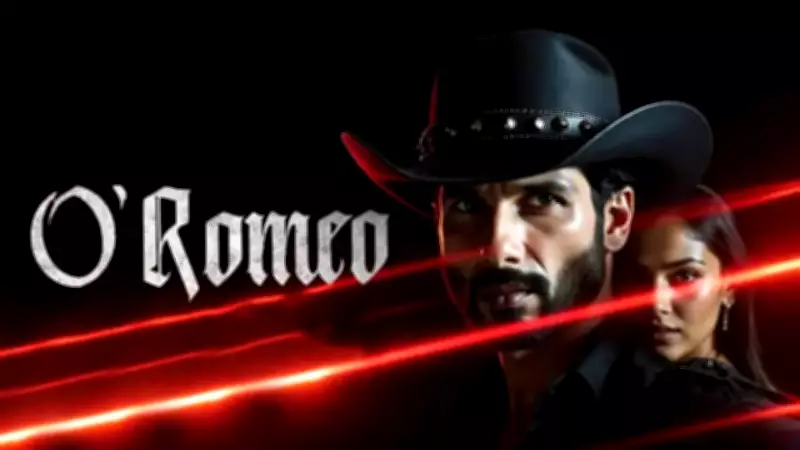
Legal Battle Intensifies Over Vishal Bhardwaj's 'O'Romeo' as Daughter Seeks Film Block
The legal dispute surrounding acclaimed filmmaker Vishal Bhardwaj's upcoming cinematic venture 'O'Romeo' has escalated dramatically, with Sanober Shaikh, daughter of the late Hussain Ustara, formally approaching the court to block the film's scheduled release. This development marks a significant escalation in what has become a contentious battle over creative rights and personal representation.
Court Petition Seeks Immediate Stay on Film Release
In her comprehensive legal petition, Sanober Shaikh has requested the court to declare that the film's makers possess no legal right to proceed with the release, telecast, or distribution of 'O'Romeo' under its current title or any alternative name. The petition specifically targets the film's planned release date of February 13, 2026, and any subsequent dates.
The legal action seeks multiple layers of protection:

- Permanent injunction restraining producer Sajid Nadiadwala, director Vishal Bhardwaj, and author Hussain Zaidi from releasing the film in theaters or streaming it across television and OTT platforms
- Temporary injunction to ensure the film remains unreleased until the matter receives full judicial adjudication
- Pre-screening order requesting the appointment of a court commissioner or authorized officer to examine the film's content and submit a detailed report
- Additional requests for interim relief, legal costs, and any further directions the court deems necessary
Controversy Ignited by Teaser Release
The controversy erupted shortly after the official teaser for 'O'Romeo' was unveiled to the public. Sanober Shaikh alleges that the film draws substantial inspiration from her late father Hussain Ustara's life without obtaining proper consent from his surviving family members. Following this realization, her legal representative issued a formal notice to both Sajid Nadiadwala and Vishal Bhardwaj, demanding clarification and immediate restraint.
Filmmakers Deny Allegations, Cite Source Material
The film's creative team has categorically denied all allegations, maintaining that 'O'Romeo' is not based on Hussain Ustara's life. During the film's trailer launch event in Mumbai, Vishal Bhardwaj addressed the controversy directly, stating that the film draws inspiration from a specific chapter in Hussain Zaidi's acclaimed book 'Mafia Queens of Mumbai'. Bhardwaj emphasized that all necessary rights for adaptation had been properly obtained from the author.
Sanober Challenges Consent Claims, Alleges Misrepresentation
The dispute took a particularly sharp turn when Sanober Shaikh publicly challenged claims that author Hussain Zaidi had secured family permission. In an interview with NDTV, she stated unequivocally, "No, not at all. We did not even know when his book was released."
She revealed that the family only became aware of the book's content much later through Zaidi's Instagram broadcast. "That is when we found out that he had written and spoken a lot about my father in the book and in the broadcast – and that too incorrectly," she added, expressing deep concern about factual accuracy.
Allegations of Factual Distortion and Ongoing Legal Proceedings
Sanober further accused Hussain Zaidi of deliberately twisting facts for personal gain and popularity. She claimed that several events attributed to her father in the book "never even happened," raising serious questions about the accuracy of the source material.
Confirming that there has been no response to the legal notice sent by her lawyer DV Saroj, she stated firmly, "Our matter is ongoing. We will file a case and whatever happens, we will proceed legally." With Sanober maintaining that no consent was ever granted, the controversy continues to deepen, bringing renewed focus to critical issues of authorship rights, consent protocols, and the ethical boundaries of cinematic adaptation.
This legal confrontation represents a significant test case for the Indian entertainment industry, potentially establishing important precedents regarding:

- The boundaries between creative inspiration and unauthorized biographical representation
- The legal requirements for obtaining consent when depicting real-life figures
- The responsibilities of authors and filmmakers when adapting sensitive material
- The rights of families to protect the legacy and accurate representation of deceased relatives
As both sides prepare for what could be a protracted legal battle, the entertainment industry watches closely, aware that the outcome could reshape how biographical and inspired-by-real-events films are developed and released in India.