Mallika Prasad's 'Mardaani 3' Performance Captivates Audiences
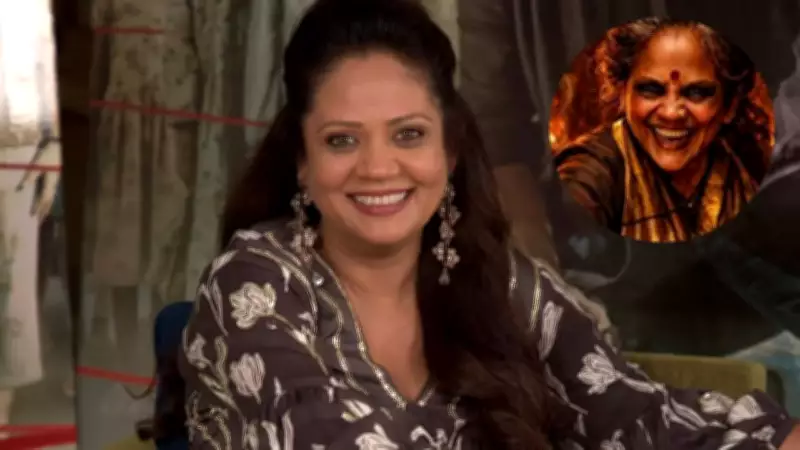
Mallika Prasad's portrayal of the menacing Amma in the blockbuster film 'Mardaani 3' has resonated powerfully with viewers across the nation. From her bone-chilling screen presence to the now-iconic lullaby that evokes terror, Mallika's character has become one of the most discussed aspects of the cinematic experience.
Exclusive Insights from the Theatre-Trained Actor
In a detailed conversation, the accomplished theatre-trained actor opened up about multiple facets of her role and career. She shared her thoughts on watching herself on the big screen, her meticulous approach to selecting roles, the unique experience of working with young actors, the creation of the famous Lullaby sequence, collaborating with the legendary Rani Mukerji, and navigating the distinct worlds of stage and screen performance.
Watching Herself on the Big Screen
When asked about receiving overwhelming audience appreciation for Amma and watching her performance on screen, Mallika revealed: "Actually, it was quite fun. When you're watching yourself on screen, you're also observing how the audience reacts, particularly during those surprising moments. I found myself getting completely immersed in their reactions. I'm also not someone who constantly checks the monitor during shoots, so seeing the final result on screen was a surprise in itself, and a genuinely pleasant one."

Criteria for Role Selection
Discussing her parameters for choosing roles, Mallika explained: "That's a really good question. The first element I examine is the character's graph—how the character is established and what their ultimate payoff is. That's critically important. Secondly, I question whether the character drives the narrative in any meaningful way. If you remove that character, does it significantly impact the story?"
"Naturally, there are instances, especially early in one's career, when you accept roles out of necessity. I've done that as well. But ideally, when selecting a role, you should evaluate what impact it has on the overall story, the character's development arc, and whether the larger narrative itself is worth participating in. Even an exceptionally well-written character cannot thrive within a fundamentally weak story."
Working with Child Actors and the Lullaby Scene
Regarding the terrifying contrast of Amma singing a lullaby to children and her off-screen interactions with young actors, Mallika elaborated: "That contrast is actually embedded within the script. The writer had already envisioned this frightening character who sings a lullaby, and our responsibility as actors was to make it completely believable. Working with the children was absolutely wonderful. Every time I sang the lullaby, all of them would spontaneously start singing along, so we had to gently remind them, 'No, no, you can't sing, it's supposed to be scary!'"
"The children demonstrated incredible discipline and remarkable talent. Whether they had speaking parts or background roles, the level of focus and dedication they exhibited at such a young age is truly extraordinary. I genuinely loved collaborating with them."
Confronting Rani Mukerji's Character
On locking horns with Shivani Roy, portrayed by Rani Mukerji, Mallika shared: "A substantial portion of that confrontation occurred in my imagination. The setup itself is beautifully crafted—the antagonist and protagonist standing on opposite ends of two vastly different worlds. That kind of larger-than-life confrontation is always thrilling. Developing a character that possesses such strong opposition automatically makes the entire creative process more engaging."
Rani Mukerji as a Co-Actor and Inspiration
When asked about Rani Mukerji as a co-actor and her favorite films, Mallika responded: "My exposure to Bollywood films is actually somewhat limited. I've watched more South Indian cinema and numerous films as part of my training, including many from the 1970s, encompassing both mainstream productions and what was then termed parallel cinema."

"Working on 'Mardaani 3' provided me with the opportunity to explore Rani's work more comprehensively. One film that particularly stood out for me was 'Hitchki'. She portrayed such an intriguing condition with tremendous sensitivity. What impresses me most is the sheer diversity of her career and the fact that the industry has celebrated her presence for three decades with immense affection and respect. She's genuinely cherished by the entire fraternity."
Theatre vs. Screen Acting
Comparing her extensive theatre background with screen acting, Mallika analyzed: "The similarity lies in the pursuit of truth—the truth of the moment, the dialogue, and the character. That fundamental process remains identical. The distinction exists within the medium itself. Theatre provides immediate audience response and a continuous temporal flow. It's predominantly driven by the spoken word."
"Cinema, conversely, revolves around images—how visuals, silence, and music converge. Words aren't as central as they are in theatrical productions. Historically, we used to say we were going to 'listen' to a play because everything was communicated through speech and imagination. Films communicate through significantly more diverse channels."
Developing Amma's Distinct Look
Regarding Amma's distinctive appearance, which remained consistent from audition to final screen portrayal, Mallika explained: "As an actor, it's essential to contribute something substantial. An audition essentially represents an offering—this is how I believe the character could be approached. Certain elements work effectively, while others may not. In this instance, the creative team responded positively to that specific approach, and it carried through the entire production. The lullaby, for example, was already present in the script—it originated from Abhiraj's creative vision. As actors, we respond to what the script provides and construct our performances from that foundation."
Cherished Memory from 'Mardaani 3'
When asked about one enduring memory from the film, Mallika reflected: "The entire process of constructing Amma's world. Developing both the external and internal layers of the character alongside the entire creative team was profoundly fulfilling. That transformative journey will always remain among my most treasured professional memories."