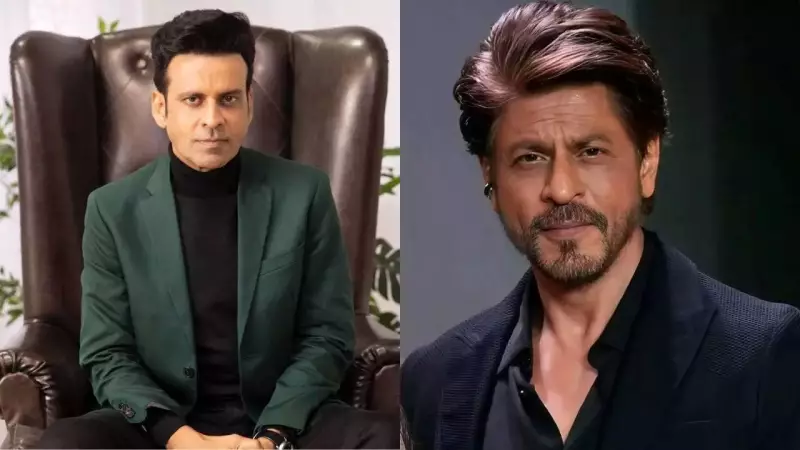
Veteran actor Manoj Bajpayee, celebrated for his powerful performances in films like ‘Satya’, ‘Bandit Queen’, ‘Aligarh’ and the web series ‘The Family Man’, recently revisited his early career struggles and his dynamic with superstar Shah Rukh Khan. In a candid reflection from an old interview, Bajpayee addressed questions of jealousy and contrasting life paths, offering a rare glimpse into the mindsets that shaped two of Indian cinema's most distinct careers.
The Mindset Divide: Stardom vs. The Wallflower
During a conversation with journalist Barkha Dutt, Manoj Bajpayee was directly asked if he ever felt envious of Shah Rukh Khan's meteoric rise to fame and immense popularity. The National Award-winning actor dismissed any notion of jealousy, attributing it to a fundamental difference in their core ambitions.
"Shah Rukh Khan always wanted to be loved, to be a star, to be the centre of attention. That was not my target," Bajpayee stated. He elaborated on his own temperament, highlighting a comfort with anonymity that contrasted sharply with the typical star persona. "I was completely okay with not being surrounded by 20 people in my theatre group. I was completely okay with nobody looking at me. I was completely okay with being a fly on the wall," he added, defining his early approach to his craft and life.

Confidence Built on Craft, Not Comparison
When probed further on whether SRK's blinding success ever shook his self-belief, Bajpayee offered a perspective rooted in resilience. He firmly rejected the idea that another's popularity could be the cause of a personal crisis of confidence.
"Your confidence breaks after failure, not because he's more popular than I am," he asserted. The actor also fondly recalled the supportive role played by his legendary acting coach, Barry John, during this formative phase. Instead of focusing on Bajpayee's then-weak command of English, John provided him with opportunities to grow.
"Many times, he would throw this challenge at me," Bajpayee remembered. "Whenever he was doing an English play with Divya or Rituraj or Shah Rukh, he’d give me a small role." This nurturing environment, he implied, helped solidify his confidence based on gradual improvement and experience, not on external validation or rivalry.
Acquaintances From Different Worlds
Bajpayee also clarified the nature of his personal relationship with Shah Rukh Khan, setting the record straight on their friendship. He explained that while they were aware of each other and moved in similar theatrical circles, their social worlds were distinct.
"We knew each other, but our friend circles weren't the same. People have to understand, we come from different worlds," he said. Elaborating on this dichotomy, Bajpayee noted, "Even back then, Shah Rukh belonged to a 'khas duniya' (special world). Just because one studies in Jamia doesn't make them a regular person."
He painted a vivid picture of their differing social energies: "I wasn't surrounded by 10 people at all times, while Shah Rukh was always charming and surrounded by people." This inherent difference in personality and social orbit, according to Bajpayee, naturally led to separate paths.
Bajpayee's Continuing Journey
Manoj Bajpayee continues to be a formidable force in Indian entertainment. He was recently seen in the highly successful third season of the spy thriller series ‘The Family Man’. Looking ahead, the actor has an exciting slate of projects, including Shoojit Sircar’s satire inspired by the Mahabharat, which also stars Rajkummar Rao.
His reflections offer more than just a nostalgic look back; they provide a powerful commentary on the diverse definitions of success and the personal philosophies that guide artists in the competitive landscape of Bollywood. Bajpayee's journey stands as a testament to the fact that stardom can wear many faces, and true fulfillment comes from staying true to one's own unique path and purpose.