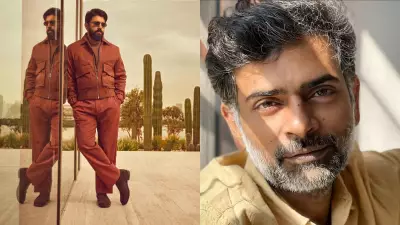
In Rahi Anil Barve's atmospheric thriller Mayasabha, the world is cloaked in smoke, a deliberate veil obscuring truths that have always lingered beneath the surface. The film boldly posits that cinema serves a dual purpose: it is both the secure vault where deep-seated trauma is meticulously locked away and, paradoxically, the very key that might one day facilitate its release. This cinematic exploration, set against the backdrop of a decaying single-screen theatre, delves into the complex languages of deception, intergenerational pain, and the myths we construct to survive.
The Opening Thesis: A World of Smoke and Light
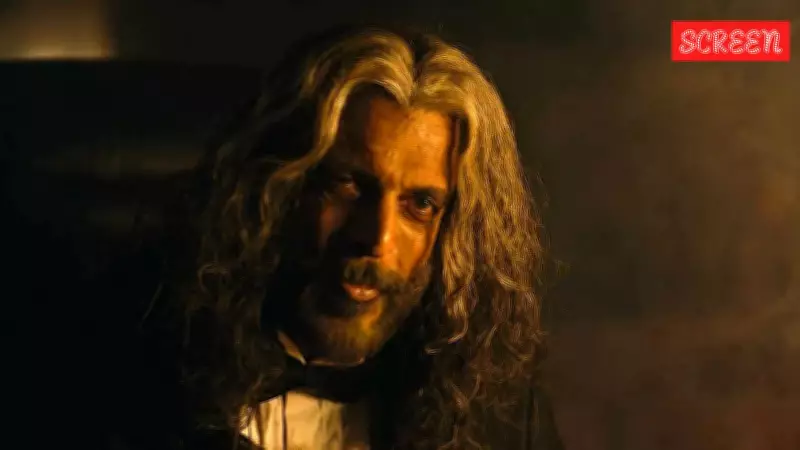
The narrative commences with two powerfully contrasting images that establish the film's core philosophy. First, we encounter Parmeshwar, portrayed by Jaaved Jaafery, a man whose wild, unattended hair mirrors his inner turmoil. He fills a cramped room with dense smoke, an act that initially reads as pure rage but gradually unveils itself as something far more fragile and devastating. It is not a shout but a breaking point; the sound is grief stripped entirely of language. His body ultimately collapses, blood gathering at his mouth, eyes heavy with exhaustion before closing. This moment feels less like a conventional death and more like an unbearable, final rest—a physical refusal to bear a psychological burden that has become intolerable.
Then, morning arrives. A single, hopeful shaft of sunlight touches the face of a child, Vasu, played by Mohammad Samad. He opens his eyes and draws a deep, full breath, reminiscent of someone entering a brand-new world. There is a palpable sense of beginning, almost of rebirth. As he stretches and stands, a giant movie screen looms behind him, and before him stands the dilapidated theatre. The title card, Mayasabha, appears. In these meticulously crafted opening minutes, director Rahi Anil Barve lays out his central thesis with striking clarity: cinema functions as both the repository and the potential liberator of human trauma.

Deception as the Principal Language
While Mayasabha shares atmospheric and thematic DNA with Barve's acclaimed debut, Tumbbad—populated by mythic figures and circling the idea of all-consuming greed—it carves its own distinct path. Here, deception is not merely a plot device; it is the principal language of the narrative. The smoke that perpetually fills the frame acts as a visual metaphor for the fog that dominates the characters' lives and perceptions. The subtext lies powerfully in the eyes of the beholder, inviting multiple interpretations.
Greed operates primarily as an entry point into a story that is, at its heart, profoundly concerned with trust. The complex love-hate dynamic between father and son becomes a gateway into a deeper examination of intergenerational trauma. The decaying cinema hall itself transforms into a potent allegory for a dying devotion to authentic storytelling. Parmeshwar, whose name translates to 'God', is a once-powerful producer now trapped in the past, a figure hinting at a man living in profound delusion. His son, Vasu—another name for the mythological Karna—endures cruelty disguised as care, mistakes survival for choice, and searches for an escape he cannot yet articulate. The film suggests that legacy often masquerades as love, a deceptive facade that perpetuates cycles of pain.
Mythology and Materialism: The Illusory World
The very title, Mayasabha: The Hall of Illusion, connects directly to the Mahabharata, referencing the legendary palace built for the Pandavas—a space so deceptively constructed that Duryodhana's humiliation within it went unseen until it was irreversible, eventually catalyzing the Kurukshetra war. In the film, the single-screen theatre performs a similar function, becoming the site of a personal conflict where façades inevitably collapse and the smoke begins to clear.
At the center of this reckoning stands Parmeshwar, the creator of this cinematic universe, who is revealed not as an all-powerful deity but as a man fractured by his own deep-seated uncertainties. His displays of rage and violence function as compensations, tools to manufacture a sense of masculinity he cannot otherwise access. This theme subtly ties to another moment from the epic, where Arjuna is forced into disguise as Brihannala.

While the Mahabharata haunts the film's soul, the Ramayana is also present. A character named Ravana, played by Deepak Damle, sees his sister's repeated advances refused by 'God' (Parmeshwar), sparking a war of its own kind. Barve navigates these mythologies not to crown his characters as gods or demons, but to portray them as flawed individuals pretending to be both. The most intriguing aspect of this world is that while mythology hovers over it, the only practiced religion is stark materialism, and the only devotion is to wealth. The true currency of this realm is storytelling: the stories we tell ourselves, the stories we tell others, and the haunting question of which narrative carries more lies.
Cinema: The Art of Lying Truthfully
In the end, Mayasabha posits that cinema is, fundamentally, the art of lying truthfully. Director Rahi Anil Barve, alongside his character Parmeshwar, performs this delicate act with remarkable effortlessness. They lay the metaphorical gold before the audience, bare and unhidden. It waits there, patient and potent, on that huge, giant screen—a testament to the power of film to both conceal and reveal our deepest wounds. The film stands as a bold, atmospheric inquiry into how we use narratives to veil our pain and how, perhaps, those same stories hold the power to set us free.