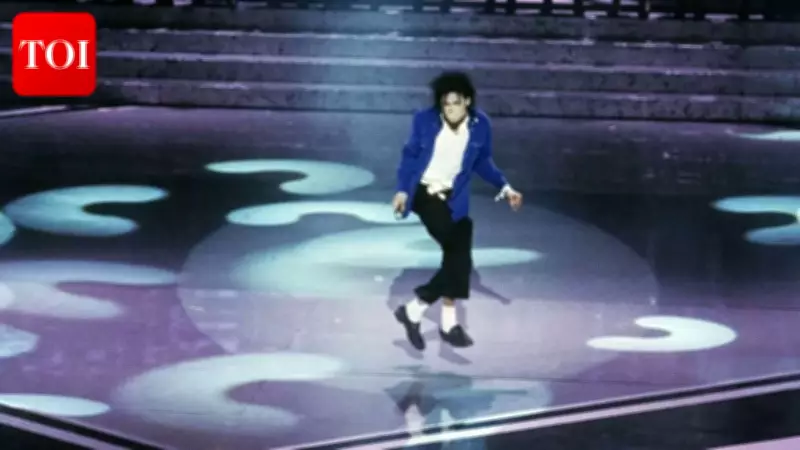
The Surprising Origin of Michael Jackson's Iconic Moonwalk
When you think of the moonwalk, one name immediately comes to mind: Michael Jackson. That impossibly smooth backward glide, executed with such precision during his legendary performance of 'Billie Jean' at the 1983 Motown 25 television special, became an instant cultural phenomenon that captivated audiences worldwide. However, a fascinating revelation from his brother Marlon Jackson has shed new light on the true origins of this iconic dance move.
An Eight-Year-Old's Contribution to Dance History
During a recent appearance on WFAN radio, Marlon Jackson shared a remarkable story that challenges the common belief about the moonwalk's creation. Contrary to popular assumption, Michael Jackson did not invent this legendary move. In fact, Marlon revealed that the first person to demonstrate the moonwalk to Michael was just eight years old.
The young instructor was Marlon's wife's nephew, who showed Michael what they called the "backwards slide" or "backslide" during a family gathering. "My nephew, not on my family's side, on my wife's side, was the first person that showed him the moonwalk," Marlon told radio hosts Craig Carton and Chris McMonigle, adding the astonishing detail: "He was eight years old."

From Street Dance to Global Phenomenon
Marlon explained that the move was already circulating within street dance and underground culture long before Michael Jackson brought it to mainstream attention. The young boy's demonstration featured that distinctive gliding motion where the dancer appears to move backward while their feet continue stepping forward. Michael was immediately captivated by the move and began practicing it extensively.
However, the raw street version needed refinement for the stage. This is where Jeffrey Daniel, a member of the R&B group Shalamar, entered the picture. Daniel had been performing the backslide on television shows like 'Soul Train' as early as 1979. After Michael witnessed Daniel's performance, he sought him out for lessons.
In a 2025 interview with Channels TV, Daniel recalled: "He brought little Janet Jackson, and they stood in the wing and watched us dance. Then he asked me to teach him to dance." Daniel not only taught Michael the refined technique but also collaborated with him on choreography for various shows and music videos.
The Evolution of a Dance Legend
Michael Jackson's journey with the moonwalk demonstrates his artistic process of absorbing influences and transforming them into something uniquely his own. While the basic move came from street culture and was introduced by a child, Michael's dedication to perfecting it and his decision to rename it the "moonwalk" created a signature element of his performances.
Marlon Jackson noted that he and his brothers Tito, Jackie, and Jermaine had seen Michael practicing the move during rehearsals for the Motown 25 special. "We knew that he was gonna do [that move]," Marlon said, indicating the family was aware of Michael's preparation for what would become one of music history's most memorable moments.
Michael Jackson's Enduring Legacy
Beyond the moonwalk, Michael Jackson's impact on music and performance remains unparalleled. Born in 1958, he rose to fame as a child star with The Jackson 5, delivering hits like 'ABC' and 'I Want You Back.' His solo career in the 1980s produced groundbreaking albums including 'Thriller,' 'Bad,' and 'Dangerous' that redefined pop music and broke numerous records.
Jackson's artistic genius extended beyond his vocal talents to encompass innovative choreography, visionary music videos, and theatrical performances that blended elements of pop, funk, street dance, mime, and pure theater. His ability to synthesize diverse influences created a distinctive style that continues to inspire artists across generations.
The revelation about the moonwalk's origins adds another layer to understanding Michael Jackson's creative process—one that involved recognizing talent in unexpected places, diligently refining raw material, and transforming street culture into global art. This story reminds us that even the most iconic cultural moments often have humble beginnings and collaborative origins.