Nora Fatehi Addresses Controversy Surrounding KD: The Devil Song
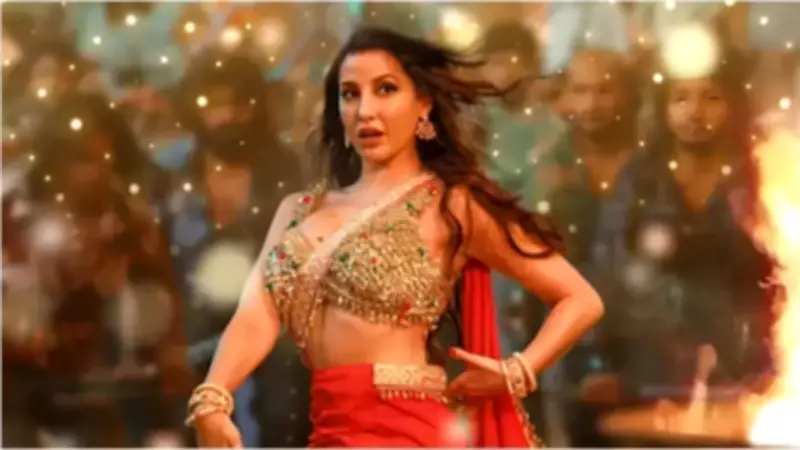
Bollywood actor and dancer Nora Fatehi has finally spoken out regarding the ongoing controversy surrounding the song Sarke Chunar Teri Sarke from the film KD: The Devil. In a detailed video message released to the public, Fatehi addressed the mounting criticism, clarified the extent of her involvement, and emphatically stated that she had no association whatsoever with the Hindi version of the track.
Original Agreement and Lack of Awareness
Fatehi explained that the song was originally filmed approximately three years ago in the Kannada language. At that time, she agreed to participate without hesitation. "I shot this song three years ago in Kannada. When I shot this song, I said yes to it because it was part of a big film and also alongside Sanjay Dutt, who would say no to it," she stated. She further revealed that she believed the song was a remake of the classic Nayak Nahi Khalnayak Hoon Main, which influenced her decision to join the project.
The performer made it unequivocally clear that she played no part in the subsequent Hindi adaptation and was completely unaware of the alterations made to the content. "When they translated this song, nothing seemed inappropriate or vulgar to me, but I do not understand Kannada, so I rely on whatever they say to me. Whatever they have done right now, dubbing it in Hindi and the lyrics, they did not take any permission or approval from me. I had no idea about it," Fatehi added, highlighting a significant communication gap.

Launch Event Revelations and Immediate Action
Nora Fatehi recalled her experience at the song's official launch event, where she first encountered several problematic elements. "When I attended the launch, I saw the Kannada version, and I had a major issue because they used unflattering photos in the lyrical video. They also used an AI photo of Sanjay and me. I was very irritated at the event when I saw all that. However, I kept my calm," she shared, describing her initial reaction to the presentation.
Upon viewing the Hindi version, Fatehi immediately recognized the potential for public backlash. She took swift action by voicing her concerns directly to the film's director and formally distancing herself from the project. "I was conflicted with what I saw. When I saw the Hindi version, I knew it would get backlash. I told the director that this was not okay, and I dissociated myself from the project. I did not promote it anywhere. I told the director my image and reputation are on the line," she asserted, emphasizing her proactive stance to protect her professional standing.
Broader Commentary on Artist Agency
In a broader reflection on the entertainment industry, Nora Fatehi discussed the limited power and control often experienced by performers. "The thing with us artists is that we do not have power, we have little power and control. Thankfully, in Bollywood, many have respected my work. However, there are certain industries that do not care about my opinion," she remarked. She expressed gratitude that due to the significant public backlash, the controversial aspects were eventually taken down, acknowledging the role of audience feedback in prompting corrective measures.
This incident underscores ongoing challenges within film production regarding artist consent, translation integrity, and the ethical use of technology like AI in media. Nora Fatehi's candid clarification aims to set the record straight while highlighting the importance of transparency and respect for performers' contributions across all regional film industries.