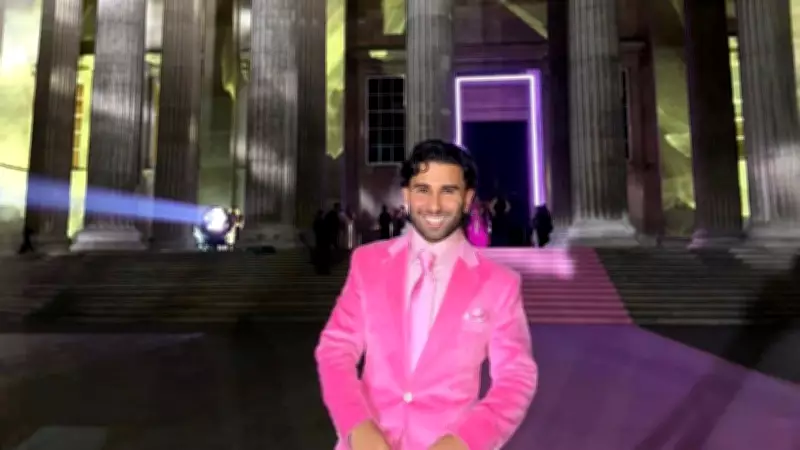
Orry's Celebrity Game: How He Masters Symbolic Capital in Digital Age
In contemporary society where images dominate our consciousness, Orhan Awatramani, popularly known as Orry, has emerged as a fascinating cultural phenomenon. While debates rage about whether someone famous primarily for being famous qualifies as a celebrity, Orry has transcended these discussions to become what many describe as a cultural artefact. He represents a case study in what occurs when fame separates from traditional achievement and transforms into pure performance. What's particularly remarkable is that we, as a society, have constructed this altar of celebrity worship—Orry simply performs the rituals we've collectively authored.
The Currency of Signs and Symbols
Look closely at Orry's strategy, and you'll discover he operates as a master of symbolic capital. Unlike traditional celebrities who trade in films, sports achievements, or artistic accomplishments, Orry trades exclusively in signs and symbols. His dandelion earrings that caught Rihanna's attention, his deliberately transparent interrogation outfit, his eccentric phone case collection, his signature pose—all these have transformed into cultural totems. Most significantly, his mythical touch reportedly commands between ₹20-30 lakh, demonstrating how he has monetized even the most abstract aspects of his persona.
In our image-saturated world, Orry understands with remarkable clarity that the image itself has become the substance. He has weaponized the personal anecdote, monetized the social media cameo, and systematized what was once considered the organic social climb. His genius manifests in his audacious literalism—when asked what he does, he responds with phrases like I do my best or I live my best life, so I am a liver. He doesn't merely attend parties; he declares partying his profession. He doesn't simply have friends; he collects them as strategic assets.

The Method Behind the Madness
There exists a deliberate methodology to what might initially appear as madness. Orry could almost be described as a maverick in his own right, enacting with a knowing wink the very machinery of celebrity that typically operates behind closed curtains. He pulls back the curtain and explicitly announces that he's doing so, creating a meta-commentary on celebrity culture itself.
Consider his highly publicized feuds, particularly the operatic fallout with the Ali Khan family. This represents social theater at its most sophisticated. Each strategic unfollow, every cryptic Instagram reel, each reference to trauma functions as a carefully released narrative pellet, fed deliberately to a media ecosystem that thrives on conflict. Orry understands that in today's digital agora, cohesion appears boring while fracture generates stories—and stories translate directly into currency.
The Spectacle Made Flesh
Orry embodies what French situationist Guy Debord termed the spectacle—a social relationship mediated entirely by images. He has become the spectacle made flesh, transforming himself into a commodity whose primary use-value is to be seen being seen. When he claims he's working on myself, he means he's laboring on the product called Orry. His self has effectively become his startup, meticulously crafted and strategically marketed.
So is he a genius or a charlatan? This question itself has become obsolete in understanding his phenomenon. Orry functions simultaneously as both symptom and surgeon—a symptom of a culture that increasingly rewards personal branding over traditional craft, and a surgeon expertly operating on our collective attention economy. He has milked our star-struck gullibility to extract tangible value, gaming a system that we collectively sustain with every click, share, and incredulous conversation about his latest antics.

The Mirror to Our Mythmaking Desires
Ultimately, Orry holds up a mirror to our own mythmaking desires. We don't merely want celebrities anymore; we want allegories, symbolic figures who represent larger cultural narratives. Orry offers himself as the perfect allegory: the celebrity as empty signifier, ready to be filled with our projections, our disdain, and our fascination. He represents the void that stares back profitably, understanding that in today's attention economy, being talked about—whether positively or negatively—constitutes success.
The joke isn't on Orry; the joke is the game itself. And Orry? He's the player who read the rules, recognized their inherent absurdity, and decided to win anyway. He remains acutely aware that he's riding the wave of ephemeral fame, strategically dropping what he calls relevance bombs to keep the waves agitated. Currently, he functions as both the wave and the moon pulling the tides—simultaneously creating and responding to the cultural currents he navigates.
As the spectacle continues unabated, Orry's story reveals profound truths about our evolving relationship with fame, achievement, and identity in the digital age. He represents a new archetype of celebrity, one perfectly adapted to an era where perception often outweighs reality, and where symbolic capital can be more valuable than traditional accomplishments.