Pa Ranjith's Quest to Bring Dalit Issues into Mainstream Cinema
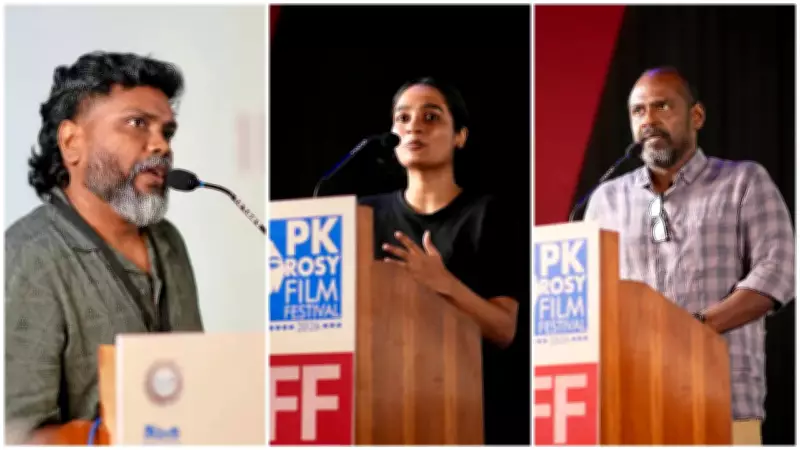
Renowned filmmaker Pa Ranjith has opened up about his early frustrations with how Dalit issues were confined to small, private discussions rather than entering mainstream public discourse. In a revealing conversation, he traced the roots of his storytelling mission back to his college days.
From College Frustration to Cinematic Inspiration
"I used to wonder why Dalit issues are being discussed in small groups and not in the mainstream," Ranjith recalled, emphasizing his persistent question about why society failed to recognize that "a Dalit's issue is also a non-Dalit's issue."
During his college years, Ranjith found himself struggling to articulate these concerns effectively. "When I spoke about Dalit issues in college, I came across as harsh or became emotional. I wasn't able to articulate well," he admitted. This communication barrier only fueled his determination to find a more powerful medium for expression.

The transformation began after college when Ranjith immersed himself in films, documentaries, and non-fiction works about real-life incidents. This exposure inspired him initially toward arthouse filmmaking. However, a crucial realization shifted his direction: "I thought of my parents, brother and others around me. I wanted my films to reach and be discussed by them, without following a regular film pattern."
Industry Recognition and Ecosystem Transformation
Veteran actor Pasupathy, who attended the event as a special guest, expressed profound admiration for Ranjith's vision and its tangible impact on the film industry. "I'm in awe of Ranjith's thoughts and what he says," Pasupathy shared. "To think that it is materializing makes me happy. I consider these festivals an extension of that."
Pasupathy reflected on the significant evolution of the cinematic landscape, contrasting the limited access of earlier decades with today's more inclusive environment. "Earlier, if we had to watch films, we would go to the British Council or the Goethe Institut. Then, we used to think about whether a private festival would happen. But we didn't have the facilities and perspectives for that back then," he explained. "But through this festival, it's being done confidently."
Cinema as Catalyst for Political Awareness
Director Varsha Bharath, known for her work on "Bad Girl," provided a powerful testimony about cinema's role in fostering political and caste consciousness. "There is no bigger example than me to show how caste and political conversations are important in mainstream cinema," she asserted.
Bharath revealed her own journey from political unawareness to enlightenment through cinematic exposure. "I had no political awareness before I entered cinema," she confessed, describing her initial perspective that opposed reservation policies based on personal family experiences.
Her transformation began when she worked as an assistant director with filmmaker Vetri Maaran. "The reason for me coming to this place from my initial outlook is because of such conversations coming into cinema," Bharath explained. "If not, I wouldn't have the awareness I have now and would have remained a fool."
These reflections collectively highlight how contemporary Indian cinema is evolving beyond entertainment to become a platform for crucial social dialogues, particularly around caste issues that were previously marginalized from mainstream discourse.