Telugu Actor's MGR Comparison Ignites Cross-Border Film Industry Controversy
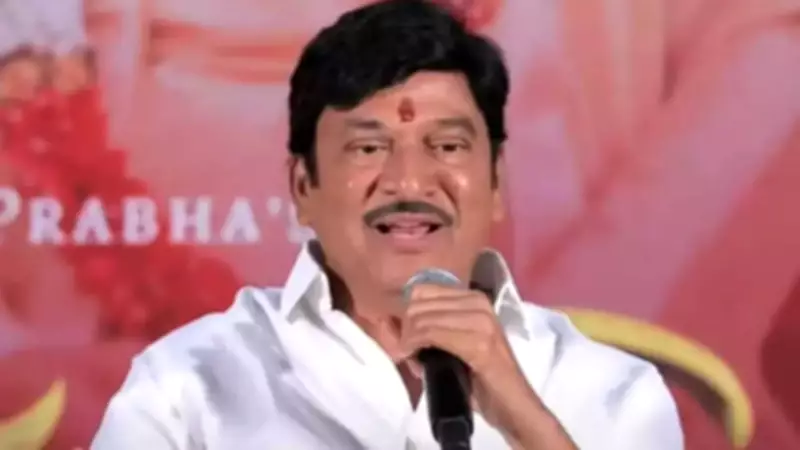
Veteran Telugu actor Rajendra Prasad has found himself at the center of a significant controversy following remarks he made about the late Tamil actor and former Tamil Nadu Chief Minister M.G. Ramachandran. The comments were delivered during a recent award ceremony in Hyderabad where Prasad was praising fellow Telugu actor Kantha Rao.
The Controversial Speech That Sparked Outrage
During his address at the ceremony, Rajendra Prasad stated, "Tamil's greatest hero MGR feared Kantha Rao. Kantha Rao's sword fighting made MGR think, 'Who is this guy sweeping away Indian cinema?'" These remarks have not been well-received, particularly in Tamil Nadu where MGR remains an iconic and deeply revered figure both as an actor and political leader.
The comparison between the two legendary actors has been interpreted by many as demeaning to MGR's legacy, creating an unexpected rift between the Telugu and Tamil film industries that have historically maintained strong bonds of mutual respect and collaboration.

Immediate Backlash from Tamil Film Community
The reaction from Tamil actors and industry bodies has been swift and forceful. Actor Vishal K expressed his dismay, stating, "It was shocking and repelling to see and hear the recent comments of senior actor Rajendra Prasad. While praising legendary actor Kantha Rao is a lovely gesture, bringing down and demeaning another legendary actor, the one and only MGR, who was not only a legendary actor but also a great leader in Tamil Nadu does not sit well with the sentiments of our people."
Veteran actor Nassar echoed similar sentiments, emphasizing the shared history between the industries: "While it is wonderful to see an actor praise another actor's craft, I was hurt by the comparison made with the great MGR. Not just Tamilians, even some of your colleagues have expressed that they felt hurt by it. The Telugu and Tamil film industries share a long tradition of exchanging talent and respecting each other's legends."
Official Condemnation from Nadigar Sangam
The South Indian Artistes' Association, commonly known as Nadigar Sangam, issued an official statement condemning the remarks. Their statement highlighted the historical connections between the industries: "The Tamil and Telugu film industries have always shared a deep bond, built on the exchange of talent and mutual admiration. Legends like NT Rama Rao, Akkineni Nageswara Rao, SV Ranga Rao, Savithri, Sharada, and Vanisri have all been cherished by audiences across both industries as members of one extended cinematic family."
The statement further elaborated on MGR's unique stature: "MGR was not merely an actor but also a leader who governed Tamil Nadu and became a personality who transcended politics. In fact, NT Rama Rao was inspired in part by MGR when he entered politics and launched his own party. We expect an apology that comes not out of compulsion, but from one's inner conscience."
The Broader Context of Industry Relations
This incident has brought to the forefront the delicate balance of inter-industry respect that has characterized South Indian cinema for decades. The Telugu and Tamil film industries have:
- Exchanged talent extensively throughout their histories
- Shared technical expertise and production resources
- Celebrated each other's cinematic achievements
- Maintained cultural bridges through film exchanges
Nassar emphasized MGR's multifaceted legacy: "MGR was not just an actor or entertainer; he was also a great leader who ruled for more than a decade, and we love and honour him." This perspective underscores why the remarks have been perceived as particularly offensive in Tamil Nadu, where MGR's memory carries significant emotional and political weight.
The controversy continues to develop as industry members and fans await further responses from those involved, highlighting the ongoing importance of respectful discourse when discussing cultural icons across regional boundaries.