Rang De Basanti Completes 20 Years: Director Reveals Bhagat Singh and Sahir Ludhianvi's Profound Influence
As the iconic film Rang De Basanti celebrates its 20th anniversary, director Rakeysh Omprakash Mehra has opened up about the powerful inspirations behind this cinematic masterpiece. The film, which premiered on Republic Day in 2006, was deliberately released on January 26 to amplify its themes of youth, idealism, and national consciousness.
The Philosophical Foundations: Bhagat Singh's Vision and Sahir's Poetry
Mehra revealed that the film originated from two profound questions that haunted him: What compelled young Indians during the Independence struggle to abandon their pens and take up arms? And how did Bhagat Singh's jail writings about true freedom shape this narrative? The director shared that Singh's letter from prison, where he wrote that freedom must liberate humans from exploitation by other humans, became a cornerstone of the film's philosophy.
Equally influential was the poetry of Sahir Ludhianvi. Mehra disclosed that he wrote the entire screenplay while facing a wall where Ludhianvi's powerful verses were pasted. The lines, "Bahut dinon se hai yah mashghala siyasat ka, ki jab javaan hon bachche to qatl ho jaayen…" (loosely translating to "It has long been the pastime of those in power that when our children grow up, they are sacrificed"), served as daily inspiration during the creative process.

Dual Narrative Structure and Contemporary Relevance
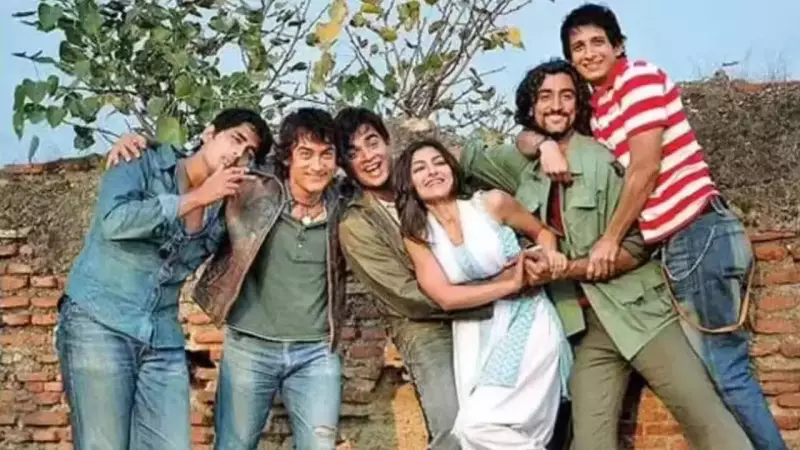
The film masterfully weaves together two parallel stories: the journey of four carefree college friends recruited for a documentary about Bhagat Singh, and the emotionally charged struggles of revolutionaries Bhagat Singh, Rajguru, Chandrashekhar Azad, and Ashfaqullah Khan. These narratives intersect thematically, creating a powerful commentary on youth activism across generations.
Mehra emphasized that Rang De Basanti was a clarion call to India's youth to actively participate in nation-building rather than remain passive observers or seek opportunities abroad. He stressed that real transformation requires youth engagement at every level, a message he believes remains critically relevant today despite the film being two decades old.
Casting Challenges and Creative Evolution
The director faced significant challenges during production, particularly in finding actors who could convincingly portray dual roles. The ensemble cast, featuring Aamir Khan, Kunal Kapoor, Siddharth, R Madhavan, and Waheeda Rehman, ultimately brought these complex characters to life with remarkable authenticity.
Interestingly, the film's concept evolved considerably from its original form. Mehra initially planned to focus specifically on revolutionary events like the Kakori train robbery and Jallianwala Bagh massacre, titling the project "The Young Guns of India." However, test screenings with young audiences in Mumbai and Delhi revealed a disconnect, as many were preoccupied with career planning and emigration. These disappointing responses ultimately shaped the film's final, more nuanced approach.
Production Struggles and Censorship Battles
Making Rang De Basanti involved considerable financial and logistical challenges. Mehra struggled for two years to secure funding before producer Ronnie Screwvala stepped in to support the project. Throughout this period, key collaborators including A.R. Rahman and Aamir Khan remained steadfast in their commitment.
The film's provocative theme of youth taking up arms against systemic corruption initially led to its ban. The controversy escalated to the highest levels, with then Defence Minister Pranab Mukherjee and the heads of all three armed forces screening the film in Delhi before its eventual clearance. Mehra reflected that creators must focus on storytelling rather than potential censorship, as excessive caution stifles artistic expression.
Musical Legacy and Lasting Impact
The film's soundtrack, composed by A.R. Rahman, became an integral part of its cultural impact. Songs like "Khoon Chala" and the title track performed by Daler Mehndi emerged as anthems of their era. Mehra revealed that Ludhianvi's line "Khoon phir khoon hai, tapkega to jam jaayega" directly inspired both these musical pieces.

Other memorable tracks including "Pathshala," "Khalbali," "Luka Chhupi," and "Tu bin bataaye" contributed to the film's enduring popularity. The title itself drew inspiration from street plays performed by Bhagat Singh and his comrades during Baisakhi fairs, connecting contemporary storytelling with historical revolutionary traditions.
Looking Forward: New Projects Addressing Contemporary Issues
As he reflects on Rang De Basanti's twentieth anniversary, Mehra is developing two new film concepts addressing pressing social concerns. One explores the negative impacts of social media, while the other examines the tragic phenomenon of farmer suicides in India. The director questions why those who produce the nation's food face such desperation while others prosper, hoping to provoke meaningful dialogue through cinema once again.
Mehra's personal connection to national symbols informed the film's perspective on patriotism. Having grown up near India Gate and regularly visiting the Amar Jawan Jyoti memorial, he defines patriotism not as aggressive nationalism but as active, inclusive participation in nation-building—a message that continues to resonate deeply with audiences across generations.