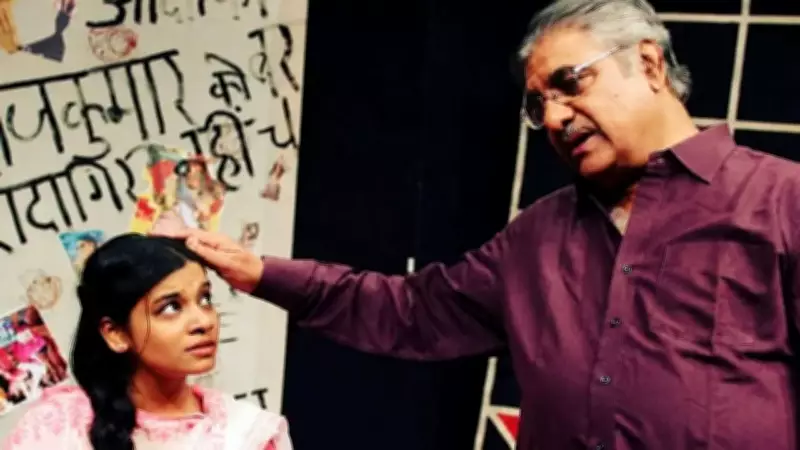
After spending nearly 15 years immersed in theatre, Ranjana Aanjjan has finally stepped into the world of screen acting with Chand Tara — a project that has already earned the distinction of having its trailer screened at the prestigious Cannes Film Festival. But for Ranjana, the journey has never been about glamour or overnight fame. Raised in a deeply rooted theatre family and mentored by stalwarts like her father Aanjjan Srivastav alongside legends from the Indian People’s Theatre Association fraternity, she grew up believing in craft, discipline, and the process more than the outcome.
In this candid conversation with ETimes, Ranjana opens up about the overwhelming transition from stage to screen, her father’s unwavering support, the financial struggles that shaped her middle-class upbringing, and the life lessons she learned from icons.
Overwhelming Transition from Stage to Screen
After spending nearly 15 years in theatre, Ranjana is now making her screen debut with Chand Tara. She describes the experience as very overwhelming. She was locked for the part only on February 5, just four days before shooting began on February 9, after multiple rounds of auditions and screen tests. Those four days were spent crying, as she feared messing up her first opportunity in films. Despite being a small-budget film made largely by theatre people, the pressure was immense. She had to pick up a Hyderabadi Urdu accent, understand the style of a singer from a period drama, and deal with heavy lines. Memorising lines was the only easy part because theatre trains you to remember entire scripts. The director advised her not to panic and to treat it like a play, which calmed her down. She eventually approached the film exactly as she would a stage production.

Unplanned Transition
Ranjana never planned to enter films or screen acting until the Covid-19 pandemic struck. Before that, she was deeply involved with her theatre group, acting, managing productions, handling lights and sound, and even serving as her father’s proxy actor. She believed screen acting was something she might not be prepared for. When Covid hit and theatre stopped, she became desperate to act again, as acting was integral to her identity. She started trying for screen work in 2021 and finally broke in last year with an OTT project, but it took four to five years to make the transition.
Covid Period Frustration
The Covid period was probably the most frustrating period of her life. Until then, theatre gave her complete satisfaction with immediate gratification from the audience. She was comfortable in that world, and her father was happy she was involved in theatre. Everything after leaving the stage has been a challenge, as screen acting is unfamiliar territory where survival depends entirely on merit. She feels excited but constantly worried about continuing to get opportunities and adapting to the grammar of screen acting.
Validation from Audience and Directors
Ranjana believes that ultimately, actors create work for the audience, so their response is extremely important. During filming, the director’s vision matters most because they understand the complete picture. However, audience feedback is equally important because actors bear the burden of the performance. She follows the director’s vision completely but also listens to audience feedback carefully.
Cannes Connection
Ranjana’s first film is already connected to Cannes, with its trailer being screened there. She feels no pressure, only excitement. For her, it feels like a small pat on the back and an acknowledgment of hard work. The film has heritage value, backed by Telangana Tourism, and revolves around the iconic Taramati Baradari. It attempts to preserve the story of Taramati, a singer from the Sultan’s era. When making the film, nobody was thinking about Cannes; they were simply trying to make the best film possible. After the trailer screening on May 18, they will all go back to work, mostly returning to theatre. She never imagined seeing her face on a screen associated with such a prestigious platform, but this experience has taught her that anything can happen in this profession.

Father’s Reaction
Ranjana’s father, Aanjjan Srivastav, is as happy as if he himself were going to Cannes. He is usually composed, but she saw him this happy only when she first stepped on stage and when she scored well in her Class 10 exams. Seeing her parents this happy is the real pinch-me moment. Her father, who has spent more than 50 years in the industry, advises her to stay patient and not become anxious about getting work. She is happier seeing her 78-year-old father jumping with joy than about the trailer launch itself.
Father’s Professional Help
While trying to enter the industry, her father tried to help but it didn’t work that way. His answer to entering the industry was simple: through screen tests. She got Chand Tara because the director saw one of her stage performances, leading to a screen test. They tried approaching the industry and failed miserably at times. Her father advised her to divide her focus: 50% into acting and 50% into a technical skill. She is also a graphic designer, which provides a backup. Her father strongly believes the industry is volatile, and survival is important. They come from a very middle-class family and have seen both difficult and successful periods. In 2002, her father suffered an accident while performing on stage but continued performing, leading to financially difficult times. That’s why he always says never to allow your bank balance to collapse and to have another skill to rely on. For acting guidance, she constantly seeks his feedback. For this project, he told her to have confidence in herself. She runs every script by him because people like him are institutions. On set, Mohan Agashe joined her and provided clarity with just a few lines of exchange.
Father as a Parent
Ranjana describes her father as very neutral. He was strict with her siblings, but she was born 10 or 11 years after them, so things were different. He has always been collaborative. By the time she was born, her parents were older and had matured. As she grew older, she became more of a collaborator with them. She admires her father for being flexible even after crossing 70. He became more of her co-actor than just a father because they shared stage space for 15 years. Their fights are about theatre, organisation, and economics of productions. Now she is also the sole caretaker for her ageing parents, so the relationship has evolved further.
Belief in Her
Earlier, her father advised her not to completely depend on acting, coming from practicality. She didn’t fully call herself an actor until she started believing she could do screen acting. When she finally believed in herself, he supported it with even greater confidence. She had to take the first step for him to take the next one.
Dealing with Good and Bad Days
In every actor’s household, if there’s work, it’s a good day; if not, it’s a bad day. Her mother has played a huge role in support. Her father remained rooted even during horrible financial phases after his theatre accident. He never panicked because he believed good days would return. She, on the other hand, gets very anxious. They have seen days when her brother had to take a call centre job to make ends meet. They are a very middle-class family. These experiences taught her that good and bad days are constant in the industry. The best thing is not to obsess over outcomes and just keep working. Her father says to put horse blinders on and keep working. They practice complete detachment from outcomes, performing with sincerity even for one viewer.
Preparing for Taramati
There is very little information available about Taramati, which is why the film was made. The director, Mohammed Ali Baig, focused on woman-centric theatre and wanted to preserve Hyderabad’s theatre culture. Ranjana had very little time to prepare, so she completely depended on the director and writer. Her only focus was getting the emotions right, as emotion is common across centuries. With only four or five days, she focused on understanding the emotional subtext behind the lines. The production had budget constraints and limited permissions. The most difficult part was the Hyderabadi Urdu dialect, which is very different from standard Urdu. Dubbing helped perfect it later. She approached it like theatre, just as the director advised.
OTT Project
Coincidentally, her first OTT project also happened around the same time. It is called Pyramid Scheme, a project by The Viral Fever for Amazon Prime Video. The director saw her perform in a play with her father and approached her for an audition. It also features her father, making it their first screen project together.
Sharing Screen Space with Father
Ranjana had already experienced sharing the stage with her father for 15 years. Seeing both of them share screen space made her parents extremely happy. It felt like another milestone. Discussing call times and preparing together was a beautiful feeling. It was different because it was a new medium, but emotionally familiar.
Rakesh Bedi’s Success
Ranjana feels Rakesh Bedi’s recent viral success is well deserved and should have come earlier. He is a powerhouse performer from the Indian People’s Theatre Association family. Watching their rehearsals taught her so much. She feels all stage actors deserve bigger opportunities on screen because screen reaches a wider audience. People who cannot come to theatre should witness such brilliant actors.
Growing Up Around Legends
Growing up around legends like Rakesh Bedi, Sulabha Arya, and others was beautiful. She lived with that little cherry on the cake. The most common reaction from people was deep respect because they had grown up watching them. These people value respect more than fame. She worries whether she will ever reach that level.
Pressure of Legacy
Ranjana doesn’t think she can take forward their legacy; she can only work alongside it. They created their place in a different era. She feels pressure to earn that kind of respect, which is much harder than becoming famous. It requires immense grit and determination. She wonders whether she can ever become even half as good an actor as they are.
Life Lessons from Stalwarts
The biggest lesson is that they never, ever give up. Theatre actors are always willing to fall down and get back up again. They are all self-made. Her father built himself entirely on his own, making him mentally very strong. The lesson is that if you are doing your work honestly and genuinely, there is no reason to stop.
Road Ahead
Ranjana doesn’t completely know yet, but theatre will always remain a part of her life. She is working as a joint section chief director and will continue making plays, directing, acting, and collaborating with younger directors. As for screen work, she hopes for more opportunities. She won’t give up, as that’s the biggest lesson learned. She wants more chances to practice this craft in this medium, just as she spent 15 years working before reaching here.