Lyricist Raqueeb Alam Accuses Director of Betrayal Over Controversial Song Credits
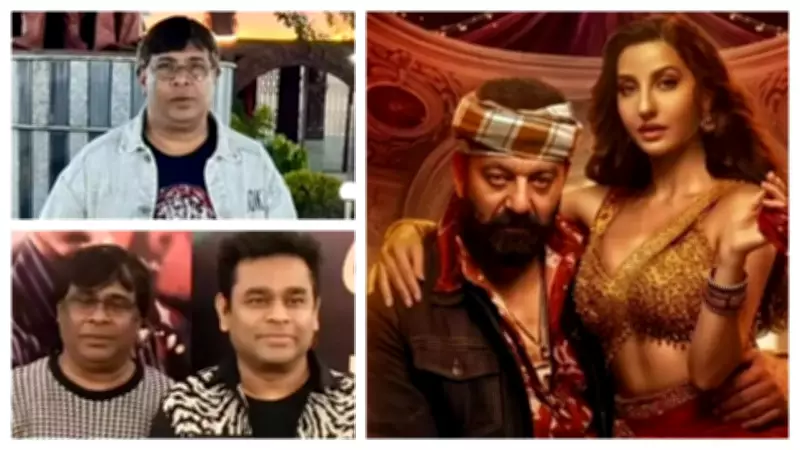
The recently released track Sarke Chunar Teri Sarke, featuring Bollywood stars Nora Fatehi and Sanjay Dutt, has ignited a firestorm of online backlash, with much of the criticism directed at lyricist Raqueeb Alam. The song is part of the upcoming pan-India film KD: The Devil, directed by Prem. However, Alam has come forward with explosive allegations, claiming he was unfairly blamed for the lyrics and that his role was strictly limited to translation.
Alam's Role: A Mere Translator, Not a Lyricist
In an exclusive interview with Bombay Times, Raqueeb Alam detailed the sequence of events, asserting that he was wrongly credited as the lyricist. According to Alam, the song was originally written in Kannada by director Prem himself, with music composed by Arjun Janya. Alam's involvement, he insists, was purely translational.
"I was told to just translate the Kannada song word for word – like 'This is my book' to 'Yeh meri kitab hai'. So, I translated it and gave it to him," Alam explained. He further stated that Prem then adjusted the translation to fit the musical meter and proceeded with the recording. Alam emphasized that he had initially refused to write the track when approached by Prem, finding the content inappropriate. "Koi bhi lyricist aisa nahi likhega. Mujhe jab Prem ne likhne bola toh maine mana kar diya. I told him yeh theek nahi hai," he recounted.

Explicit Request to Avoid Credit Ignored
Alam alleged that he had explicitly instructed the director not to credit him as a lyricist for the song. "When I gave him the translation, I had told him not to credit me as a lyricist for this song. After that, maine ek baar bhi woh Hindi translated song nahi suna. Kisne gaya, kahan record kiya, kuch bhi pata nahi tha mujhe," he said. It was only after the song's release that Alam discovered his name in the credits, prompting an immediate and angry call to Prem.
"Maine uspe bahut chillaya, and I told him to remove my name and put his own or pull the song down completely," Alam revealed. According to him, Prem eventually agreed to take the song down, but by then, the damage to Alam's reputation had already been done. "Prem said that he would remove the song, and that eventually he did it, but by then the damage was done," Alam lamented.
Personal and Professional Betrayal
Calling the episode a "betrayal", Alam expressed deep personal distress over the association with the controversial track. "Mere saath dhoka hua hai. This wasn't right. Mere bhi bacche hain, family hai. Main aise song ke saath kaise associate ho sakta hoon? Kal mere bachche mujhse puchenge ke aapne apne zindagi mein iss tarah ke gaane likhein? Toh mein kya jawab doonga?" he questioned, highlighting the potential impact on his family and legacy.
Alam, who has previously translated popular songs like Srivalli for Pushpa: The Rise and its sequel, as well as for films such as Master, Jailer, Leo, and Varisu, stressed his consistent stance against vulgar content in music. "I have been someone who has spoken against vulgar songs in the past. Main khud bahut aware rehta hoon ki mujh se aise alfazon ka chayan nahi ho jisse hamare samaj pe, bacchon pe bura asar pade," he asserted.
Contractual Obligations vs. Ethical Stand
Alam clarified that his involvement was driven by contractual obligations. "Once you sign a contract for a film, you are bound to fulfil its requirements. I refused to be part of this track once I read the Kannada lyrics, but I was asked to translate them into Hindi, and I had to fulfil my role as per the contract," he explained. Despite this, he maintained that he had clearly communicated his desire to avoid credit for the song to director Prem.
The controversy underscores ongoing debates about creative responsibility and credit in the Bollywood music industry. As the backlash continues, Alam's allegations raise questions about transparency and ethical practices in film production, particularly in cross-lingual projects like pan-India films.