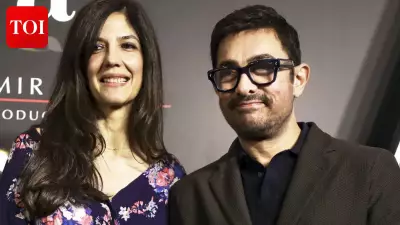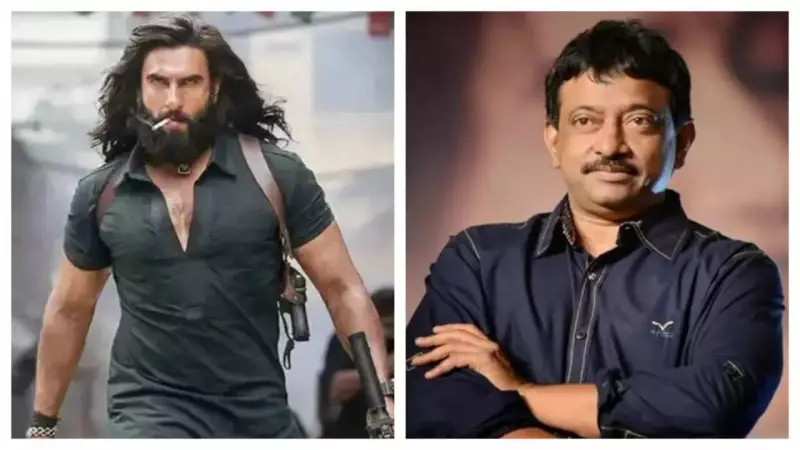
Bollywood's recent box office struggles, contrasted with the pan-India success of southern films, had sparked debates about a shifting power dynamic in Indian cinema. However, the monumental success of Aditya Dhar's Dhurandhar, which has stormed into the coveted ₹1000 crore club, has dramatically altered the conversation. Veteran filmmaker Ram Gopal Varma strongly asserts that this blockbuster has effectively "kicked back" the southern film industry's invasion into Bollywood's territory.
Elevating the Masala Template with Aesthetic Realism
In a candid discussion, Ram Gopal Varma clarified that his observations are not meant to disparage South Indian cinema but to highlight a stylistic evolution. He pointed out that while South cinema, much like Korean cinema, is renowned for its distinct template of potboilers and masala films, Dhurandhar has taken that very foundation and elevated it artistically. "Aditya Dhar took the same masala template, but elevated it aesthetically. That's what has shaken everyone," Varma told Bombay Times.
He believes the film's nuanced execution and mature detailing will compel Southern filmmakers to re-evaluate their scripting and storytelling methods. Unlike the exaggerated, physics-defying action common in many mass entertainers, Dhurandhar grounds its stunts in believability. Varma emphasized that this commitment to character clarity and realistic conflict is a rarity in traditional masala fare, which can often drift into tackiness.

A Shift from Hero Worship to Ensemble Storytelling
Varma delved into one of Dhurandhar's most significant departures: moving away from pure hero worship. He noted that when Ranveer Singh's character makes his entry, the goal isn't to trigger mandatory applause; he is seamlessly woven into the narrative as just another character. "Every character matters equally. You don't just remember Ranveer – you remember everyone," Varma stated, praising the film's rare focus on giving every role its due weight.
This grounded approach, he argued, poses a serious question to the survival of over-the-top pan-India films. If audiences embrace the intense, character-driven realism of Dhurandhar, the formulaic excesses of some mass films may struggle to connect. Varma addressed the narrative of Bollywood's decline, suggesting it stemmed from a period where the industry stopped making films people genuinely enjoyed, allowing South masala films to dominate. He questioned whether those same Southern hits would find similar success if released after the benchmark set by Dhurandhar.
A Historical Perspective on Bollywood-South Exchange
Reflecting on the long history of cross-pollination, Varma provided crucial context. He recalled that many Southern legends like Rajinikanth and N.T. Rama Rao in the 1970s and 1980s achieved superstardom through remakes of Hindi films, particularly those starring Amitabh Bachchan. The 1990s saw Bollywood pivot from masala films to romance-driven musicals, influenced by music companies turning producers. This was followed by a wave of foreign-educated filmmakers focusing on slice-of-life narratives.
"The South, barring Malayalam cinema, never stopped making masala films, which is why their stars became nationally popular," Varma observed. However, he noted that the storytelling sensibility often failed to resonate deeply with North Indian audiences. Dhurandhar, in his view, uses the action-masala blueprint but roots it firmly in realism, making its music, dialogues, cinematography, and action sequences topics of deep discussion—a post-theater engagement he finds lacking after many Southern spectacles, excluding major period epics.
On comparisons between Dhurandhar and his own seminal works like Satya (1998) and Sarkar (2005), Varma concluded that human conflict is universal. The setting—whether it's the American mafia, Mumbai's underworld, or a patriotic action drama—is secondary. "What matters is how the conflict is portrayed," he said, citing The Godfather (1972) as a global benchmark created purely through masterful execution, a principle he sees embodied in Dhurandhar.