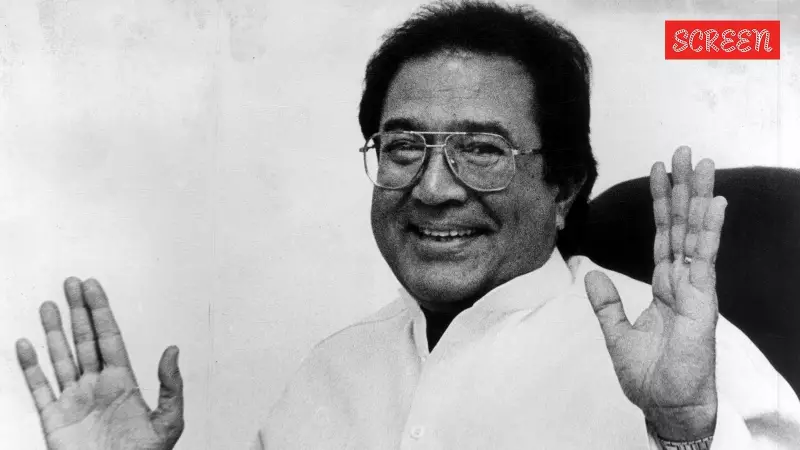
The legendary rise and tragic fall of India's first superstar, Rajesh Khanna, is a tale etched in Bollywood folklore. Central to this narrative is his iconic sea-facing bungalow, Aashirwad, on Mumbai's Carter Road, which became a symbol of his immense stardom and later, a source of intense financial and emotional turmoil. In a dramatic twist, it was revealed that Salman Khan once offered to work for free in a film to facilitate the purchase of this very property for his brother, Sohail Khan—an offer Khanna perceived as a profound betrayal, accusing them of wanting to bring him to the streets.
The Regal Reign at Aashirwad
Rajesh Khanna purchased Aashirwad in the early 1970s from actor Rajendra Kumar for approximately Rs 3.5 lakh. The bungalow was not just a home; it was the throne from which King Kaka ruled. As detailed in Gautam Chintamani's biography, Dark Star: The Loneliness of Being Rajesh Khanna, the actor cultivated an aura of monarchy. Producers were made to wait endlessly in his 'durbar' for an audience. Khanna would sit on a chair placed on a slightly raised platform, dressed in his signature silk lungi-kurta, embodying the superstar who delivered 15 consecutive solo hit films between 1969 and 1972.
The inner sanctum of Aashirwad was reserved for a select few, where nights were filled with endless whisky and flattery. Khanna's tolerance for dissent was minimal; those who disagreed with him were often theatrically banished from his court with the proclamation, "Aapko humara durbar chhodna padega." This lavish lifestyle, however, was not destined to last forever.

The Steep Decline and Financial Desperation
The zenith of Khanna's career was challenged by the arrival of Amitabh Bachchan as the 'angry young man' with films like Zanjeer (1973), Sholay, and Deewar. Despite attempts at a comeback, Khanna could never reclaim his former glory or financial stability. By the early 2000s, his finances were in dire straits. Rumours swirled that he was considering selling Aashirwad. The situation was exacerbated by a notice from the Income Tax department demanding unpaid dues of over Rs 1.5 crore, severely damaging his credibility.
It was during this period of vulnerability that an offer emerged from the Khan family. Screenwriter Rumi Jaffery was approached by Salman Khan to convey that his younger brother, Sohail Khan, was interested in buying the Aashirwad bungalow. The family made several lucrative proposals, including settling Khanna's substantial tax liabilities. Salman Khan was reportedly so keen on the deal that he even offered to act in a Rajesh Khanna production free of cost to make it happen.
"You Want to Bring Me to the Streets"
When Rumi Jaffery relayed this offer to Rajesh Khanna, the reaction was volcanic. According to Jaffery's account in the biography, Khanna felt deeply wounded and betrayed. He questioned how Jaffery could even suggest such a thing and accused him of stabbing him in the back. In a moment of raw emotion, Khanna exclaimed, "I consider you a son-in-law aur tu mera ghar bikwana chahta hai… Sadak par lana chahta hai!" (I consider you a son-in-law, and you want to get my house sold… You want to bring me to the streets!).
Jaffery clarified he was merely a messenger delivering Sohail Khan's proposal. The book further notes that Khanna later 'scolded' Sohail Khan in person years later for the same reason. Khanna held a firm belief that while he would die one day, Aashirwad would live on forever, ensuring the world never forgot Rajesh Khanna.
The irony of history is often stark. Rajesh Khanna did pass away alone in Aashirwad in 2012. Furthermore, contrary to his belief in its eternal legacy, the iconic bungalow was eventually demolished to make way for a high-rise building, marking the physical end of an era that was already long gone.