Satyajit Ray's Timeless Cinema Enthralls Japanese Audiences in Major Retrospective
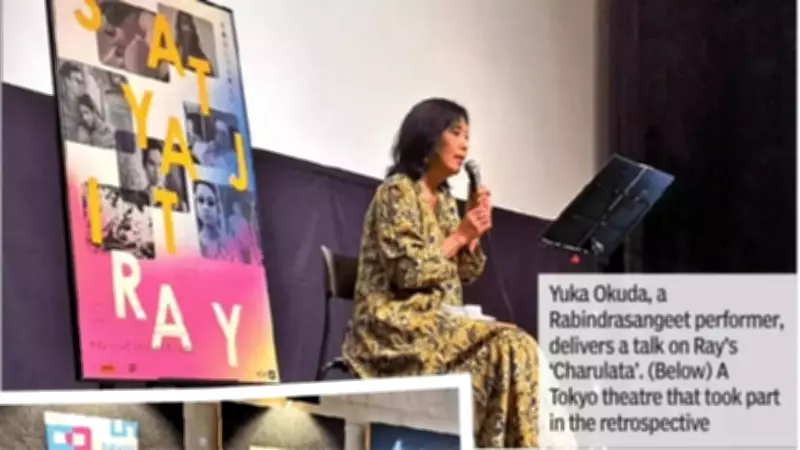
On a warm August evening in Tokyo, a medium-sized theater was completely filled with an attentive audience. The crowd listened intently to a woman on stage, who was framed by the movie screen behind her. This was no ordinary film screening; the topic of discussion was Rabindrasangeet within the context of Satyajit Ray's 1964 masterpiece, Charulata.
Seven Restored Classics Make Japanese Theatrical Debut
The event was part of a significant retrospective showcasing seven of Ray's most celebrated films, which received their first theatrical release in Japan. The lineup included Jalsaghar (1958), Mahanagar (1963), Charulata (1964), Kapurush, Mahapurush (both 1965), Nayak (1966), and Jai Baba Felunath (1979). These films span two decades of Ray's illustrious career and were also made available on Video on Demand and home video with Japanese subtitles.
Due to overwhelming demand, the retrospective's initial three-week run was extended by an additional week. The films were screened not only in Tokyo but also in cities such as Hiroshima, Osaka, and Kyoto, reaching approximately 15 to 20 cinemas nationwide. The popularity has surged to such an extent that a Blu-ray release is scheduled for March.

Historical Ties and Cultural Appreciation
For Sandip Ray, filmmaker and son of Satyajit Ray, this success is not surprising. He recalled the deep historical connections between his father's work and Japan, noting the influential role of Japanese distributor Toho-Towa Co. Ltd., founded in 1928 by film pioneer Nagamasa Kawakita. Kashiko Kawakita, Nagamasa's wife, was a devoted admirer of Ray's cinema.
"She was very close to our family and a die-hard Satyajit follower right from the start," Sandip Ray said. It was Kashiko who arranged a memorable meeting between Satyajit Ray and legendary Japanese director Akira Kurosawa in 1966. Reflecting on the distributor's ongoing interest, Sandip added, "I think till the 80s, they distributed all of Baba's films in Japan. The films must have done good business. Otherwise, why would she ask about new films every year?"
Enriching Discussions and Audience Engagement
The screenings were complemented by a series of discussions and talks, enhancing the cultural exchange. Film researcher and producer Eri Morinaga spoke after Mahanagar, while Asian cinema researcher Tamaki Matsuoka delivered a talk following Jalsaghar. A particularly notable session occurred after Charulata, led by Yuka Okuda, a Rabindrasangeet performer and Bengali language instructor.
Okuda shared her insights on the impact of Rabindrasangeet in the film, stating, "I offered some reflections on the impact of the Rabindrasangeet in the film... Some in the audience said they wanted to watch the film again. It made us realise all the more that Ray's cinema is a deeply layered and magnificent creation." This feedback underscores the profound resonance of Ray's work with Japanese viewers.
Legacy of Restoration and Global Appeal
The restoration of these classic films was spearheaded by Varsha Bansal, whose grandfather, RD Bansal, produced the Ray classics. This meticulous effort has allowed new generations to experience Ray's cinematic genius in high quality. The retrospective not only celebrates Ray's artistry but also highlights the enduring power of cultural diplomacy through cinema.
As Akira Kurosawa famously remarked, "Not to have seen the cinema of Satyajit Ray means existing in the world without seeing the sun or the moon." This sentiment continues to ring true, as evidenced by the enthusiastic reception in Japan, bridging continents through the universal language of film.