Sona Mohapatra Questions AR Rahman's Communal Assertion in Bollywood Debate
Playback singer and independent musician Sona Mohapatra has publicly responded to Oscar and Grammy-winning composer AR Rahman's recent interview remarks, stating that "the facts simply don't support AR's communal assertion." In an exclusive conversation with The Indian Express, Mohapatra addressed Rahman's comments about a perceived "power shift" in the Hindi film industry and his claims of losing work over the past eight years due to communal factors in India.
Rahman's Controversial Interview and Subsequent Clarification
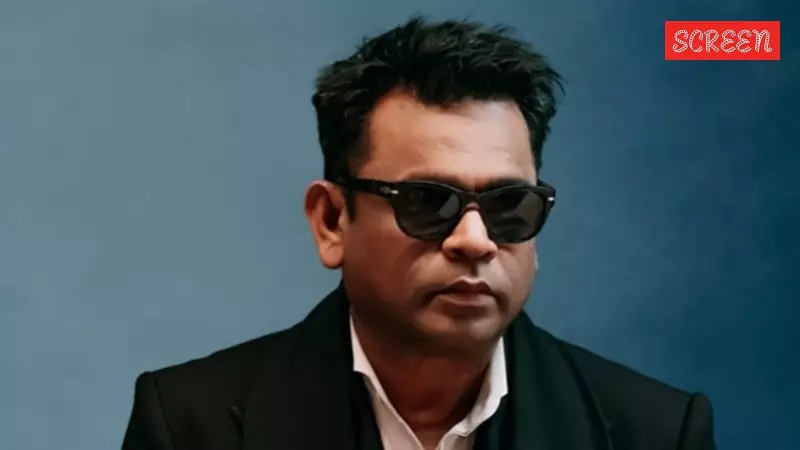
AR Rahman, the Chennai-based musical maestro, sparked intense public debate with his BBC interview where he discussed experiencing a communal environment affecting his career opportunities. Following significant backlash, Rahman issued a clarification video, emphasizing his dedication to uplifting and serving through music. "I understand that intentions can sometimes be misunderstood. But my purpose has always been to uplift, honour and serve through music," he stated, attempting to contextualize his earlier remarks.
Mohapatra's Counter-Argument Based on Project Evidence
Sona Mohapatra, known for hits like Ambarsariya and Bedardi Raja, presented a detailed rebuttal to Rahman's claims. She pointed to his ongoing involvement in high-profile projects as evidence against marginalization. "He scored Chhaava. He is scoring Ramayana. He continues to be attached to some of the biggest, most high-profile projects in the country, while also being globally active and constantly travelling and likely not available to many projects. By any objective measure, that is not marginalization," Mohapatra asserted.

She further elaborated that Rahman remains a "first-call composer for prestige projects," suggesting his selection for films like Chhaava over composers such as Ajay-Atul carries symbolic weight. "It makes a statement about a plural, pan-Indian idea of culture. Similarly, Ramayana being scored by Rahman and not, say, Ram Sampath, tells us something about how scale, international visibility, and brand stature increasingly influence these decisions," she explained.
Examining Industry Power Dynamics and System Privileges
Mohapatra emphasized the importance of honestly examining power dynamics within Bollywood. She highlighted how the industry often privileges familiarity and symbolism over pure merit. "Explore how many equally capable musicians remain outside these circles not because of lack of merit, but because of how the system privileges familiarity and symbolism," she noted, urging a broader conversation about inclusivity and opportunity.
Clarifying her stance, Mohapatra reiterated that her comments are not a critique of Rahman's unparalleled talent. "What I'm saying isn't a critique of Rahman's talent, which without doubt is beyond question. But it does complicate the narrative that he's being edged out," she stated, aiming to separate artistic appreciation from industry analysis.
Insights into Bollywood's Operational Mechanics
Reflecting on the broader industry landscape, Mohapatra described contemporary Bollywood as functioning through a complex mix of factors. "What we're really seeing is how Bollywood today functions through a mix of optics, global positioning, legacy names, and risk-averse commissioning," she observed, suggesting that these elements often dictate project assignments more than communal considerations.
Mohapatra, whose recent film work includes Kiran Rao's Laapataa Ladies under composer and husband Ram Sampath, brings a nuanced perspective to this discussion, blending insider knowledge with critical analysis of industry trends.