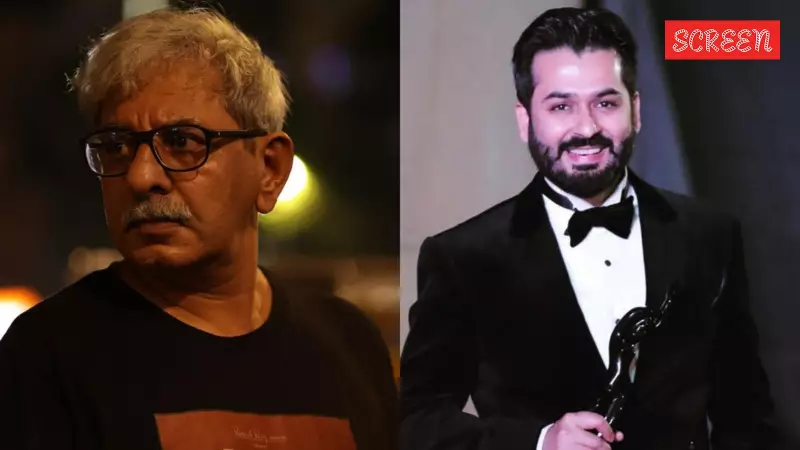
While filmmaker Aditya Dhar's latest blockbuster Dhurandhar continues to shatter box office records and earn praise from industry heavyweights, acclaimed director Sriram Raghavan has made it clear that the gangster saga is not a film he would ever make. Raghavan, who is currently preparing for the release of his own upcoming project Ikkis, shared his candid thoughts in a recent conversation with The Hindu.
A Different Sensibility: Raghavan's Take on the Dhurandhar Phenomenon
The conversation turned to the roaring success of Dhurandhar, headlined by Ranveer Singh with a powerful performance by Akshaye Khanna. The film has been lauded by directors like Karan Johar, Sandeep Reddy Vanga, and Ram Gopal Varma for its inventive storytelling. However, Raghavan offered a perspective rooted in his own distinct cinematic voice.
He acknowledged that Dhurandhar is a "well-made film with terrific performances" and deserves its spectacular success. Yet, he firmly stated it is "not our kind of film." Drawing a parallel to the evolution of the James Bond franchise, Raghavan noted that while the earlier, fun films of Sean Connery and Roger Moore had their place, the series later turned serious. He emphasized that Dhurandhar represents one successful format, but it is not the only one.

"If I start following it, it will be the silliest thing to do," Raghavan remarked, underlining his commitment to his own creative path. He reflected on his shared history with Aditya Dhar, recalling that they both won National Awards in the same year—Dhar for Uri: The Surgical Strike and Raghavan for Andhadhun. "He has a different kind of sensibility and craft, and I love watching his films, but it is not something I would make," he added respectfully.
Dharmendra's Swan Song: The Heart of Ikkis
Shifting focus to his own work, Raghavan spoke at length about the legendary Dharmendra, whose final acting role is in Raghavan's war drama Ikkis. He described the experience of working with the veteran as a profound pleasure, highlighting Dharmendra's deep connection to the film's emotional core.
"With Dharamji, there was no acting," Raghavan revealed. He explained how the actor's very walk and gait became part of the character, a man carrying the pain of leaving his home in Punjab. "The idea of revisiting home became a very personal experience for him; he was totally into the character," the director shared.
Raghavan praised Dharmendra's keen sense of dialogue and his value for the "economy of words." Their collaboration was highly improvisational, with Raghavan often asking the veteran how he would prefer to deliver lines. "He would offer his own improvisation, and I have used many of his lines," Raghavan said. The director also fondly recalled their discussions about Dharmendra's poetry and even requested him to recite one of his compositions for the film.
Agastya Nanda Steps In: Casting a Fresh Face for Ikkis
Ikkis also marks the second major film role for newcomer Agastya Nanda, following his debut in The Archies. Interestingly, the role was initially offered to Varun Dhawan, with whom Raghavan had previously collaborated on the hit film Badlapur.
Raghavan explained the casting shift, noting that the COVID-19 pandemic caused delays. As the script developed, he realized that "age is integral to the story," with the protagonist, Arun, depicted as a 19-year-old in crucial scenes. "The age when Jeetendra could dance around trees in his 40s is over. The script demanded a fresh face," he stated pragmatically. Agastya was 21 when he was cast.

The director emphasized the commitment required, as the role needed an actor willing to dedicate two to three years. At its heart, Ikkis is "the story of a boy becoming a man." Raghavan wanted Agastya to capture the character's innocence and his urge to serve, culminating in the heroic final two hours of his life for which he was posthumously awarded the Param Veer Chakra. "I guess Agastya's eyes reflect it," Raghavan concluded, expressing confidence in his young lead.
As the industry celebrates the success of Dhurandhar, Sriram Raghavan's comments reaffirm the diverse tapestry of Indian cinema, where different directorial visions can thrive without imitation, and where veteran legends like Dharmendra can deliver poignant final performances.