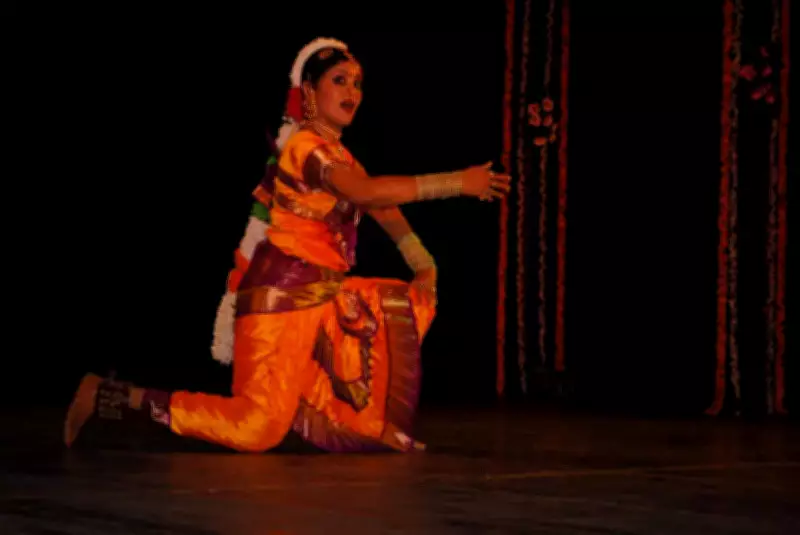
Sudha Chandran's Defining Moment: A Life-Altering Accident
Life often presents moments that split existence into distinct halves: the person one was before and the individual they become afterward. For Sudha Chandran, this pivotal juncture did not occur amidst the glamour of stage lights or the roar of applause. Instead, it unfolded on a desolate road in Tamil Nadu during the year 1981. At just 16 years old, she was a rising star in Bharatanatyam, a classical dance form that defined her very essence. Dance was far more than a mere pastime; it served as her identity, her primary mode of expression, and her envisioned future. Audiences had already begun to recognize her for her expressive storytelling and impeccable technical grace. Her life appeared to be progressing precisely as she had always dreamed. Then, a catastrophic event threatened to obliterate it all.
The Accident That Changed Everything
Sudha Chandran was traveling with her parents following a pilgrimage when their bus was involved in a severe accident near Tiruchirapalli. She sustained critical injuries to her right leg. Initially, medical professionals attempted various treatments, but complications quickly arose. A dangerous infection, identified as gangrene, began to spread at an alarming rate. The subsequent decision was harsh yet necessary: her right leg required amputation below the knee.
For a teenager whose entire world depended on precise footwork and perfect balance, this loss seemed utterly inconceivable. Dance, her greatest passion, suddenly felt permanently inaccessible. In later interviews, she would recount not only the intense physical pain but also the profound emotional devastation—the crushing realization that the stage might never welcome her again.

Visitors offered their sympathies. Some whispered words of consolation aimed at softening the harsh reality, noting that at least she had survived. Others quietly assumed her dancing career had reached its end. However, for Sudha, grief gradually morphed into a powerful force: defiance.
Learning to Stand and Dance Again
Recovery was neither dramatic nor inspiring in a cinematic sense. It was a slow, frustrating process riddled with doubt. Even basic movements had to be relearned from scratch, with pain accompanying every minor step.
During this challenging period, Sudha was fitted with the Jaipur Foot, an affordable prosthetic limb developed in India that offered greater flexibility compared to conventional artificial legs available at the time. Yet, wearing a prosthetic did not miraculously restore her former life. Merely walking demanded immense effort, and dancing appeared nearly impossible. Nevertheless, the idea of returning to dance stubbornly persisted in her mind.
She commenced training once more. Initially, the sessions were agonizing. The prosthetic caused wounds and bleeding, balance felt unnatural, and movements that once flowed effortlessly now required extraordinary concentration. Each stamp of the foot, a fundamental element in Bharatanatyam, sent shockwaves of pain throughout her body. Many individuals would have halted at this point.
She did not give up. Her practice evolved into an act of rebuilding not only muscle memory but also belief. Hours turned into months of relentless training. Gradually, her body adapted, rhythm returned, and the impossible began to seem attainable once again.
The Stunning Comeback Performance
In 1984, barely three years after losing her leg, Sudha Chandran stepped onto the stage for her comeback performance in Mumbai. The audience was well-acquainted with her story. Many arrived expecting to witness courage, but few anticipated brilliance.
As the performance commenced, something extraordinary transpired. The focus shifted away from what she had lost to what she had reclaimed. Her expressions carried a deeper emotional intensity, shaped by lived suffering. Each movement felt like a powerful declaration that art could endure even the most profound physical loss. By the conclusion of the performance, the entire auditorium rose in a standing ovation.

This was not applause born of sympathy; it was a gesture of profound respect. Her return signified more than a personal victory; it challenged deeply ingrained assumptions about disability and capability within Indian society. She was no longer merely a dancer who had survived tragedy; she had become a symbol of resilience.
From Personal Struggle to National Inspiration
Sudha Chandran's story soon reached millions across the nation. Her life inspired the Telugu film Mayuri, later remade in Hindi as Naache Mayuri, in which she portrayed herself, reliving her own trauma and triumph on screen. The film introduced her journey to audiences throughout India, transforming her into a household name.
However, fame was never the central achievement. What truly resonated was her steadfast refusal to be defined by loss. At a time when conversations surrounding disability were limited and often stigmatized, her visibility reshaped public perceptions. She demonstrated that physical limitations do not negate artistic excellence.
Over the years, she expanded her career into television and cinema, becoming a familiar face in Indian households. Yet, dance remained the emotional core of her identity—the place where her story began and where she repeatedly proved that resilience can be practiced like an art form.
Beyond Inspiration: A Testament to Human Will
Stories of courage are frequently simplified into tidy motivational lessons. However, Sudha Chandran's journey was not constructed upon constant strength. It encompassed fear, exhaustion, and moments when continuing must have felt unbearably difficult. What renders her story so powerful is not perfection, but persistence. She did not deny tragedy; she negotiated with it. She did not erase pain; she learned to move alongside it.
Today, when audiences watch her perform or see her on screen, they witness more than mere talent. They observe an individual who refused to allow a single devastating moment to dictate the remainder of her life. The stage she returned to was the same, but she was not. She came back stronger, carrying a quiet message that continues to resonate far beyond dance halls: sometimes resilience is not about standing unbroken. Sometimes, it is about learning to rise again, differently, and still choosing to dance.