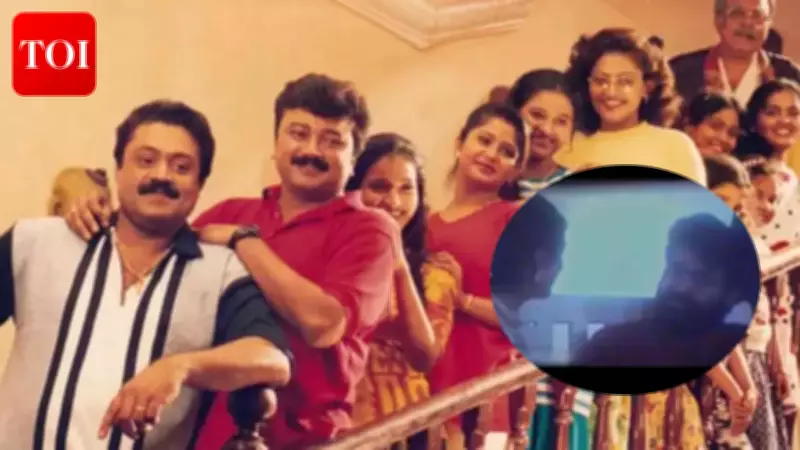
Mollywood Classic 'Summer in Bethlehem' Unveils Long-Lost Deleted Scene After Nearly Three Decades
The evergreen romantic drama film 'Summer in Bethlehem' stands as one of the most cherished cinematic gems in Malayalam cinema history. Featuring an ensemble cast including Jayaram, Suresh Gopi, Manju Warrier, Kalabhavan Mani, and Mohanlal in pivotal roles, the movie has captivated audiences for generations. In a remarkable move, the film's producers have now released a significant deleted scene after a staggering 28 years since the movie's original theatrical run.
The Nine-Minute Revelation: What the Deleted Sequence Contains
The newly shared nine-minute sequence was uploaded through the Siyad Koker Entertainments YouTube channel, offering fans a fascinating glimpse into what might have been. The deleted portion focuses intensely on the emotional aftermath following the dramatic moment when Niranjan, portrayed by Mohanlal, is sentenced to death.
The scene depicts Amy, played by Manju Warrier, and Dennis, played by Suresh Gopi, returning home after their final jail visit with Niranjan. What unfolds is a powerful family intervention where Amy's relatives attempt to convince her to continue her marriage with Dennis despite her lingering feelings for Niranjan.

In his dying moments, Niranjan makes a heartfelt request that Abhirami should tie the mangalsutra to Dennis, symbolically passing on his blessing for their union. Following this final meeting, Dennis takes the extraordinary step of explaining the entire situation to Amy's family and even offers to remove the thali (mangalsutra) to release Amy from the commitment.
However, Jayaram's character and other family members strongly oppose this gesture, believing Amy should honor Niranjan's final wish. After considerable emotional turmoil, Amy ultimately agrees to move forward with her life alongside Dennis. The sequence concludes with a poignant dream-like apparition where Niranjan reappears to encourage Amy to embrace her future with Dennis.
Director's Revelation: Why These Crucial Scenes Were Originally Cut
As reported by Manorama Online, director Sibi Malayil had previously explained the reasoning behind removing these emotionally charged scenes. The sequences were originally shot to provide greater logical coherence to what might otherwise seem like a sudden marital transition.
"We kept Mohanlal's role a secret until the film released in theatres—it was meant to be a surprise, and it worked really well," Malayil revealed. "There was another secret too—we had shot two scenes that were later deleted. After Manju's character ties the thali, there was a long scene where the family tries to convince her. Logically, it raises the question of how someone deeply in love could suddenly accept marrying another person."
The director elaborated that they specifically shot a 10-minute sequence addressing this emotional transition, including the moment where Mohanlal's character makes a spectral reappearance. However, after viewing the completed film on opening day, producer Siyad Koker contacted Malayil with concerns about the scene's necessity.
"He felt audiences might get uncomfortable—once they realize Mohanlal's character dies, they might not stay in the theatre," Malayil explained. "Also, such a long scene might not work at that point. He suggested cutting it in one theatre first and seeing the response."
Malayil further detailed the editorial decision: "After Niranjan ties the thali and collapses, the next scene shows Manju smiling at a railway station. We thought it might feel like a jump cut, but Siyad said it worked fine. I tried to include the deleted scenes in a newer version, but couldn't find a good negative. Otherwise, it would have been a surprise addition to the film."

Fan Reactions: Mixed Responses to the Newly Released Footage
Following the release of this long-hidden sequence, viewers have expressed diverse and passionate reactions across social media platforms. Some audience members believe the deleted scenes add crucial emotional depth to Niranjan's character arc and provide necessary context for Amy's decision.
However, others maintain that the editorial decision to remove the scenes was correct, arguing that they disrupt the film's carefully crafted tone and pacing. One user commented: "This scene wasn't needed. And about that suspense—everyone wishes that the person behind the cat would be Sangeetha. I feel the same."
Another viewer praised the editorial choice: "Brilliant job in editing away this unnecessary scene. Kudos to the editor." Meanwhile, an emotional reaction stated: "It feels like seeing what a loved one who passed away is doing in heaven… I actually had this doubt back when the film released, especially after seeing Mohanlal in a red dress in some posters."
Yet another perspective emerged: "Over drama .... brilliant choice by the editor... for cutting it out ..." highlighting how different viewers perceive the same cinematic choices through varied emotional lenses.
Enduring Legacy of a Malayalam Cinema Masterpiece
'Summer in Bethlehem' continues to hold a special place in the hearts of Malayalam cinema enthusiasts as one of the most beloved films in the industry's history. Directed by Sibi Malayil and written by Ranjith, the film's enduring appeal was recently demonstrated through a successful re-release that garnered enthusiastic responses from both nostalgic older audiences and new generations of viewers.
The revelation of this deleted scene after nearly three decades provides not only additional content for devoted fans but also valuable insight into the creative decision-making process that shapes cinematic storytelling. It serves as a fascinating case study in how editorial choices can significantly impact narrative flow, emotional resonance, and audience engagement in filmmaking.