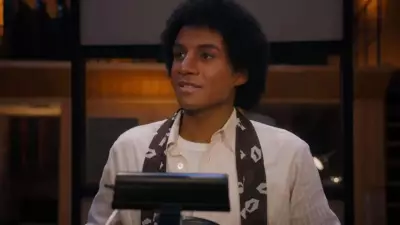
The Bollywood film Tere Ishk Mein, starring Dhanush and Kriti Sanon, arrived in theatres with a promising premise but delivered a deeply problematic narrative. Released on December 4, 2025, the Aanand L Rai directorial venture attempts to dissect the trope of the angry, volatile male protagonist but ultimately ends up celebrating the very toxicity it claims to critique.
A Promising Premise Derailed
In an era dominated by films like Arjun Reddy, Kabir Singh, and Animal, Tere Ishk Mein initially positioned itself as a bold examination of toxic masculinity. The story introduces Shankar, played by Dhanush, a man whose rage stems from a childhood trauma where he witnessed his mother burn to death due to his inability to afford her treatment. He is portrayed as broken, volatile, and prone to violence, as seen when he beats a student over a college election.
Enter Mukti, portrayed by Kriti Sanon, a PhD scholar who believes she can clinically erase anger from the human psyche. She chooses Shankar as her subject, setting the stage for what could have been a sharp psychological drama. However, the film quickly abandons logic and ethics for a cringe-inducing romanticization of abuse.

Where Therapy Becomes a Toxic Game
The first major red flag is Mukti's character. Despite her academic credentials, her actions are shockingly immature and unethical. After slapping Shankar for bullying, his creepy response—“Apna toh roz ka hai, par sundar ladki roz kaha milti hai”—is met with a smile from her and even a policeman. This moment establishes the film's troubling core: abuse is flirtation.
Mukti exploits Shankar's emotional vulnerability for her research, confusing his obsessive affection for therapeutic progress. In a bizarre twist, she agrees to take him to a hotel room after he demands physical intimacy in exchange for submitting to a slap from a bus driver he assaulted. The film's portrayal of psychological treatment is not just inaccurate; it is dangerously simplistic and ethically bankrupt.
Shankar, meanwhile, is consistently romanticized. His outbursts are excused, and his toxic behavior is framed as a byproduct of his tragic past and deep passion. The narrative grants him a heroic, redemptive arc, transforming him into an Air Force pilot who dies a martyr's death, with the film concluding with the line: “Humari generation aakhri hogi jo pyaar karne ki himmat ki hogi.”
The Real Victim: Narrative Logic and Agency
The most significant failure of Tere Ishk Mein lies in its handling of Mukti's character. Instead of a rational psychologist, she is stripped of all agency and common sense. She enables Shankar's toxicity, leads him on for the sake of her thesis, and makes bewildering decisions, like inviting him to meet her parents.
When her father finally calls the police, the film deflects accountability through a tragic monologue from Shankar's father, played by Prakash Raj, who dies immediately after. Shankar curses Mukti, vanishes, and she spirals into alcoholism, breaks her marriage, and remarries a former suitor—all influenced by Shankar's absurd curse about her future son. This plotline defies all logical storytelling.
The film had a genuine opportunity to offer an antidote to the Animal era and provide a critical lens on alpha male aggression. Instead, it glorifies both Shankar's violence and Mukti's disastrous choices. While the performances, particularly by Prakash Raj, are impactful, the story is a profound letdown.
Ultimately, Tere Ishk Mein reduces a complex psychological premise to a toxic love story, turning its female lead into a punchline and failing its audience. It reinforces the very destructive tropes it promised to dismantle.