The Unseen Turning Point in Hollywood's Greatest Comeback Story
In Hollywood, narratives of comebacks are often polished for awards season with glossy publicity campaigns. However, the genuine turning points typically occur far from the spotlight—on film sets between takes, in quiet moments that never reach the tabloids. One such profound story involves Val Kilmer and Robert Downey Jr., a tale that resurfaces whenever discussions turn to second chances and the true meaning of friendship during someone's darkest hours.
The Backdrop: Robert Downey Jr.'s Industry Exile
Rewind to the early 2000s, before Oscar glory and the Marvel Cinematic Universe transformed his career. Robert Downey Jr. found himself virtually blacklisted by Hollywood. A series of drug-related incidents and public meltdowns had severely damaged his professional credibility. Most industry insiders had written him off, avoiding association with the troubled actor. Yet, Val Kilmer stood apart from the crowd, refusing to abandon his colleague.
Kilmer's Quiet Act of Solidarity on Set
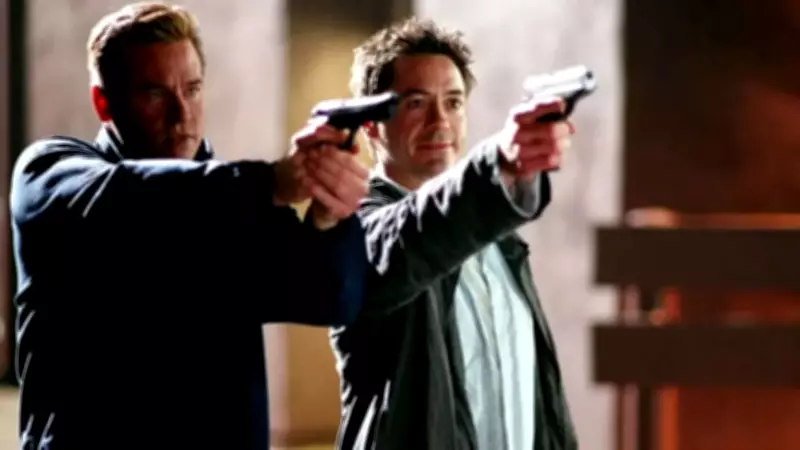
According to Fandom Wire, the pivotal moment occurred in 2005 during the filming of 'Kiss Kiss Bang Bang.' Kilmer, despite his iconic roles, carried an undeserved reputation for being difficult to work with. On this particular set, he transformed into an unexpected lifeline for his co-star.

Understanding that Downey was fighting daily battles with sobriety during his recovery journey, Kilmer made a simple yet powerful decision: he completely abstained from alcohol throughout the production. This might seem insignificant, but on movie sets of that era, alcohol consumption was often part of the routine social fabric. By voluntarily removing this temptation, Kilmer created a safer environment that supported Downey's fragile recovery process.
This quiet gesture, never publicized in entertainment media, likely contributed more to Downey's stability than any headline could have achieved. For someone clinging to sobriety by their fingertips, such consideration can mean the difference between relapse and recovery.
On-Screen Chemistry Masking Deeper Support
The professional collaboration between the two actors produced remarkable on-screen chemistry. Their improvisational energy became legendary, with Downey once remarking, "He's Val goddamn Kilmer" when describing their creative dynamic. The actor recalled specific moments where Kilmer's spontaneous lines enhanced scenes, such as when his character deadpanned, "Throw it in that clump of dry bushes, you moron" during a cigarette disposal exchange.
Their extensive script improvisations reportedly frustrated director Shane Black, but beneath the comedic surface existed genuine mutual respect. Kilmer himself noted the unique dynamic, stating that playing opposite Downey's intentionally dim-witted character allowed for particularly entertaining exchanges since the intelligent actor couldn't verbally retaliate in character.
Beyond the visible camaraderie, Kilmer's most significant contribution remained invisible to audiences. He wasn't merely performing scenes; he was actively constructing a stable, supportive environment for a colleague whose personal life remained tumultuous.
The Depth of Downey's Struggle and Recovery
To fully appreciate Kilmer's support, one must understand the severity of Downey's addiction challenges. As reported by People magazine, his substance abuse issues weren't a mere Hollywood "bad boy" phase. Exposure began shockingly early at age six, and despite critical acclaim for performances like 'Chaplin,' his career derailed through repeated arrests, rehab cycles, and squandered opportunities between 1996 and 2001.
The actor served prison time, faced numerous failed drug tests, and watched Hollywood doors slam shut. He lost professional opportunities, personal trust, and nearly all hope for redemption. His recovery involved gradual, painstaking steps through multiple rehabilitation programs, with small acting roles slowly returning by 2003.
'Kiss Kiss Bang Bang' represented a crucial milestone. While not a box office sensation, the film demonstrated Downey's professional reliability and, importantly, saw him complete filming with his sobriety intact—partly thanks to Kilmer's unobtrusive support system.

The Career Resurrection That Followed
The momentum continued building until 2008's 'Iron Man' not only resurrected Downey's career but launched the entire Marvel Cinematic Universe. His portrayal of Tony Stark—a brilliant, flawed character seeking redemption—mirrored his personal journey in compelling ways that resonated with global audiences.
Subsequent roles in 'Sherlock Holmes,' 'The Avengers' series, and more recently 'Oppenheimer' showcased expanding range and depth beyond mere charisma. His Oscar-winning performance in Christopher Nolan's biographical drama finally cemented a comeback that felt authentically earned rather than manufactured by publicity machines.
This remarkable journey from industry exile to Academy Award winner contains many chapters, but the quiet solidarity shown by Val Kilmer during a critical transitional period remains one of its most human and impactful moments—a testament to how unseen support can help rewrite Hollywood destinies.