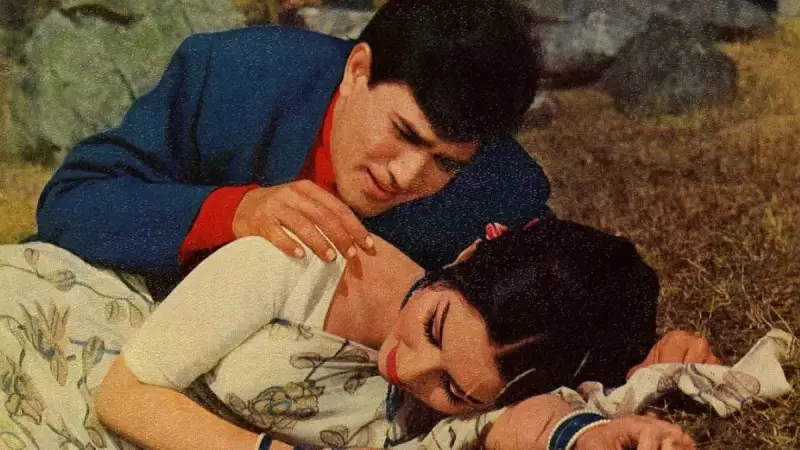
The legendary film Aradhana, which cemented Rajesh Khanna's status as India's first superstar, almost had a very different narrative. In a fascinating piece of cinematic history, the film's celebrated director, Shakti Samanta, initially conceived the movie with a double role for its leading man. However, in a crucial creative decision, this idea was ultimately abandoned, shaping the film into the classic we know today.
The Original Vision: A Tale of Two Roles
According to historical accounts, Shakti Samanta's original script for Aradhana featured a compelling double role for Rajesh Khanna. The plot was structured around the story of an Air Force pilot and his look-alike. The pilot, played by Khanna, would tragically die in an accident, and the narrative would then introduce his doppelganger. This second character was intended to enter the life of the pilot's lover, portrayed by Sharmila Tagore, creating a complex web of emotion, mistaken identity, and unresolved love.
This concept was a popular trope in Indian cinema of the era, offering actors a chance to showcase range and audiences a thrilling dramatic device. For the young Rajesh Khanna, who was on the cusp of unparalleled fame, it presented an opportunity to play two distinct characters in a single, high-profile project.

The Pivotal Decision: Why Samanta Changed Course
Despite the potential of the double-role plot, Shakti Samanta, a filmmaker known for his strong storytelling instincts, began to have reservations. He felt that introducing a second character who merely resembled the deceased hero could dilute the powerful emotional core of the story. The central theme of enduring love and sacrifice, embodied by Sharmila Tagore's character Vandana, risked being compromised by a contrived coincidence.
Samanta realized that the film's true strength lay in the poignant journey of Vandana. Her story—of loving a pilot, losing him, raising their child alone under societal pressure, and facing immense hardship—was profoundly moving on its own. The director concluded that a look-alike plot might shift the focus from her powerful saga to mere melodramatic convenience, potentially weakening the audience's emotional connection.
Therefore, in a decisive move, Shakti Samanta dropped the double role concept entirely. He rewrote the script to have the hero, Arun, die definitively. The rest of the film then focused solely on Vandana's resilience and the later storyline involving her son, who grows up to also be played by Rajesh Khanna. This critical rewrite solidified the film's structure as a moving maternal drama rather than a twin-separation thriller.
The Aftermath: A Decision That Defined a Classic
The impact of this decision cannot be overstated. Released in 1969, Aradhana became a monumental blockbuster. It catapulted Rajesh Khanna to unprecedented superstardom, creating a hysterical "Khannamania" across the nation. Songs like "Mere Sapno Ki Rani" and "Roop Tera Mastana" became eternal anthems. Sharmila Tagore's performance was hailed as a career-defining act.
More importantly, the film's focused narrative, centered on sacrifice and a mother's love, resonated deeply with Indian audiences. It established a successful template for many future dramas. Had the double role been retained, the film's legacy might have been that of a well-made entertainer, but likely not the cultural touchstone it became. Shakti Samanta's choice to streamline the story ensured that Aradhana's emotional purity remained intact, allowing its themes to connect on a much deeper level.
This behind-the-scenes anecdote highlights the importance of directorial vision in filmmaking. It serves as a reminder that sometimes, the most powerful stories are the simplest ones, and that a bold decision to remove a flashy element can be the key to creating enduring art. The legacy of Aradhana and the stardom of Rajesh Khanna were, in part, shaped by a concept that was left on the cutting room floor.