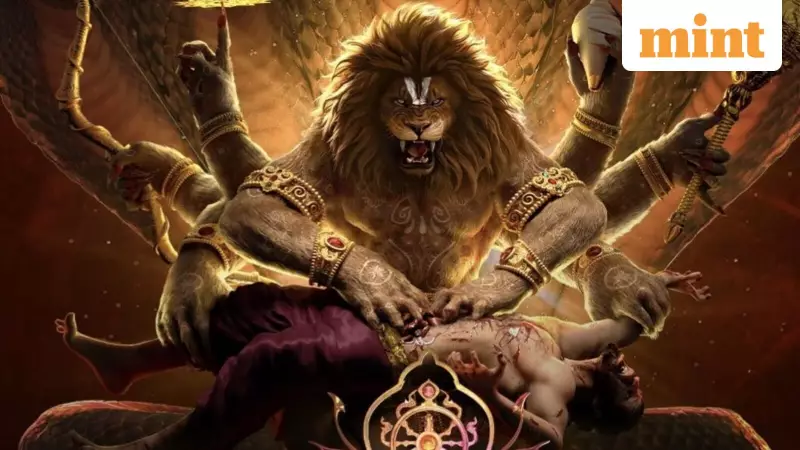
The Indian film industry is witnessing a seismic shift, powered not by live-action stars but by animated deities. The unexpected, monumental success of Mahavatar Narsimha, an animated mythological epic, has shattered long-held beliefs about animation's commercial potential in the country. Released quietly in July 2025 without promotional campaigns, the film stunned the trade by grossing a staggering ₹300 crore at the domestic box office.
A Historic Triumph for Indian Animation
This achievement marks a definitive turning point. Historically, animated features in India struggled to cross the ₹20-30 crore mark, often relegated to the 'cartoons for kids' category. Mahavatar Narsimha, presented by the powerhouse studio Hombale Films (known for the KGF franchise), has rewritten the rules. Its viewership grew organically through word-of-mouth, particularly in small towns, proving a deep, latent demand for culturally resonant stories told in a modern visual format.
The film's success underscores a crucial insight: combining mythology with high-quality animation can attract adults and families, creating a broad-based appeal. This taps into a shared cultural identity, similar to live-action historical hits. Furthermore, animation offers practical advantages, sidestepping the exorbitant costs of star fees, elaborate costumes, and sets needed for live-action mythological authenticity, while also avoiding controversies over visual interpretations of deities.

The New Creative and Business Playbook
Industry leaders see this as the beginning of a new wave. Gautam Dutta, CEO of PVR Inox Ltd, highlights a clear creative shift towards reimagining mythology through modern animation. This approach connects with younger, globally-aware audiences while preserving cultural roots. The Ormax Cine Sense: 2023 report already identified mythology as a top-five genre for Hindi theatrical audiences, validating this direction.
On the technical front, the landscape has transformed. Bhuvanesh Mendiratta of Miraj Entertainment Ltd notes that Indian studios now have access to world-class technology, including AI-assisted tools, advanced rendering, and motion capture. Collaborations with international teams are enhancing production quality. Cinemas are supporting this by offering animated films premium formats like IMAX and 4DX, treating them as cinematic spectacles equal to live-action blockbusters.
From a business perspective, mythology's universal appeal across age and language, combined with animation's visual grandeur, creates a potent recipe for box office success. Inspired by this win, a slate of animated mythological projects has been announced, including Chiranjeevi Hanuman and Jai Santoshi Mata, with the makers of Mahavatar Narsimha planning a multi-part franchise.
Challenges and the Road Ahead
Despite the euphoria, trade experts urge caution. Past live-action mythological ventures like Brahmastra and Adipurush faced challenges in delivering adequate returns. There is also a risk of audience fatigue with a sudden surge in similar content across both animation and live-action. Devdatta Potnis, a content strategist, points out that the historical lack of a robust animation viewership culture in India for domestic content—and the perception of cartoons being solely for children—are hurdles that are only now being overcome.
However, the triumph of Mahavatar Narsimha has fundamentally challenged these notions. By proving that a well-told, culturally rooted story in animation format can achieve historic commercial success, it has set the stage for Indian animation to finally claim its place in mainstream cinema. The industry now has a proven template, advanced technology, and an eager audience, signaling that this big moment for Indian animated storytelling is just beginning.