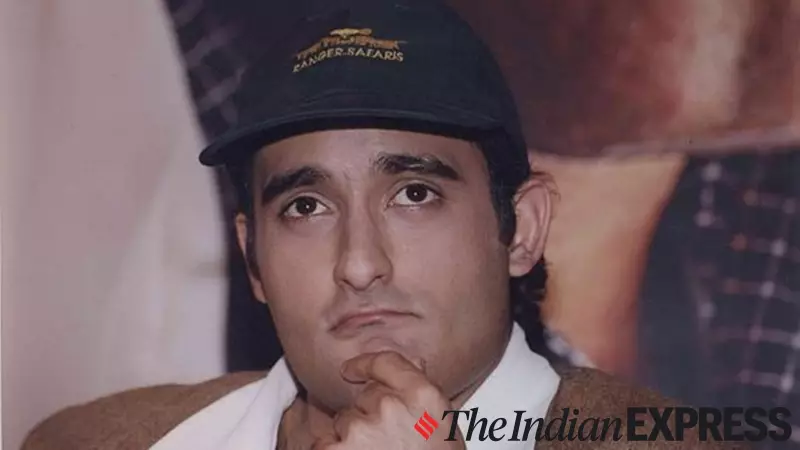
Akshaye Khanna's Frustration with Marriage Questions: A Candid Revelation
Bollywood actor Akshaye Khanna, known for his roles in films like Dhurandhar, has openly expressed his irritation with the persistent inquiries about his marital status. At 50, the actor has faced countless questions about when he plans to tie the knot, leading to a sense of frustration that he has not shied away from sharing.
'After Salman Khan Gets Married, I Will': A Sarcastic Retort
In a 2012 interview with Faridoon Shahryar, when Khanna was 36, he revealed his annoyance with strangers probing into his personal life. 'It's so irritating when people who you don't even know are asking you about when you'll get married. It's irritating,' he stated. To deflect such questions, he quipped, 'I said that after Salman Khan gets married, I will. Just to avoid this topic.' This sarcastic remark highlights his desire to steer clear of societal expectations.
Embracing Solitude and Avoiding Responsibility
Khanna elaborated on his life choices, emphasizing his preference for a responsibility-free existence. 'I don't like responsibility in my life. There is no bigger responsibility than having children. There is no bigger responsibility than being responsible for a wife, for a family. That's the ultimate responsibility for any man. I don't want that responsibility,' he explained. He added, 'I'm happy alone. No responsibility. Nobody has to worry about me. I only have to worry about myself. Fantastic life I have got. Why should I spoil that?'

He did leave room for possibility, noting, 'After a few years, if I feel I want to get married, and if I fall in love with someone, if I find the correct, beautiful woman, then I can think about it.' However, at 36, he questioned the pressure, saying, 'Why do you guys want to spoil my life? I'm just living life for myself. Why should I change that?'
Marriage Is Not for Me: A Firm Stance
In a 2018 interview with Vickey Lalwani, Khanna reinforced his stance, clarifying that his views are not a rejection of marriage as an institution but a personal choice. 'Not that I don't believe in the institution of marriage. Marriage is not for me. That I know for sure,' he asserted. He pointed to the unpredictability of relationships, stating, 'Tomorrow, your wife can leave you, or a husband can leave the wife. I like my own space.' This reflects his desire for independence and self-reliance.
Psychological Insights: Societal Pressure and Personal Autonomy
Psychotherapist and life coach Delnna Rrajesh sheds light on the psychological implications of such societal interrogations. 'The irritation is not about the question alone,' she shares. 'It is about the repeated invalidation of autonomy. When strangers feel entitled to interrogate someone's life choices, the message being conveyed is simple. Your contentment is not trusted unless it resembles the norm.'
Responsibility: Romanticized vs. Realistic
Delnna emphasizes the importance of honest discussions about responsibility. 'Many people enter marriage and parenthood without ever being allowed to say what they truly feel about it. Responsibility is romanticized, moralized, and glorified, but rarely discussed in terms of temperament, capacity, or desire,' she explains. 'Not everyone is wired to hold the emotional, relational, and logistical weight that comes with being responsible for a partner and children. Acknowledging that truth is not selfish. It is being self-aware.'
Challenging Societal Norms
She notes that problems arise when society insists on a single model of adulthood, labeling alternatives as avoidance or immaturity. 'Marriage does not guarantee stability. Commitment does not immunize against loss, separation, or loneliness,' Delnna asserts. 'Some individuals are acutely aware of this and choose a life in which they take responsibility only for themselves, rather than risk resentment, burnout, or emotional withdrawal later. This is not cynicism. It is realism.'

Delnna highlights that many single adults are exercising discernment, not avoiding responsibility. 'They understand the weight of commitment and refuse to take it lightly. This is a form of integrity that deserves respect, not interrogation,' she says.
The Damage of Constant Pressure
The constant need to justify one's choices can be damaging. 'Repeated questioning communicates that contentment outside marriage is suspicious. Over time, this creates irritation, defensiveness, and withdrawal, not because the individual is insecure, but because their boundaries are being repeatedly crossed,' Delnna elucidates.
Evolving Perspectives on Adulthood and Fulfillment
Delnna calls for a societal evolution in understanding adulthood. 'Marriage is one path, not the path. Responsibility can be shared or singular. Fulfillment can be relational or solitary. None of these are moral failure,' she states. 'The more psychologically healthy approach is simple. Let people choose the life that fits their temperament, values, and nervous system. Trust that adults are capable of knowing what sustains them.'
Akshaye Khanna's candid reflections serve as a reminder that personal happiness and fulfillment are subjective, and societal pressures should not dictate individual choices. His story encourages a broader acceptance of diverse life paths, where contentment is measured by personal satisfaction rather than conformity to traditional milestones.