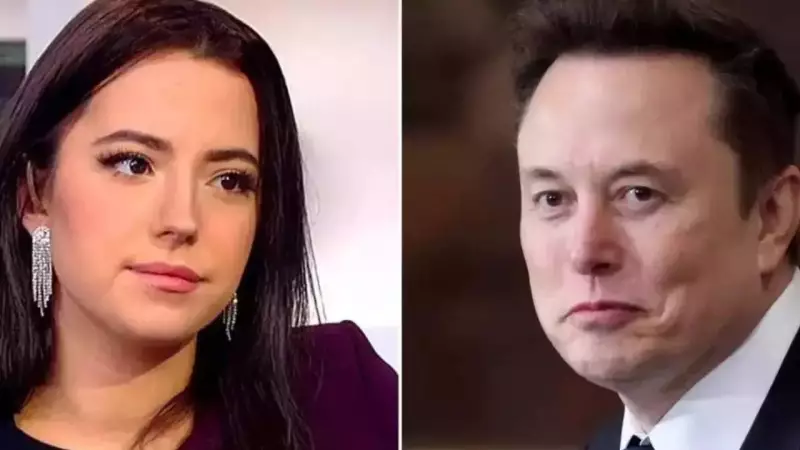
Ashley St Clair, the woman who publicly claimed to be the mother of Elon Musk's 13th child, has embarked on a public explanation for her recent ideological shift. Using Musk's own platform, X, she began detailing her turn towards 'woke' politics, a move that came after a series of confrontations involving the platform's AI, Grok, and the subsequent cancellation of her premium subscription.
The Spark: A Clash with Grok AI and Account Downgrade
The sequence of events that led to Ashley St Clair's vocal new stance appears to have been triggered by her criticism of X's AI chatbot, Grok. She called out the AI for generating sexualized images, an action that was soon followed by her losing her verified blue tick and having her premium subscription canceled. This demotion on the platform seemingly became a catalyst, prompting her to start speaking out on a range of socio-political issues, including the H-1B visa program and transgender rights.
When social media users labeled her a "bitter ex," St Clair was quick to defend her credibility. She pointed to her historical stance on H-1B visas as proof of her consistent, principle-driven opinions. "It's really funny cause I was very publicly opposed to Elon on H1B in December 2024, months before the public scandal," she wrote on X. She argued that she wasn't called bitter then because her position was "objectively correct" and critics lacked "talking points" against her at the time.

Revisiting Her December 2024 H-1B Critique
What exactly was Ashley St Clair's position in December 2024? The context was a significant political controversy. The incoming Trump administration was embroiled in a major debate over the H-1B visa program. While figures like Elon Musk expressed support for the program—provided its abuses were curbed—and Trump also seemed favorable, St Clair offered a critical insider's perspective.
In a detailed post from that period, she explained the mechanics of what she described as "visa body shops" in the tech job market. She alleged that these firms, often run by former hiring managers from major tech companies, exploit the system. Her claim was that an H-1B worker might be paid only $40 an hour for a job officially listed with a $200,000 annual salary, with multiple middlemen pocketing the difference.
She described a process where these agencies bring workers to America, house multiple people in single apartments, provide basic training, and then place them in jobs while retaining a large portion of their earnings. This critique, made months before her personal scandal with Musk became public, forms the backbone of her argument that her views are not newly minted out of bitterness.
Addressing Past Transphobia and a Connection to Musk
Ashley St Clair's newfound advocacy for transgender rights faced immediate scrutiny, with users reminding her of her past transphobic comments. In her response, she directly referenced Elon Musk's trans daughter, Vivian Jenna Wilson, calling her "my son's sister." This phrasing notably reinforced her claimed familial link to Musk through their son, Romulus.
She expressed regret for her previous actions. "I feel immense guilt for my role. And even more guilt that things I have said in the past may have caused my son's sister more pain," St Clair wrote. She added that while she doesn't fully know how to make amends, she has been trying "incredibly hard privately to learn + advocate for those within the trans community that I've hurt."
However, this attempt at reconciliation was met with skepticism online. Many observers noted how she swiftly tied her apology to her connection with Elon Musk. The overall verdict from social media commentators has been that her sudden 'woke' calling is seen as an attempt to regain relevance. It is noteworthy that Elon Musk has rarely acknowledged Ashley St Clair since her 2025 claim about being the mother of his 13th son.
The saga presents a complex picture of personal grievance, platform politics, and public ideology. Whether Ashley St Clair's explanations will alter public perception remains uncertain, but her story underscores how personal disputes on social media can quickly escalate into broader debates on immigration, technology, and human rights.