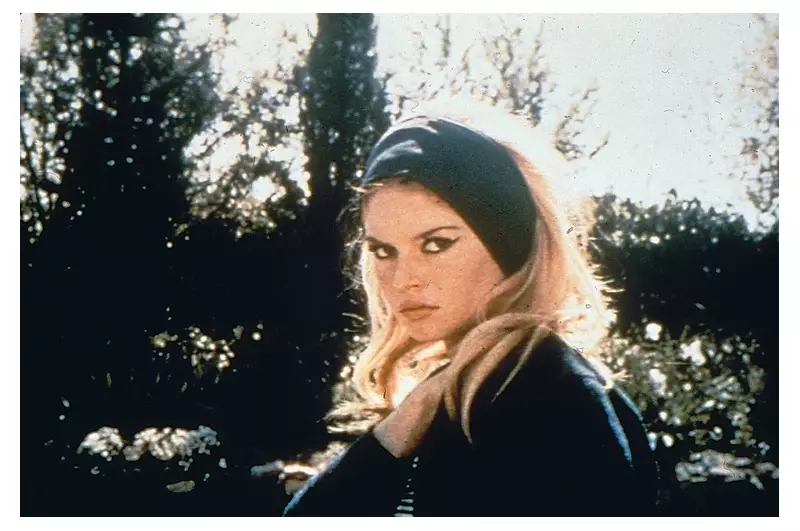
The recent passing of French film legend Brigitte Bardot at the age of 91 has reignited a complex conversation about her legacy. Bardot, who died on Sunday, was not just a global sex symbol but a cultural force who redefined female sexuality in the post-war era, only to later embrace a controversial and reactionary political stance.
From National Symbol to Global Rebel
In the 1960s, the French government made a striking decision. They chose Brigitte Bardot, the cinema's ultimate symbol of untamed sexuality, as the new model for Marianne. This allegorical figure has represented the French Republic's values of "Liberty, Equality, Fraternity" since the revolution. This act formally cemented Bardot's image as synonymous with France itself.
Her rise began in the early 1950s. With her signature voluminous blonde hair and bold winged eyeliner, she became the embodiment of a newfound liberation after years of wartime austerity. Her global stardom exploded in 1956 with the film ...And God Created Woman, directed by her then-husband Roger Vadim. Portraying a woman who danced barefoot and pursued desire openly, Bardot's audacity felt revolutionary in a world bound by rigid propriety.

She became one of the most photographed women alive, made nearly 50 films, recorded hit songs with Serge Gainsbourg, and defined the internationally copied "Bardot look."
A Liberation That Was Personal, Not Political
Philosopher Simone de Beauvoir recognised Bardot's subversive power early. In a 1959 essay, "Brigitte Bardot and the Lolita Syndrome," de Beauvoir argued that Bardot's startling naturalness and indifference to judgement threatened the myths governing women's lives. "As soon as one myth is touched, all myths are in danger," de Beauvoir wrote.
However, Bardot herself never embraced feminism. She framed her stardom as a personal triumph. In a bold move, she retired from acting in 1973 at the peak of her career, aged just 38, seen as a final assertion of control. She retreated to Saint-Tropez and channelled her energy into animal rights activism, founding the Brigitte Bardot Foundation in 1986. She lobbied presidents and campaigned fiercely against seal clubbing and the fur trade.
The Fatal Turn: From Icon to Controversial Figure
Over time, her moral fervour took a dark turn. Bardot began to suggest animals were more deserving of care than certain people. From the 1990s, she aligned openly with France's far-right, first with Jean-Marie Le Pen's National Front and later Marine Le Pen's National Rally.
French courts convicted her five times for inciting racial hatred. In 2022, she was fined €40,000 for derogatory comments about the people of Réunion. Muslims and immigrants were frequent targets of her scorn.
Her hostility extended to feminism. She dismissed the #MeToo movement as a witch hunt, defended convicted actor Gérard Depardieu, and bluntly stated in an interview, "Feminism isn't my thing. I like men." When challenged that one could be both, she sharply replied, "No."
A Legacy of Contradiction and a Cautionary Tale
This late-life bigotry is not a betrayal of her youthful image but a continuation of its core principle. Bardot's revolution was always a revolution of the self. She championed personal autonomy and freedom over collective equality and justice. This explains the paradox: an icon of sexual liberation became a pillar of reactionary politics. She dismantled constraints on female sexuality while fiercely defending hierarchies of race, nation, and power.
De Beauvoir's hopeful words now ring with irony: "I hope she will mature, but not change." Bardot did not change.
Her story illuminates an uncomfortable pattern in women's struggles, where hard-won visibility and autonomy are sometimes secured by distancing from other women deemed improper or undeserving. Bardot made women's desire visible and casual in a repressive era, and for that, she remains a landmark. Yet, her life ultimately teaches that autonomy without solidarity is a dead end. She taught a generation to wear freedom lightly but never learned that meaningful freedom must be shared. That was her defining limit.