For years, technology promised to save time. Yet for many people, it has had the opposite effect. The workday no longer ends when office hours are over, messages continue long after meetings are done, and even a short break can come with the pressure of staying reachable.
Against that backdrop, a LinkedIn post by a Mumbai-based CEO is drawing attention online, not because of a business announcement, but because of what happened when he stepped away from it all.
For more than two weeks, he cut himself off from emails, calls, WhatsApp, social media, and even the news. When he finally logged back in, there were thousands of messages waiting for him and countless updates to catch up on. But the observation he shared after returning was surprisingly simple, and it is the reason his post is resonating with so many people.

Choosing to go completely offline
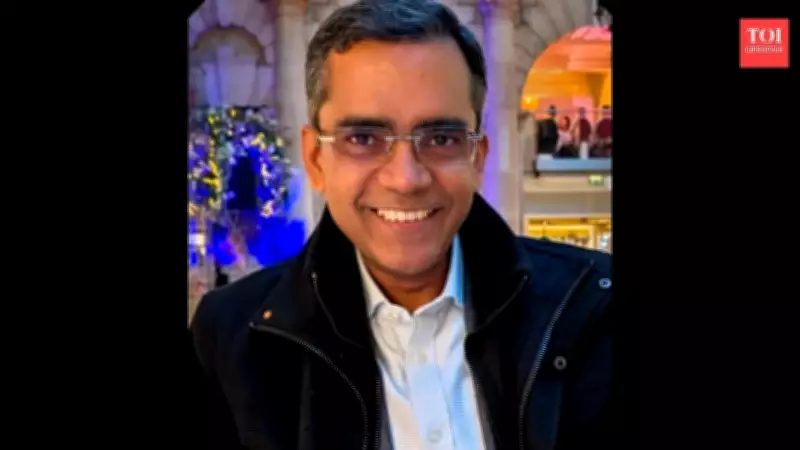
Jairam Sridharan, Managing Director and CEO of Piramal Finance, recently shared on LinkedIn that he spent 16 days away from all forms of work-related communication.
Instead of checking notifications or staying updated, he dedicated the time entirely to family and friends. Explaining how he approached the break, he wrote: “Returned to ‘normal life’ yesterday night, after a 16-day break. Per my usual custom, for these 16 days I did not access email, didn't pick up any calls, stayed away from WhatsApp, didn't engage in any social media chatter, didn't watch the news ... Basically avoided anything that could remotely bring me back to 'work mode'. Dedicated the time fully to family and friends, and our time together.”
Thousands of notifications waiting on his return
After 16 days, Sridharan switched his devices back on and found a huge backlog waiting for him.
According to his post, he had around 3,000 unread WhatsApp messages, nearly 2,000 emails, and hundreds of missed calls. Some of those calls had come from his boss and the company's partner.
A number of developments had also taken place during the time he was away. Reflecting on those events, he wrote: “May's month end drill came and went. My absence made no difference. RBI made some big ticket policy announcements on the forex side. Rupee is still at 95 though. Oil, however, seems to have fallen below $100. I don't know why, but let's not look a gift house in the mouth, shall we?”
The one thought that stayed with him
Sridharan also noted that a friend went through an important and distressing life event during the period. He mentioned that the Royal Challengers Bengaluru won IPL 2026 and that the road outside his house was dug up.
But among everything that had happened, one realization stood out. “Everything in the world has carried on just fine without me.” That, he said, was the biggest takeaway from the experience.
Why he believes the break mattered
According to Sridharan, disconnecting entirely does involve certain trade-offs. However, he believes the chance to be fully present with loved ones is worth it. He wrote: “Device and interruption free time does entail some costs, some sacrifices. But the ability to be 100% present with your family for two weeks? Priceless.”
Social media users relate to the message
One user wrote: “At a time where distractions are all around us, being able to switch off completely for that long and getting the time for yourself and family, feels like a superpower!”
Another commented: “yes, unplugging has a cost but it’s measurable and recoverable. The benefits, on the other hand, are intangible and irreplaceable. Maybe the real lesson is not just taking these breaks once in a while, but normalizing boundaries even in ‘regular mode’”
A third user added: “What stood out to me is that your absence didn't stop the world, but your presence likely meant everything to the people you spent those 16 days with. In a culture that celebrates constant availability, being fully present may be one of the most underrated forms of success.”
Disclaimer: The views expressed in the social media comments quoted in this article are those of individual users and do not necessarily reflect the views of this publication.