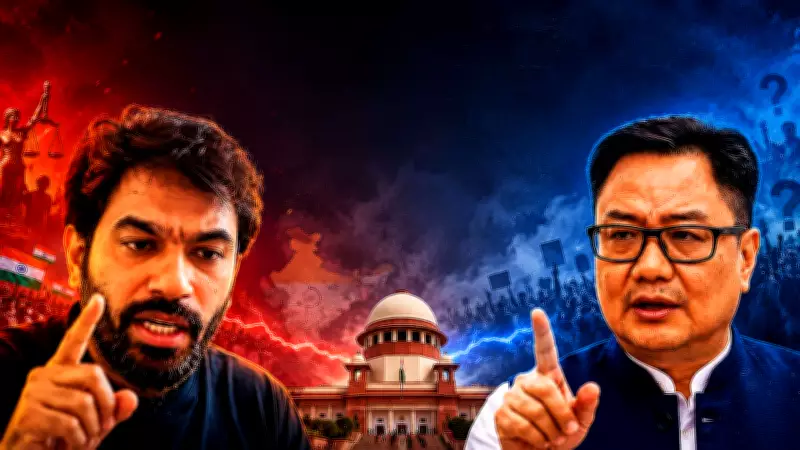
A major online political controversy has erupted after Union Minister Kiren Rijiju hinted that the rapidly growing Cockroach Janta Party was drawing support from Pakistan and "George Soros networks." Founder Abhijeet Dipke responded by releasing audience analytics allegedly showing that over 94% of followers are Indian users.
The movement, which gained momentum during the NEET-UG paper leak protests, has now become a flashpoint in debates around student anger, digital activism, political satire, and social media mobilisation.
Dipke, in a detailed rebuttal, presented data from social media platforms indicating that the vast majority of the party's online followers are based in India, contradicting Rijiju's claims of foreign interference. He accused the minister of attempting to discredit the party's legitimate concerns over education reform and corruption.

Background of the Controversy
The row began when Rijiju, during a public address, suggested that the sudden rise of the Cockroach Janta Party could be linked to external forces seeking to destabilise India's political landscape. He specifically mentioned Pakistan and networks associated with billionaire philanthropist George Soros, without providing evidence.
Response from the Founder
Abhijeet Dipke, a former student activist, released a statement along with graphical analytics showing that out of the party's 2.5 million online followers, over 94% have Indian IP addresses. He challenged Rijiju to provide proof for his allegations or retract them.
"We are a grassroots movement of angry students and citizens demanding accountability in the education system. To label us as foreign agents is an insult to the millions of Indians who support us," Dipke said in a press conference.
Political Implications
The controversy has escalated into a broader debate about the role of satire in politics and the government's response to student protests. The Cockroach Janta Party, known for its humorous branding, has gained significant traction among young voters disillusioned with traditional parties.
Political analysts suggest that Rijiju's comments may be an attempt to discredit the party before upcoming state elections, where student issues are expected to play a key role. However, the move has backfired, with many accusing the minister of suppressing dissent.
Social Media Reaction
On platforms like X and Instagram, the hashtag #CockroachJantaParty trended for hours, with users mocking Rijiju's allegations. Memes and videos comparing the party's growth to a "cockroach infestation" went viral, further amplifying the movement's reach.
Dipke has called for a public debate with Rijiju to settle the matter, but the minister has not yet responded. The incident highlights the growing influence of digital activism in Indian politics and the challenges faced by authorities in countering online movements.