During a hearing on social media criticism of the judiciary, Chief Justice of India Surya Kant remarked that some unemployed youngsters who “don't get any employment or have any place in the profession” become activists, social media users, or members of the media and “start attacking everyone.” He went on to describe such individuals as “cockroaches” and “parasites” attacking the system.
From Insult to Identity
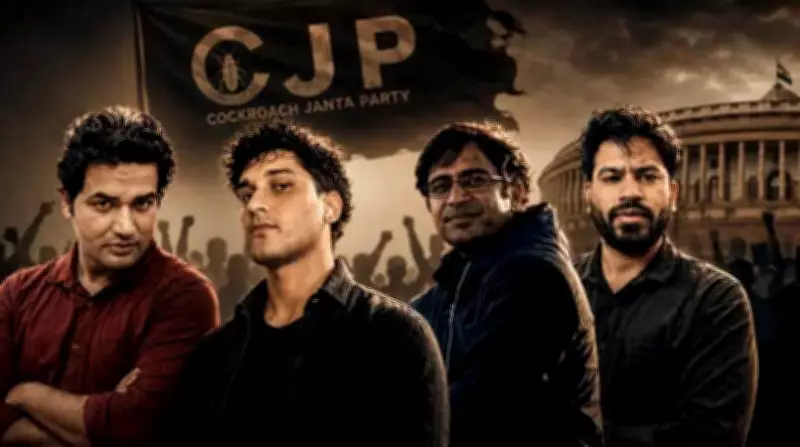
Instead of rejecting the label, a group of young Indians embraced it. What began as a social media joke soon evolved into the Cockroach Janta Party (CJP), a movement that aims to raise questions about education, jobs, and public accountability.
If the term “cockroach” was meant to describe people with little place in the system, the backgrounds of those leading the movement tell a different story. The party's founder is pursuing a master's degree in the United States. Its spokespersons include an investigative journalist, a filmmaker and researcher, and an IIT graduate who went on to study at the London School of Economics and work for a global consulting firm.

Far from being anonymous voices on social media, the people leading the Cockroach Janta Party come with resumes that would stand out in many professional circles. In short, India's self-described “cockroaches” appear to be far more educated than many might have expected.
Founder: Abhijeet Dipke
Abhijeet Dipke, the founder of the Cockroach Janta Party, describes himself as a political communication strategist whose work focuses on narrative building, public messaging, and the influence of digital platforms on politics. He studied journalism in Pune before moving to the United States for higher studies. He is currently pursuing a master's degree in Public Relations at Boston University.
His involvement in politics began years before the creation of CJP. Between 2020 and 2023, he volunteered with the Aam Aadmi Party's social media team. During the 2020 Delhi Assembly elections, he worked on meme-based online campaigns aimed at engaging younger voters. Speaking to PTI, Dipke said the sudden popularity of the movement changed his own circumstances. “Two weeks back, I was applying for jobs,” he said, describing the last fortnight as a “roller coaster ride.” According to him, the attention generated by CJP even led to job offers from multinational companies in the US and Europe, which he declined to focus on the movement in India.
Chief Spokesperson: Saurav Das
Investigative journalist Saurav Das, appointed chief spokesperson, has spent years reporting on legal, judicial, and social issues. The organization also pointed to his involvement in anti-pollution protests held at India Gate in November 2025. As chief spokesperson, Das is expected to become the primary public face of the movement as it expands its activities and prepares for upcoming campaigns.
Spokesperson: Vijeta Dahiya
Vijeta Dahiya is a political researcher, writer, filmmaker, and content creator. He studied at Delhi Technological University and has worked on research and content projects for digital creators. Dahiya has also authored two books, Power of Universe and To Hell With That Job, and directed Haryanvi films including Dararein and Opri Paraai.
Spokesperson: Ashutosh Ranka
The third spokesperson, Ashutosh Ranka, comes from a different professional background. Ranka studied at IIT Kanpur before attending the London School of Economics. He later worked with global consulting firm McKinsey & Company in London. He returned to India last year and has since been involved in campaigns related to environmental, educational, and youth issues in Jaipur.