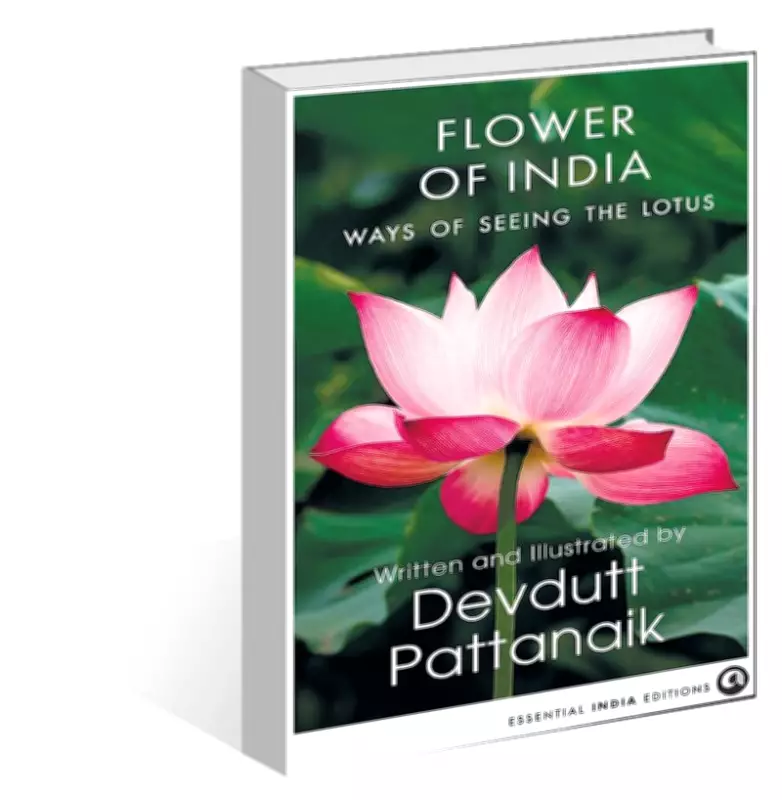
Devdutt Pattanaik's 'Flower of India: Ways of Seeing the Lotus' (Aleph, 94 pages, Rs 399) is a concise pocketbook that examines the lotus from five perspectives: botany, resource, metaphor, design, and the sacred. The book opens with a surprising revelation: the Botanical Survey of India has never officially declared any flower as the national flower, yet the lotus has long been revered in Indian imagination.
Distinguishing Lotus from Water Lily
Pattanaik clarifies the ancient confusion between the lotus and water lily, a mix-up that persisted even with Carl Linnaeus, who originally named the lotus Nymphaea foliis undique integris (waterlily with completely whole leaves). In 1696, English botanist Leonard Plukenet described it as 'the marsh-loving nut-bearing Indian waterlily with large, navel-centred leaves, prickly stalks and rose-purple flowers.' The lotus received its own genus, Nelumbo, only in 1788, thanks to German botanist Joseph Gaertner. The genus name derives from the Sinhalese nelumbo, recorded by French botanist Joseph Pitton de Tournefort in 1700, and resembles the Sanskrit nīlam.
Mythical and Philosophical Trivia
The book is rich in cultural references, including the Assamese folktale of Tejimola, a young girl killed by her stepmother, summarized in five sentences. The Lotus Sutra's philosophy is condensed into three bullet points under 'Awakening.' Pattanaik references numerous texts: Radha Tantra, Meghaduta, Kama Sutra, Mahabharata, Mahapaduma Jataka, Kathasaritasagar, Sat-cakra-nirupana, Padmasamhita, and Milindapanha. However, some citations lack specificity—'In a Vedic ritual manual' appears twice. A grammatical issue arises in 'By the Upanishad philosophical texts (500 BCE), the image moves inward,' but the author's prose often shines: 'The heart-lotus becomes the inner shrine — the small, secret space where Brahman dwells.'

Urban Legend and Conclusion
In his conclusion, Pattanaik shares an urban legend about the Bharatiya Janata Party's lotus emblem: 'The addition of water enhanced the power of the logo and contributed to the party’s success and growth.' According to the reviewer, Sarabjeet Garcha, the book's true value lies in its catalytic power, casting a wide gaze while focusing on the flower, making it a meaningful departure point for the reader's own journey.