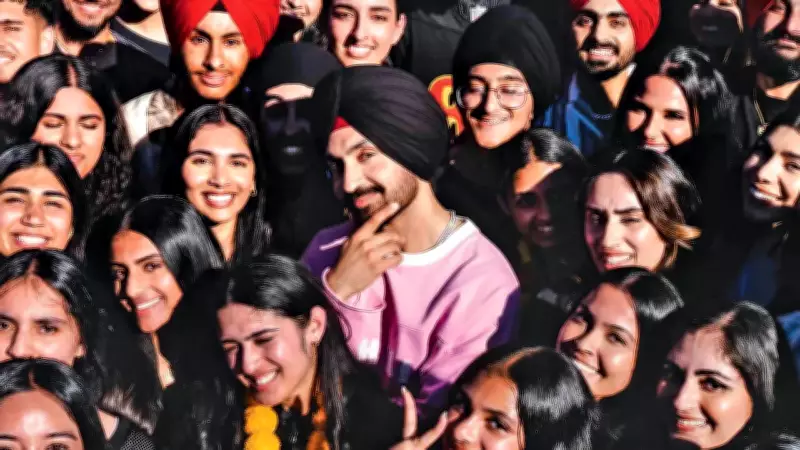
Fandoms across the globe are eager to defend their favorite artists over the smallest of things. Statements like 'My favorite band did not advocate a certain cause, they did not mean this in their song, they are perfect in everything they do' are common. We have all often defended an objectionable lyric or a song among friend groups because sometimes we oscillate between standing up for what is probably right and simply vibing to a song for entertainment. Intent can never be seen through a singular lens, but when someone like Diljit Dosanjh sings a lyric in Aroma – 'Oh mardaan di gall hundi yakke di nai… Jurta di talk hundi chhakke an di nai' – I pause and wonder how many things I am expected to defend this gentleman for.
The Problem with the Lyric
Like David Rose in Schitt's Creek once famously said, 'I have never heard someone say so many wrong things, one after the other, consecutively, in a row.' While social media and articles online are flooded with conversations about how he uses a transphobic slur in the song, there are two possible interpretations of the lyric. Yes, he compares the highest form of masculinity and then drops the slur like it is supposed to be cool. The problem is that, whether he intended it that way or not, the line lands as transphobic to many listeners. And that alone should make us uncomfortable.
Glorifying Masculinity
And what exactly is this 'mardaan di gall' that we are glorifying? Diljit is a celebrated global celebrity now. He is everywhere – Jimmy Fallon, Coachella, the Met Gala. And here we are, talking about masculinity that can only be seen in one light: hard, difficult men glorified for centuries. What is the point?

The Card-Game Defense
Another explanation, as fans have been quick to point out, is that the specific line is actually a card-game metaphor. Yakka is the ace card in Punjabi, and calling someone a yakka means they are top-tier, number one, exceptional. Chhakke also means sixes. So, according to this reading, the lyric is talking about the ace versus the six, excellence versus mediocrity. But as much as I try to defend it, I am falling short of my defenses.
Intent vs. Impact
What he meant or wanted to talk about, only the singer can explain. Intent matters. But so does impact. Even when you want to defend an artist with all the logic and explanation available, you cannot really fight some of the bizarre things they end up writing and singing. Can you defend Volume 2? Songs that even Badshah and Honey Singh have publicly distanced themselves from. What is there to fight about when it comes to the representation in Tateeree or the Hindi version of Sarke Chunar?
When Fandom Becomes Rationalization
And maybe that is the larger question – At what point does fandom stop being appreciation and become rationalization? In the fight to defend our favorite artists, we must not become the content they are selling. They are getting the money, the packed stadiums, and the truckloads of fame. We are the ones normalizing slurs, stereotypes, and objectionable lyrics because we happen to like the person singing them.
I know artists will say, 'Why are we always blamed?' and 'Why am I always wrong?' Fair enough. That is a different conversation for another day. For now, the next time you find yourself singing 'Chhoti dress mein bomb lagdi mainu,' pause and think. Don't start a fight. Just think about what we sometimes consume, excuse, and eventually defend. Because the real question is not whether our favorite artists get things wrong. They do. The question is how long we are willing to defend them when they do.