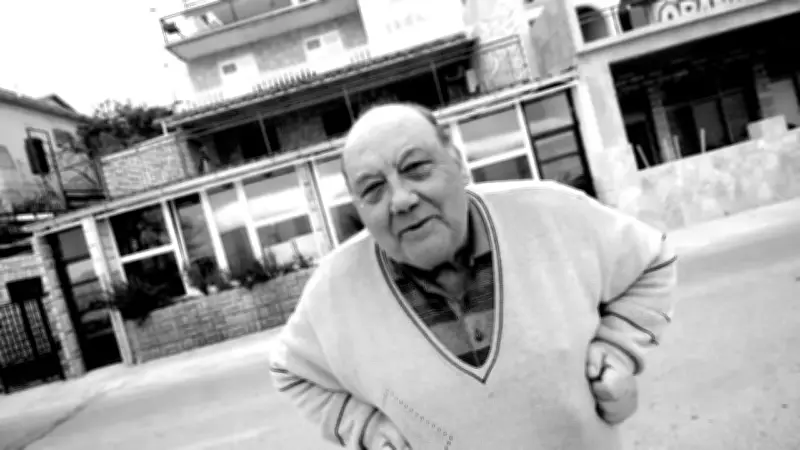
In parts of the former Yugoslavia, stories often travel faster than the records that might confirm them, carried in conversation, retold in passing, and gradually shaped into something that sits between biography and folklore. Frano Selak is one of those names that keeps resurfacing in that space. A man born in 1929 in Croatia, whose life ended in 2016, became associated with a sequence of incidents that seemed to cluster around him with unusual persistence. Not every detail has ever been pinned down in the same way, but the outline is widely repeated. A string of accidents across decades. A survival record that feels almost stitched together by improbability. And then, much later, a lottery win that added another layer to an already crowded life history.
Frano Selak: The Croatian man who reportedly survived 7 accidents and won the lottery
Frano Selak grew up in a country that was itself changing shape through much of the twentieth century. Little in his early life suggested he would become a figure people talked about far beyond his local setting. For a long time, he was simply another man moving through ordinary work, ordinary routines, and the quieter rhythms of post-war Europe. The reputation came later, almost retroactively, once accounts of his experiences began to circulate outside his immediate surroundings. What followed was less a single defining event and more a sequence of moments that, when placed together, seemed to resist easy explanation.
Repeated incidents in Frano Selak's life that led to a story of extreme luck
The first major accident in a series of unusual survival stories
The first widely repeated incident is set on a winter journey in the early 1960s. A passenger train travelling through a cold stretch of landscape left the rails and ended up in icy water. Several passengers did not survive. Selak reportedly came away with injuries, including a broken arm and the effects of prolonged exposure to the cold. There is a particular way such events settle in memory, especially when they involve large-scale disruption. For him, this was described as the beginning of a pattern, though at the time it would have simply been an accident like many others on aging rail networks of the period.

A mid-air emergency that became a defining survival account
Not long after, there is the account of his first experience on an aircraft. The story goes that during the flight a malfunction involving an emergency door led to him being pulled out mid-air. The landing, if it can be called that, was said to have been broken by a haystack on the ground below. The aircraft itself was reported to have gone on to crash, with no survivors among the remaining passengers. Whether every detail aligns perfectly across retellings is difficult to confirm, but this episode became one of the most repeated parts of his life story, often the one people mention first.
Roads, buses and recurring accidents
In the years that followed, accounts describe further incidents on land. A bus journey ending in a river after losing control on a bend. Several passengers lost in the aftermath, while Selak again survived with relatively minor injuries. These were not isolated types of events for the region or the era. Road conditions, vehicle standards, and infrastructure all contributed to accidents that were not uncommon. What made his case stand out was not the nature of each incident on its own, but their accumulation over time.
Fire incidents and failing vehicles
By the early 1970s, motor vehicles had become part of his personal history in a more troubling way. One account describes a car catching fire and him managing to exit moments before it became fully engulfed. Another refers to a separate vehicle issue involving fuel ignition and rapid destruction. He is said to have escaped each situation without life-threatening injury, though not without shock and physical marks left behind. These episodes added to the growing narrative that had begun to follow his name.

Zagreb traffic and a familiar pattern
In the mid-1990s, another incident placed him in the middle of urban traffic in Zagreb. This time it involved being struck by a bus. The injuries reported were relatively minor compared with what might have been expected. By this stage, his story had already taken on a kind of public familiarity. Each new account seemed to reinforce the earlier ones, even as he continued to live what was otherwise described as a fairly private life away from attention.
The mountain road in 1996
One of the later incidents often cited took place on a mountain road. A vehicle swerved in response to oncoming traffic, left the road, and went over a steep edge. The drop was substantial. The survival detail attached to this episode involves him escaping the car during or after the fall and ending up clinging to vegetation on the slope. It is the sort of account that is difficult to retell without it sounding exaggerated, yet it is consistently included in summaries of his life. By then, his name had already become shorthand in some circles for improbable survival.
From survival stories to an unexpected fortune in old age
In the early 2000s, at around the age of 73, he won a large lottery prize, often reported as the equivalent of around one million dollars. For a period, this shifted attention away from accidents and towards a more ordinary question of what someone does with an unexpected windfall late in life. He later withdrew from public attention. The final years were comparatively quiet. He died in 2016 at the age of 86. What remains is not a single verified narrative so much as a layered set of accounts, retold in different forms, with his name attached to a sequence of events that continue to sit somewhere between documented biography and enduring modern folklore.