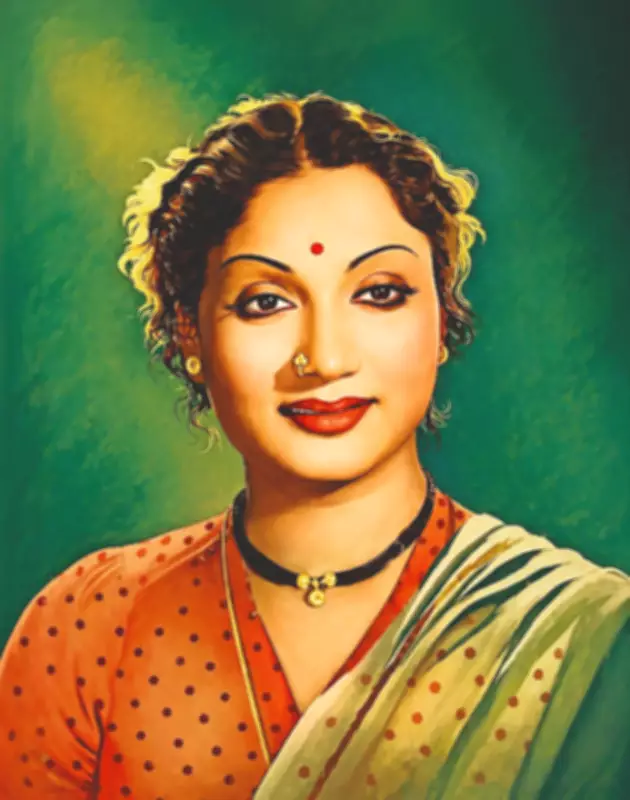
G Varalakshmi was an actress of remarkable range, capable of playing the traditional heroine, a morally ambivalent protagonist, a breezy comedienne, an unrestrained seductress, or a supporting player with shades of grey. Off-screen, however, she remained resolutely herself, a woman who lived by her passions, indifferent to social approval. That uncompromising persona earned labels such as 'rowdy' and 'crazy', often overshadowing a film career spanning about 100 Telugu and Tamil titles. Her birth centenary offers an occasion to restore that legacy to sharper focus.
Early Life and Debut
Born in Ongole, Varalakshmi was studying in a convent in Guntur when her wrestler father abandoned his wife and six children to become a wandering mendicant. The upheaval prompted the 11-year-old to flee with her brother to nearby Vijayawada, where she took to the stage. She quickly made a name for herself and caught the attention of R S Prakash, a pioneer of Telugu cinema who had trained in Europe and Hollywood. He cast her in the lead in 'Barrister Parvatheesam', part of a three-in-one Telugu film released in 1940. She was just 13.
Voice and Singing
Though no print of the film has survived, her voice endures in gramophone recordings of songs such as 'Premaiye Jagathi' and 'Poyuda Priyuda London'. She had trained in singing during her stage years under Pendyala Nageswara Rao, who would later emerge as a major composer in Telugu cinema. Varalakshmi continued to sing in her own voice in some of her films until the early 1950s. Film music archivist and her close friend V A K Ranga Rao recalled: 'Though she was no virtuoso, there was a spontaneity to her singing.'

Career Milestones
After her debut, Varalakshmi appeared in supporting roles in Telugu films such as 'Daksha Yagnam' (1941) and 'Bhakta Prahlada' (1942). A decisive turn came in 1943, when she became the second wife of K S Prakash Rao, who would go on to become a major figure in South Indian cinema. The couple had two children. Around this time, she travelled to Bombay for a Telugu film project that failed to materialise. She instead appeared in the jungle adventure 'Vanarani' (1946) and also sang in the chorus of Naushad's orchestra.
Partnership with Prakash Rao
The Varalakshmi–Prakash Rao partnership began to find fuller expression on screen with 'Drohi' (1949), a Telugu production in which they played the lead pair under the direction of L V Prasad. Varalakshmi's role — the westernised, arrogant daughter of a corrupt landlord — foregrounded themes of moral decline and redemption, a trajectory she would revisit in later years as a character artiste. In films such as 'Kuzhandhaiyum Deivamum' (1965) and its Telugu version 'Letha Manasulu' (1966), she played domineering maternal figures whose authority carried similar moral undertones. Prakash Rao, meanwhile, went on to establish himself as a director in Telugu films such as 'Modati Raathri' (1950), later helming notable successes such as 'Prema Nagar' (1971) and its Tamil adaptation 'Vasantha Maligai' the following year.
1950s and Bilingual Films
The 1950s saw a proliferation of Telugu–Tamil bilingual productions, and the Prakash Rao–Varalakshmi duo also rode this trend. Films such as 'Deeksha' (1951) and its Tamil version 'Anni', as well as 'Kanna Thalli' in 1953 and its Tamil counterpart 'Petrathaai', cast Varalakshmi in roles defined by emotional warmth and moral authority. Whether as the devoted sister-in-law whose affection reforms a wayward youth or as the self-sacrificing mother, she embodied archetypes that resonated strongly with audiences of the period. Yet, by 1960, when 'Renukadevi Mahatyam' was released, in which she again played a figure of maternal sacrifice, her personal and professional partnership with Prakash Rao had come to an end. The separation marked a turning point, after which she married the wrestler Ajit Singh. The name board at her Eldams Road residence in Madras then read 'Lakshmi–Ajit Singh'. The relationship, however, proved short-lived, and her separation from Rao is often seen as marking a downturn in her career.

Tamil Cinema Success
In Tamil cinema, Varalakshmi enjoyed a successful run, featuring in a notably romantic number with M G Ramachandran in 'Gulebakavali' (1955) and then appearing opposite Sivaji Ganesan in films such as 'Naan Petra Selvam' and 'Vazhviley Oru Naal' a year later. Around the same time, she was also paired with M K Radha in films such as 'Porter Kandan' and 'Pasavalai'. Equally at ease across contrasting registers, she moved from romantic allure to maternal warmth and to roles marked by hauteur and authority. This versatility found striking expression in parts such as the Amazonian queen in the 1957 film 'Aaravalli', produced by Modern Theatres, and as a stunt-oriented heroine in the bilingual 'Thirudargal Jagrathai' ('Dongalunnaru Jaagratha' in Telugu in 1958).
Later Career and Legacy
Reflecting on his career in later years, Rao would speak of his former wife with a mix of respect and reserve. He would describe her as a 'very good artiste', noting her selectiveness in choosing roles that carried narrative weight rather than mere glamour. He would also point to her success across languages, observing that she was willing to work in any industry so long as the role was substantial, irrespective of remuneration. In several of his films, he said, her performances exceeded his expectations. With this approach to her craft, Varalakshmi continued to find substantial character roles well into the late 1970s. In her later years, she considered making a film about her own life. This project remained unrealised following the untimely death of her son, K Siva Prakash, who was to have handled its cinematography. Telugu cinema commentator Kiran Prabha notes that she spent her final years at a farmhouse on Old Mahabalipuram Road, at times reflecting on the impulsive choices that had marked her life. Yet, as she acknowledged, they were inseparable from who she was.
Producer, Director, Star
Varalakshmi was born on September 27, 1926, and died in 2006. She is survived by her daughter Kanakadurga. Her breezy role opposite N T Rama Rao in Vijaya Vauhini's satirical comedy 'Kalyanam Panni Paar' ('Pelli Chesi Choodu' in Telugu) won critical praise. Her mercurial temperament sometimes led to clashes with co-stars; an alleged incident in which she struck actress Lakshmi Rajyam with her sandal became something of a cause celebre. She produced, directed, and acted in 'Mooga Jeevulu' in 1968; produced 'Harischandra' the same year and played the lead opposite Sivaji Ganesan. The release was delayed, and the film flopped.