Dehradun: When the Indian Military Academy's passing out parade takes place on June 13, eight women cadets will march out alongside their male counterparts for the first time in the academy's history. For Major Priya Jhingan (retd), this moment represents a milestone she helped set in motion over three decades ago with a letter to then Army chief General S F Rodrigues, requesting the inclusion of women in the Indian Army beyond medical services.
A Pioneering Journey
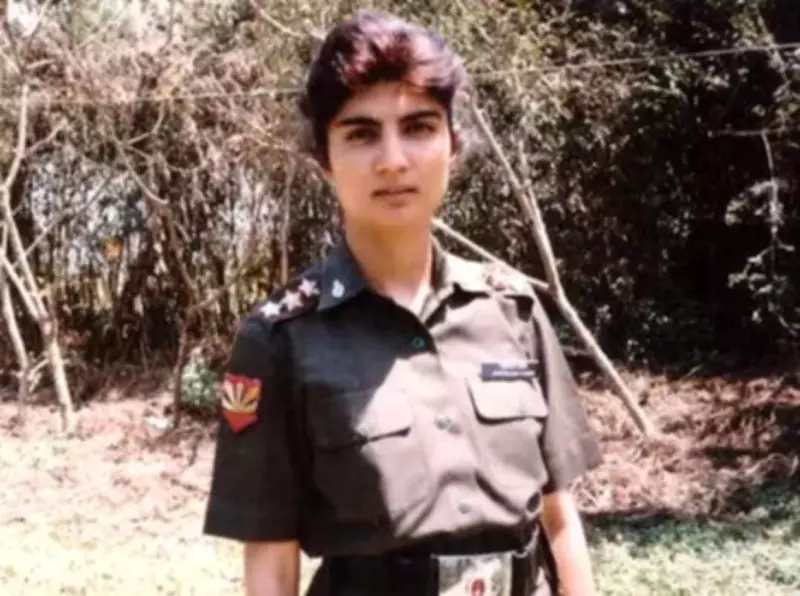
Maj Jhingan, a law graduate, joined the first batch of women cadets at the Officers Training Academy (OTA) in Chennai on September 21, 1992, with the roll number "Lady Cadet Number 1." She was among the first women officers commissioned into a non-medical branch of the Indian Army. After completing her training on March 6, 1993, she joined the Judge Advocate General's Department, which handles the Army's legal matters.
Calling the commissioning of IMA's first women cadets a "proud and historic moment," Maj Jhingan told TOI that the parade carries a meaning far beyond ceremonial firsts. "The event marks not just a great opportunity for women, but a stronger and more inclusive Army. I hope it inspires many younger women to don the olive green uniform, but inspiration must be matched by determination," she said.

The Road to Inclusion
Before 1992, women could only enter the Army as doctors or nurses. Jhingan, then in her early 20s, wrote to General Rodrigues questioning why women were not allowed into other branches as officers. It was, as she has often described, a shot in the dark, but it worked. Subsequently, women were allowed to train at OTA Chennai under the Short Service Commission, and Jhingan entered the academy with 24 other women cadets in the first such batch.
That opening has since expanded through several institutional and legal changes. Women officers later fought for permanent commission in more branches, and the Supreme Court's intervention helped widen their career pathways in the Army. The decision to allow women into the National Defence Academy (NDA) in 2021 created another pipeline, bringing women into the same tri-service training route as men before they move to pre-commission training at service academies, including IMA.
A New Chapter in IMA's History
The June 13 parade marks a new chapter in IMA's 93-year history. Founded in 1932, the academy has trained generations of Army officers. However, women cadets marching out from its portals as commissioned officers places the institution within a longer arc of change that began with women first entering non-medical Army roles through OTA in the early 1990s.
Maj Jhingan emphasized that the young women passing out from IMA must now carry the moment through professional performance. "The Army demands excellence, resilience, leadership, and sacrifice—qualities that know no gender. The real success of this milestone will be measured not by how many women join, but how convincingly they prove, through performance, that competence transcends gender. I wish all the brave-hearts memorable soldiering," she said.
Legacy and Inspiration
After retiring from the Army as a major with 10 years of service, Jhingan moved into leadership training and now runs a leadership academy in Chandigarh. But for the women cadets who will march at IMA on June 13, her 1992 letter remains part of the institutional memory behind the day—a reminder that the opening of one gate often begins with someone asking why it was closed in the first place.