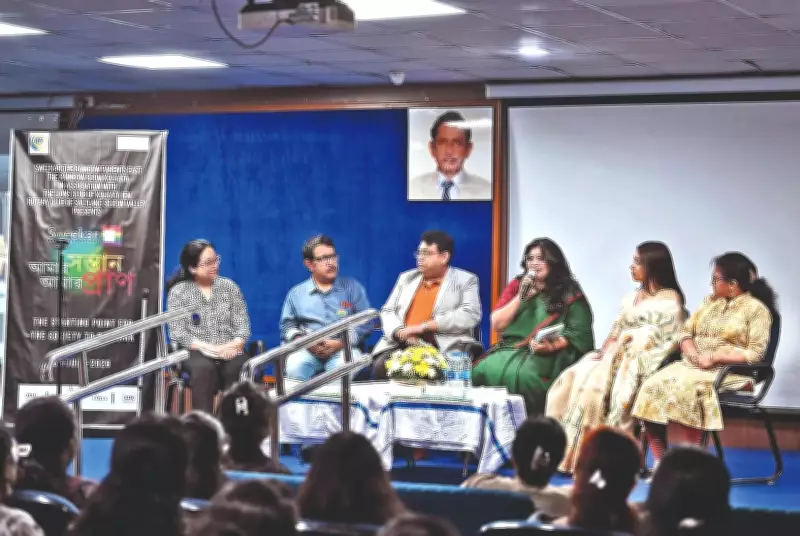
Creating a supportive environment for children requires understanding, empathy, and collaboration from families, schools, and society at large. This was the central message of 'Amar Santaan Amar Pran', an event organised by Sweekar – The Rainbow Parent and The Rainbow Room Kolkata, with Bridge, India and Varta as community partners. The gathering brought together parents, psychologists, educators, queer activists, and children for an open conversation on inclusive parenting.
The Crossroads of Acceptance and Anxiety
The journey of raising a child considered 'different' by society is often marked by love, concern, self-reflection, and resilience. 'Alongside the instinctive desire to support children are questions about whether they will encounter discrimination and how we can best prepare them for a world that is not always accepting,' said Anjana Banerjee, parent of queer children. Many parents also undergo a process of learning and unlearning. Indrani Sen, parent of a queer individual, recalled the moment her child got married: 'Several of their friends came up to me and said they wished their own parents could be as accepting. It was bittersweet – I felt grateful, but was also reminded that many queer young people are still searching for the unconditional love every child deserves.'
Dr Amrita Panda, a single parent raising an adopted child with non-verbal autism, offered a candid account of caregiving: 'There have been moments of exhaustion and loneliness, but also immense joy. Every small breakthrough, every smile carries a meaning that words cannot capture.' Mahua Seth, Founder of The Rainbow Room and a parent to a queer child, said: 'For a child, the parents are their world and it's imperative that the parents stand by them. We need to strengthen the networks of inclusive parents who can support, counsel, and help each other through moments of doubt. I hope today will be the starting point for this.'

Why a Support System Matters
When a child comes out, said psychologist-poet Dr Anuttama Banerjee, the response that matters most is listening – 'gratitude for their trust, and a reaffirmation of love.' Chirabrata Majumdar, parent of a neurodivergent child, urged families to see difference as strength: 'ADHD is not a limitation; it is a unique rhythm of thinking.' Social acceptance, speakers agreed, begins with conversation. Ruvena Sanyal, school counsellor, called for sensitisation from an early age; Abhilasha Das, principal of a Barasat school, stressed normalising the vocabulary around queerness – 'because when something isn't spoken about openly, people assume it is taboo.' Nilanjan Majumder, counsellor and parent of a transmasculine person, warned of institutional failure leaving 'lakhs of trans-queer children stranded, helpless and full of despair.' Clinical psychologist Shatabhisha Chatterjee summed it up: 'When parents, teachers, and society choose to team up, all our young ones thrive in their uniqueness.'
Ratnaboli Ray, clinical psychologist and mental health activist, noted: 'Parents often recognise their child's identity – yet hope it's just a phase.' The event underscored the need for consistent support and open dialogue to ensure every child feels accepted and valued.