A significant collection of 2,000 Jain manuscripts, acquired by British pharmaceutical entrepreneur Sir Henry Wellcome, is being returned to the Jain community. The manuscripts had been held by the Wellcome Collection in London, a museum established after his death to house the vast array of items he collected globally.
Historic Restitution
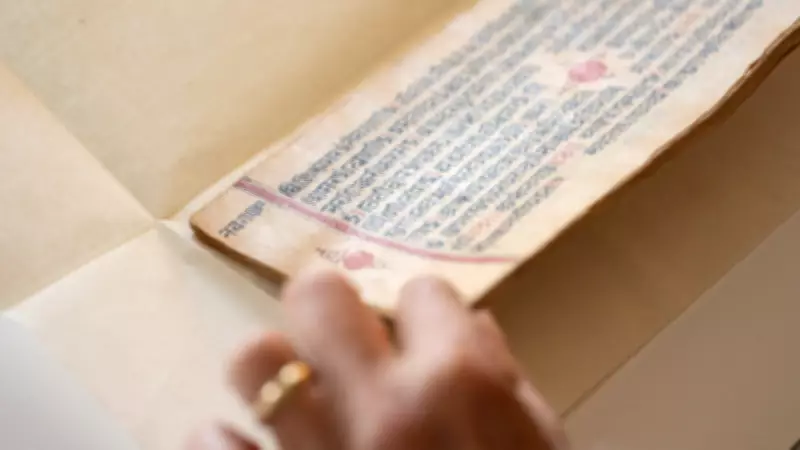
This collection, believed to be the largest of Jain manuscripts outside South Asia, spans the 15th to 19th centuries. The manuscripts are being transferred to the Dharmanath Network in Jain Studies at the University of Birmingham and will be owned by the Institute of Jainology, which represents 65,000 Jains in the UK.
Background of the Collection
Sir Henry Wellcome amassed a considerable fortune and collected thousands of manuscripts, medical equipment, paintings, and sculptures. He acquired them at auctions, and his agents traveled worldwide to procure items on his behalf. In his will, he bequeathed everything to the Wellcome Trust. Around 1,200 of the manuscripts were purchased in 1919 from a single Jain temple in Punjab, Pakistan, which no longer exists.

Dr Adrian Plau, Wellcome's information lead, who researched and initiated the landmark restitution, explained the acquisition. 'One of his agents came across this collection in a temple library in what he describes as Malwa. The agent wrote back to the London company secretary and said he had been offered this collection at a very low price and actually uses the phrase: If it was in learned hands they would not part with it. It is unclear who he spoke to. The instructions from London were to try and get it even cheaper. In the end, it seems he paid around Rs 5 per manuscript. That is very low,' Plau said.
Notable Manuscripts
The collection includes the 1854 treatise 'On English People, the Servants of Jesus' by Ratanchand, Nainsukh's Vaidyamanotsav, or 'A Celebration of Physicians', dated 1688 (possibly the earliest surviving copy of the 1592 text), and an early 16th-century illustrated copy of the Kalpasutra.
Community Response
Mehool Sanghrajka, managing trustee of the Institute of Jainology, expressed gratitude. 'If you look at the turmoil post-Partition, it is unlikely these would have survived if they had stayed in Punjab, and without preservation they would have massively deteriorated. We are grateful to Wellcome for the care and respect they have shown these texts. It made little sense sending them back to the area where they came from as there is no Jain community nor any Jain temple in Pakistan now. Birmingham University, with its global outreach, seemed like the obvious choice. The community is overjoyed and this will play a huge part in the drive for Jain academia,' he said.