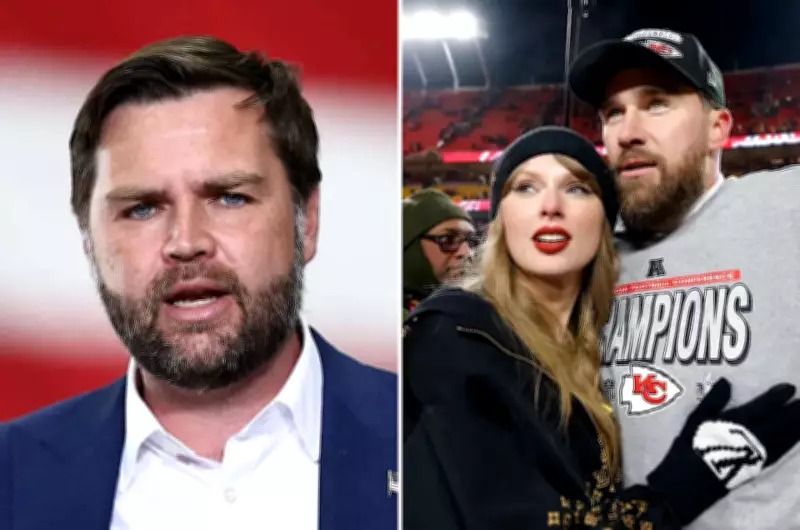
Vice President JD Vance's name is once again at the center of a national political debate, as he revisited a comment that haunted him for years. The renewed interest comes ahead of the release of his new memoir, in which he discusses the fallout from remarks that became a major talking point during the 2024 presidential election cycle.
A political sound bite became a cultural flash point. Swift later adopted the phrase publicly and helped turn the debate into a broader conversation about gender, identity, and political participation. Now Vance offers a different perspective on remarks that drew widespread criticism in the past.
Taylor Swift's Reaction Turned a Political Dig into a Cultural Moment
That phrase gained new significance during the 2024 election season when Taylor Swift threw her support behind Kamala Harris and signed off her social media post with the now-famous label. In doing so, the global pop star reclaimed a word that many critics found dismissive and turned it into a symbol of empowerment.

The controversy traces back to a 2021 television interview in which Vance criticized several prominent Democratic figures. At the time, he argued:
"It's just a basic fact -- you look at Kamala Harris, Pete Buttigieg, AOC -- the entire future of the Democrats is controlled by people without children. How does it make any sense that we've turned our country over to people who don't really have a direct stake in it?"
The remark sparked immediate backlash and remained a recurring topic throughout Vance's political rise. Swift's decision to embrace the phrase years later only amplified its visibility, introducing it to a much wider audience beyond traditional political circles.
JD Vance Admits the Comment Was a Mistake in New Memoir
In excerpts from his upcoming memoir, Communion: Finding My Way Back to Faith, Vance appears to acknowledge that the remark crossed a line and failed to communicate his intended message.
Reflecting on the controversy, he writes:
"It was a boneheaded comment, intentionally (and successfully) provocative rather than illuminating. I could have made that point much more effectively, and with the benefit of showing a little charity to the many Americans who--for some reasons beyond their control--don't have children."
Vance also connects the incident to his personal faith and says the episode revealed a failure to live up to his own values. He writes:
"When I consider the Church's admonition to respect the dignity of every life, this was a clear moment where I failed."
The comments mark one of the clearest acknowledgments yet from the Vice President regarding a statement that generated years of criticism and debate.
For Swift, the renewed discussion highlights the growing influence she has wielded beyond music. Since publicly entering political conversations in 2018, her endorsements and social commentary have consistently attracted national attention. As Vance's memoir reaches readers, the episode serves as another reminder of how political rhetoric, celebrity influence, and public opinion often intersect in unexpected ways.