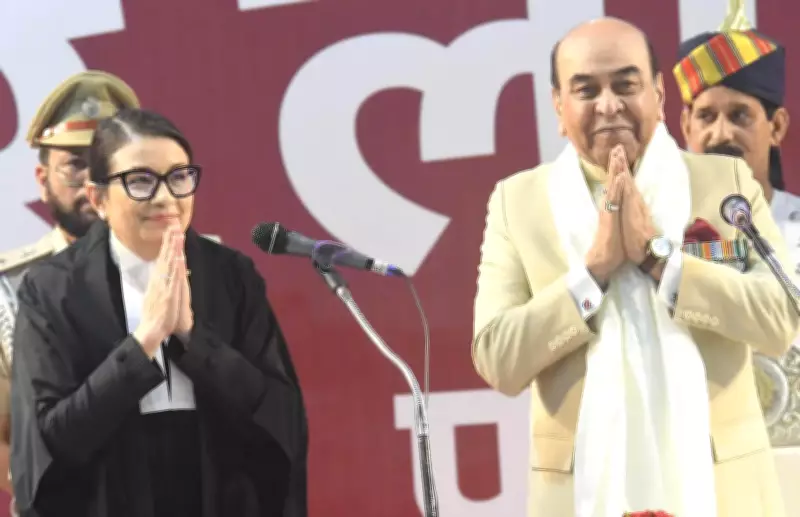
The swearing-in of Justice Meenakshi Madan Rai as the second woman chief justice of the 110-year-old Patna High Court on Friday has revived memories of a landmark chapter in the court's history when a woman was denied entry to the legal profession.
Historical Context: The 1922 Sudhanshubala Hazra Case
Legal professionals recalled the 1922 Sudhanshubala Hazra case, in which the Patna High Court rejected a woman's application to be enrolled as a legal practitioner, ruling that women were not legally recognised as a 'person' under the Legal Practitioners Act. The verdict led to a nationwide debate and contributed to the enactment of the Legal Practitioners (Women) Act, 1923, which removed gender-based barriers to legal practice. The following year, Sudhanshubala Hazra, adopted daughter of Madhusudan Das of Odisha, became the first woman lawyer to practise at the Patna High Court.
Current Milestone: Record Number of Women Chief Justices
With Meenakshi's appointment, the number of women serving simultaneously as chief justices of high courts in the country has risen to a record four. The others are Justice Sunita Agarwal of the Gujarat High Court, Justice Revati Mohite Dere of the Meghalaya High Court, and Justice Lisa Gill of the Andhra Pradesh High Court. Justice Indu Prabha Singh was the first woman judge of the Patna High Court. Appointed in July 1990, she became the first woman to hold court at both the Patna High Court and its then Ranchi bench.

Perspectives from Legal Veterans
Senior advocate M S Khan, who began practice in 1969, said women were rarely seen in the profession during the early years. After Hazra, barrister Dharmshila Lal joined the court, followed by Leila Seth in 1959. Leila later became the first woman judge of the Delhi High Court and subsequently the first woman chief justice of a state high court when she headed the Himachal Pradesh High Court. She was also the first Indian woman to top the London Bar examinations in 1958.
The appointment of Meenakshi is another milestone in the gradual but significant rise of women in the higher judiciary, a journey that began with a struggle for basic recognition before the law.