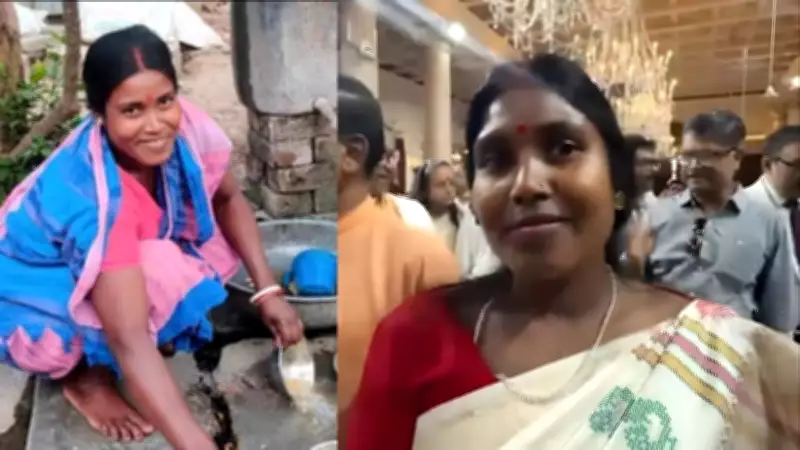
KOLKATA: Kalita Majhi, a former domestic helper who scripted an extraordinary political victory in the West Bengal Assembly election, was among the 35 MLAs sworn in as ministers in the state government. Majhi took on her new responsibility during a major cabinet expansion under Chief Minister Suvendu Adhikari on Tuesday.
From Domestic Worker to Minister
Majhi, 37, won the Ausgram Assembly seat on a Bharatiya Janata Party (BJP) ticket, defeating her nearest rival from the Trinamool Congress (TMC) by a margin of 12,535 votes. She secured 1,07,692 votes in the constituency. Her elevation comes days after a quiet and understated return home on the night of her victory.
On being sworn in as a cabinet minister, Majhi said, "When I was the MLA, now also I am. I used to think only about my legislative assembly. Those people who are backward, there's scarcity of water and there's no health centre. My first work as an MLA would be to build Guskara as a hospital, then fire brigade and women's security. Our area is in jungle mahal, so women face a lot of problems as they have to cross the jungle to come to school and colleges."

A Humble Beginning
Majhi recalled ending the tense election day with a simple meal of 'alu-potoler jhol' (pointed gourd and potato curry) cooked by her mother-in-law. The following day, she resumed washing clothes and attending to household chores even as she prepared for her new political role.
Married to a plumber in 2006, Majhi worked as a domestic helper in the Guskara area for many years, managing cleaning, cooking support and caregiving duties. She earned around Rs 4,500 a month. Her entry into politics was inspired by Prime Minister Narendra Modi. "Despite working as a domestic helper, I attended all BJP programmes while managing my responsibilities," she said.
Campaign and Vision
During the election campaign, Majhi often highlighted her own life as an example, saying that a domestic worker could also aspire to become a politician. She emphasised that her beliefs aligned with the BJP's principles and that the party could uplift women and the economically weaker sections. "I want to work for poor people like me," Majhi said.
Her election campaign focused on women's empowerment, addressing gender bias, corruption-free governance and issues affecting the poor. As she took the oath as a minister of state, Majhi's journey from cleaning homes in Patra Para to assuming office in the state government has become a powerful symbol in West Bengal's political landscape.
Impact and Symbolism
Her rise marks a significant step forward for women, encouraging them to pursue their ambitions without fear or societal pressure. Majhi's story resonates across the state, inspiring many to believe that hard work and determination can lead to extraordinary achievements.