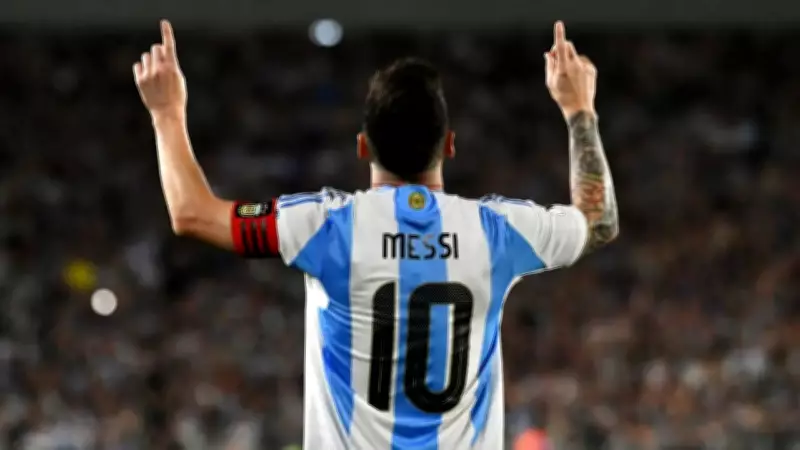
Lionel Messi has officially joined the billionaire club, with Forbes now estimating the Inter Miami forward's net worth at $1.1 billion. This milestone makes him one of only four active athletes in history to cross the three-comma threshold, alongside LeBron James, Tiger Woods, and Cristiano Ronaldo. While Ronaldo reached billionaire status first, the gap between the two is narrower than many anticipated, and the manner in which Messi built his fortune tells a distinctly different story.
How Did Lionel Messi Actually Become a Billionaire?
The straightforward answer is decades of elite earnings, carefully accumulated. However, the full picture is more nuanced. Messi first appeared on Forbes' highest-paid soccer players list in 2008, earning an estimated $11.9 million. Over the next decade at Barcelona, his income scaled dramatically. A leaked contract later published by Spanish newspaper El Mundo revealed he pocketed roughly $177 million during the 2017-18 season alone. By the time he finished at Paris Saint-Germain in 2023, his career playing earnings had crossed $1.2 billion before taxes, a figure only Ronaldo has surpassed.
His move to Inter Miami was not the financial windfall it appeared to be on paper. He turned down a reported $400 million-per-year offer from Saudi Arabia, a decision that likely cost him the billionaire title earlier. In Major League Soccer, his guaranteed salary is $28.3 million, but that only tells part of the story. Club co-owner Jorge Mas confirmed to Bloomberg in March that Messi's total annual compensation, including revenue-sharing arrangements with MLS partners Adidas and Apple TV, reaches between $70 and $80 million per year.

Beyond playing income, Messi holds equity in Inter Miami that vests upon retirement, which has become more significant as the club's valuation has soared from $600 million before his arrival to $1.35 billion today. Forbes credits his billion-dollar net worth primarily to career cash accumulation and asset appreciation, rather than a single big contract. His commercial portfolio adds another layer, with endorsements from Mastercard, Lay's, and Michelob Ultra among over a dozen active deals. A lifetime Adidas partnership signed in 2017 remains the cornerstone. Total career earnings, combining on-field and off-field income, now sit at approximately $1.8 billion, behind only Ronaldo and Tiger Woods among active athletes.
Messi has also built a real estate investment trust in Spain called Edificio Rostower Socimi, holds stakes in boutique hotel chain MiM Hotels, and owns two soccer clubs, including Uruguayan side Deportivo LSM, which he co-founded with Luis Suárez last year. His MLS Cup win with Inter Miami in 2025, the club's first, further cemented the commercial value of the move he made at age 36.
Is Messi Now Richer Than Cristiano Ronaldo?
Not quite, but the margin is smaller than it has ever been. Ronaldo crossed $1 billion first. Bloomberg reported his net worth surpassed that threshold in late 2025, driven largely by his tax-free $235 million annual salary at Al Nassr in Saudi Arabia. Forbes projects his 2026 earnings at $300 million, making him the highest-paid athlete on the planet. His current net worth sits between $1.2 billion and $1.4 billion depending on how private business assets are valued. Bloomberg's Billionaires Index places him at $1.4 billion.
Messi, at $1.1 billion, trails that figure. But what makes his achievement notable is the path he took to get there. He chose a lower-paying league, passed on the Saudi money, and still built a fortune through longevity, smart equity structures, and brand value accumulated over two decades. Ronaldo's wealth is more concentrated in his current contract; Messi's is more diversified.
Both men are now the only active team-sport players to have crossed the billion-dollar mark while still playing. David Beckham, Messi's club co-owner at Inter Miami, only reached that milestone in retirement, 13 years after his last professional match. The comparison underscores how these two have expanded what's possible for athletes at the peak of the modern sports economy.