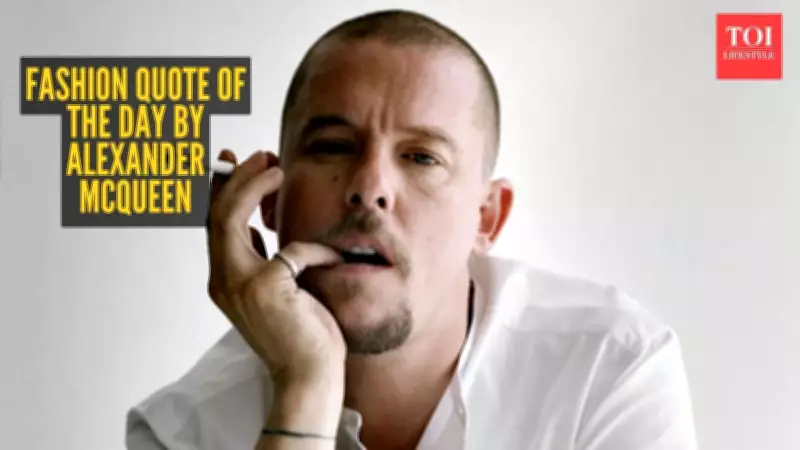
Alexander McQueen once said, "I think there is beauty in everything. What 'normal' people perceive as ugly, I can usually see something of beauty in it." This quote encapsulates a worldview that defied the fashion industry's obsession with perfection.
The Quiet Luxury Era
Today's sartorial landscape is dominated by quiet luxury—understated, old-money aesthetics. Flawless Jamdani weaves, minimalist heritage investments, and vintage Rolexes tucked under tailored cuffs define this trend. It is safe, polished, and controlled.
McQueen's Antidote
McQueen offered the opposite. He drew inspiration from the margins: taxidermy, medical apparatuses, historic trauma, and nature's brutality. While heritage brands see luxury in perfect silk, McQueen found it in the grotesque—molted feathers, razor-sharp shells, ripped lace, and leather harnesses—tailored into masterpieces.

The Horological Parallel
If quiet luxury is a simple vintage dial, McQueen's aesthetic is a skeletal avant-garde timepiece, exposing raw mechanics. It forces you to watch the machine work.
A Psychological Canvas
McQueen's runway shows felt like Dostoevskian narratives, confronting darker corners of the human condition. Pain, decay, and beauty are inextricably linked in his work. By embracing the grotesque, he made beauty shine with blinding intensity.
Redefining Taste
McQueen's philosophy disrupts standard notions of "good taste." It asks us to reconsider the flawed and unconventional. True artistry does not hide messiness; it drags it into the light and tailors it into something unforgettable.
Next time you encounter art that makes you uncomfortable, do not look away. That friction is where genius lives. McQueen knew it, and if we look closely, we might see it too.