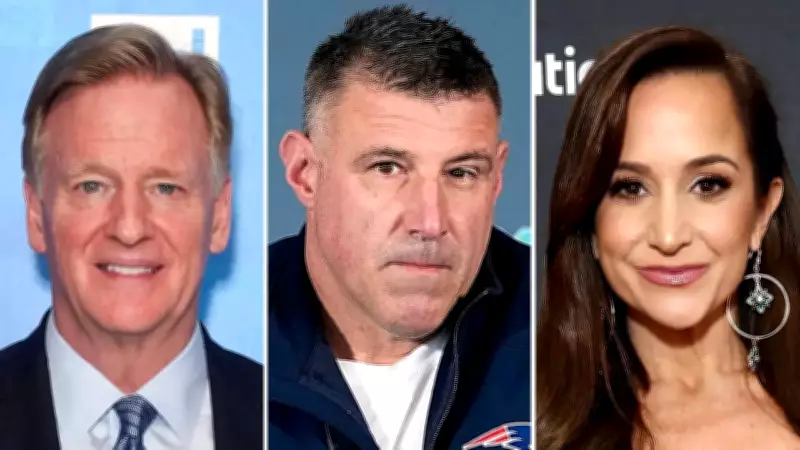
The NFL found itself at the center of a social media storm this week after a viral post accused the league of covering up an alleged relationship between New England Patriots head coach Mike Vrabel and NFL reporter Dianna Russini. The claims spread rapidly on X, sparking debates among fans about whether the rumors were baseless gossip, targeted speculation, or something more significant involving media access and league influence.
How the Rumors Gained Traction
The controversy escalated after users circulated screenshots of a Yahoo-linked article alongside a strongly worded post from an NFL personality account. Although no concrete evidence has surfaced to support the allegations, the online reaction demonstrated how quickly rumors about powerful figures in football can explode into a full-scale internet debate.
X user Rickie W ignited the fire by posting: “Roger Goodell and the NFL is covering up the vile and unethical 6 year affair of head coach Mike Vrabel and NFL reporter Dianna Russini like the DOJ has covered up for Donald Trump in the Epstein Files.” This statement immediately divided NFL fans. Some demanded proof, while others questioned why personal rumors involving coaches and reporters gain so much traction. Neither Vrabel nor Russini has publicly addressed the speculation.

The Role of Media Coverage
The conversation was further fueled by a Yahoo preview that criticized the media’s handling of the alleged situation. The article teaser described the coverage as “super shady” and labeled the subject a “taboo” issue in NFL circles. This wording sent football fans deeper into debate threads, podcasts, and reaction videos.
The timing also added intrigue. Vrabel remains one of the NFL’s most closely watched coaches after returning to a high-profile role with the Patriots, while Russini continues to be a highly recognized insider. Any rumor involving two major NFL names was bound to attract attention.
Broader Questions About Media Ethics
The situation reopened a broader conversation about sports media boundaries. Some fans argued that personal allegations should stay off social platforms unless backed by verified reporting. Others accused football media of protecting insiders and influential figures when controversies arise.
At this stage, there is no verified proof to confirm the viral claims. However, the story highlights the modern reality of sports coverage, where speculation can travel faster than facts and public perception can shift within hours.
For the NFL, this online storm serves as another reminder that in today’s media cycle, silence often becomes part of the story itself.