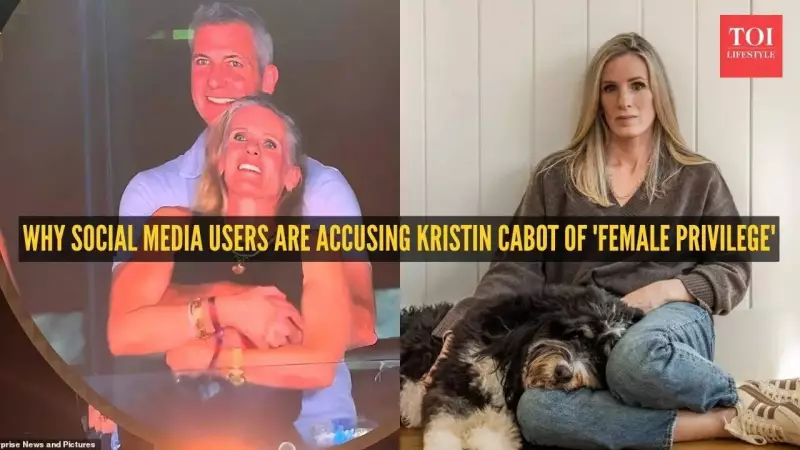
The conversation around feminism is gaining crucial momentum, but a diluted, conditional version of it—often termed 'feminism lite'—is finally facing much-needed scrutiny. While women's voices often find a platform more readily than men's in certain contexts, the recent case of Kristin Cabot highlights how this dynamic can be manipulated, raising critical questions about accountability and privilege.
The Coldplay Scandal and a Calculated Comeback
The controversy traces back to July 16, 2025. At a Coldplay concert, the jumbotron captured Astronomer CEO Andy Byron and the company's HR executive Kristin Cabot in a compromising embrace. A viral TikTok video, amassing 100 million views within days, exposed their affair to the world—including their unsuspecting spouses, children, and colleagues.
For weeks, both individuals faced intense public shaming. However, the narrative took a sharp turn when Kristin Cabot leveraged a feature in The New York Times titled 'The Ritual Shaming of the Woman at the Coldplay Concert'. The article, published months after the scandal, framed Cabot as a victim enduring cruel labels like "slut" and "homewrecker," presenting her apology as an act of earnest contrition.

Social Media Backlash: Accusations of 'Female Privilege'
The carefully timed NYT piece did not achieve the intended clean slate. Instead, it ignited a firestorm on social media, particularly on X (formerly Twitter). A post by user Gina Bontempo, viewed by 203.7K users and liked by 6.8K, crystallized the growing dissent.
The post accused Cabot of wielding "female privilege" to rebrand herself as the primary victim. "Andy Byron was shamed just as much as she was — and rightfully so — but he doesn’t get a feature in the NYT," the critique stated. It dismissed the article as "feminist-lite PR fluff" and argued that public sympathy should lie with the betrayed spouses and deceived employees, not with Cabot.
The sentiment resonated widely. One user commented, "so what if I had an affair', girl be so for fucking real rn, you betrayed your husband, your kids, Andy's wife and Andy's kids." Another pointedly advised, "I have a simple solution to not getting your life blown up in public: DONT CHEAT WITH YOUR BOSS IN PUBLIC."
The Core Conflict: Feminism Lite vs. Equal Accountability
This incident underscores a pivotal debate. While Cabot's feature detailed the misogynistic abuse she faced, it largely glossed over the fact that Andy Byron faced equally severe, if not harsher, criticism, with his gender adding a layer of expected predatory behavior to the public's anger.
The critical difference lies in reception. Cabot's side of the story, however controversial, was read by millions. Had Byron attempted a similar media rehabilitation, the backlash likely would have been exponentially louder, with his piece facing total boycott. This highlights a paradoxical outcome of patriarchal structures: while men have historically dominated discourse, in modern scandals of morality, they are often stripped of any platform for explanation, told their time to speak has passed.
This is not to justify either party's actions. Both were equal participants in infidelity that devastated families. The core argument is for equality in empathy and accountability. True feminism demands calling out hypocrisy—whether it's 'feminism lite' that offers conditional solidarity or a system that denies nuanced discourse based on gender.
The families affected deserve the foremost attention. Yet, the Cabot case serves as a stark reminder that advancing gender justice requires vigilance against versions of feminism that prioritize selective victimhood over universal principles of fairness and responsibility.