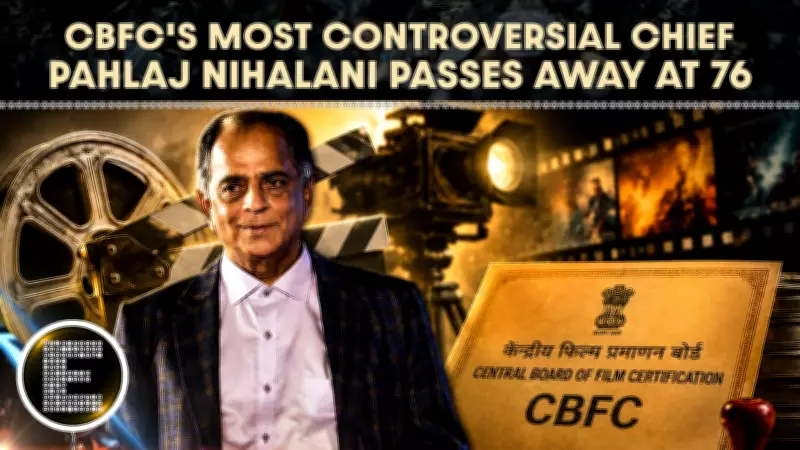
Former Central Board of Film Certification (CBFC) chairperson and Bollywood producer Pahlaj Nihalani has passed away at the age of 76. He reportedly succumbed to liver-related health issues. Nihalani, who produced commercial entertainers such as Aankhen, Shola Aur Shabnam, and Paap Ki Duniya, became one of India's most controversial censor board chiefs. His tenure between 2015 and 2017 ignited fierce debates around censorship, morality, and creative freedom. Controversies surrounding films like Udta Punjab, Lipstick Under My Burkha, and When Harry Met Sejal made national headlines. Here is a look back at the dramatic and debated legacy of Pahlaj Nihalani.
From Producer to Censor Chief
Pahlaj Nihalani began his career in Bollywood as a producer and distributor. He gained fame with action and comedy films in the 1990s and early 2000s. His production house delivered several box office hits, earning him a reputation as a savvy filmmaker. However, his appointment as the CBFC chairperson in 2015 under the Narendra Modi government marked a turning point. Nihalani quickly became known for his strict and often arbitrary censorship decisions.
Controversial Tenure
Nihalani's tenure was marked by numerous clashes with filmmakers. He demanded cuts in Udta Punjab, a film about drug abuse, citing its depiction of Punjab. The controversy reached the Bombay High Court, which overturned many of his demands. Similarly, he objected to Lipstick Under My Burkha for its portrayal of female sexuality, leading to a prolonged ban. When Harry Met Sejal faced issues over a kissing scene. These incidents sparked a national conversation about censorship and artistic freedom.

Legacy and Reactions
Nihalani remained unapologetic about his actions, often stating that he was protecting Indian culture and values. His supporters praised him for upholding traditional norms, while critics accused him of stifling creativity. After his tenure ended in 2017, he largely retreated from the public eye. News of his death has prompted mixed reactions from the film industry and the public. Some remember him as a successful producer, while others recall his divisive role as a censor. His legacy remains complicated, reflecting the ongoing tension between regulation and expression in Indian cinema.