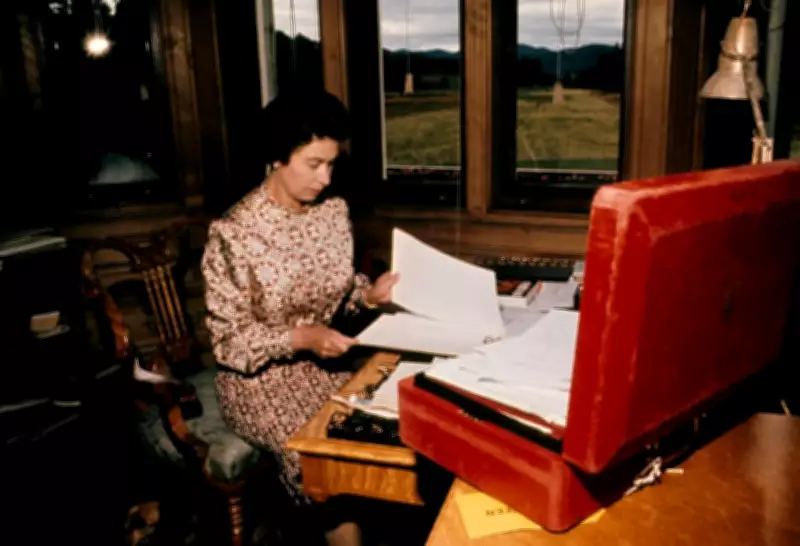
Throughout her long reign spanning decades, the sight of a large, red leather file placed on the monarch's writing desk heralded the beginning of official business each day. This routine, carried out daily, set the stage for one of the longest reigns of modern times.
The Mundane Became Symbolic
While the global world often linked the Queen to sparkling diamond diadems and impressive military parades, she was deeply involved in mundane activities at her desk. These secure boxes were not merely decorative; they became the essential tool for communication between her personal chambers and the official work process of the UK government.
Nearly four years since her death in autumn 2022, interest in her disciplined desk routine remains vivid. These leather-covered boxes stayed by her side through significant political changes and personal events, from her early days as a young queen to her final days at Balmoral Castle.

Outside observers often judge royalty solely by its splendid public displays, but this lifelong practice underscored a dedication to quiet hard work behind the scenes. Over time, the red boxes expanded from their initial office function into a powerful symbolic meaning in a fast-changing world.
Turning Daily Work into a Symbol of National Stability
The significant influence of this administrative practice extends far beyond royal residence walls, shaping how contemporary societies think about continuity. According to an academic study, people need physical representations of abstract concepts. When a prominent person maintains the same work routine across generations, a simple object like a paperwork box becomes a symbol of institutional reliability.
Every day, the late Queen devoted many hours to carefully analyzing secret reports from her cabinet, telegrams, and documents requiring her signature. She did not view this as a monotonous constitutional obligation but approached it with tremendous inner discipline, which amazed her prime ministers.
This rhythmic and reliable pattern of government served as a reassuring backdrop for the country, illustrating that fundamental mechanisms governing the nation were in place regardless of political changes and societal shifts. The leather boxes symbolized concrete images of industriousness, providing a modern interpretation of traditional ceremony. The unassuming box became a powerful emblem of national stability and consistent leadership, offering comfort and a tangible legacy of service to a grieving nation.
How a Nation Found Comfort in a Legacy of Routine Service
Only after the Queen's passing did the full emotional significance of this ritualistic routine become understood worldwide. In a study on mourning and orienting to the future, authors explain how the unexpected death of a beloved leader generates a unique sense of shared sorrow. Objects commonly used by the departed assume deeper symbolism during national mourning as people re-evaluate their culture.
After her death, the image of the single red box on her desk became a key theme in global remembrance and honor. The public celebrated her ability to endure because of this small but significant detail. The box became a symbol of leadership—the result of years of tiny acts of consistent, unwavering dedication.
In conclusion, the story of the red box shows how the most essential parts of a person's legacy can initially seem unremarkable. By giving each government document the same careful treatment, Queen Elizabeth II created an impressive work of diplomatic art.