Circus reinvents itself with human talent and technology
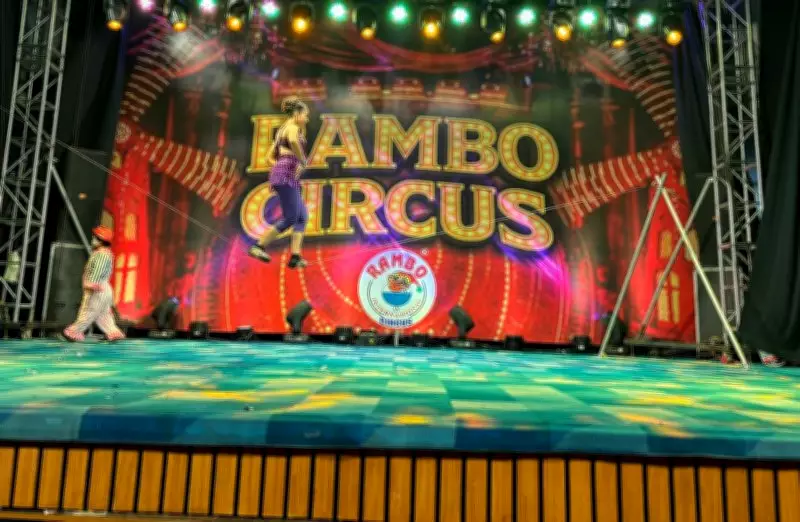
Rambo Circus, India's only circus recognised internationally by the Federation Mondiale du Cirque, concluded its four-day series of performances at the NCUI Auditorium in Hauz Khas, South Delhi, drawing families eager to experience an art form that has steadily reinvented itself over the past three decades. The organiser reported an overwhelming audience response, with 200–300 people attending each show from Monday to Sunday.
Performances shift from animals to acrobatics
The performances included aerial acrobatics, juggling, cycling, balancing acts, tightrope walking and LED laser shows, while clowns Ranjit Sada and Rajeev Chatterjee engaged children through interactive performances, bunny ear caps and bubble acts. "Circus is all about creating a connection between the artistes and the audience," they said, adding that making children smile is the most rewarding part of their performance.
The transformation reflects a larger shift that reshaped India's circus industry after the Government of India banned the use of wild animals in circuses in 1998 over concerns related to animal welfare, cruelty and harsh training practices. Founded by circus entrepreneur PT Dilip and launched on January 26, 1991, Rambo Circus once featured elephants, lions, tigers, horses, camels, chimpanzees, bears, parrots and dogs. Following the ban, the troupe rebuilt its performances around human talent and technology-driven attractions. That transition, artistes say, demanded years of learning and adaptation.

Artistes share personal stories of adaptation
Rinki, who has spent nearly two decades with Rambo Circus, said the profession had been passed down through her family. "I have enjoyed being an artiste since childhood. We learned everything from our seniors. Earlier, animals were also part of the performances, but after the ban, we had to learn new skills. Today, we watch international circuses and introduce new activities to keep improving our performances," she said. Speaking about audience appreciation, she added, "When the audience laughs and applauds, it gives us confidence to perform better."
One of the most-watched performances is the balancing box act by Arjun Nayak and his wife. During the routine, Arjun deliberately fails twice before finally balancing a stack of boxes, creating suspense before completing the stunt. According to the artistes, the act carries a simple message that consistency, determination and perseverance ultimately lead to success.
Technology takes centre stage in modern circus
Technology has also become central to the performances. Artiste Lucky Raj, who performs the laser dance, said he designed his own LED costumes. "I have been interested in technology since childhood. I also modify cars. So, I try to introduce something new in every performance," he said. Gaurav, the circus manager, told The Tribune that since their Delhi shows had been successful, they had planned a surprise for the Capital, expected in December this year.
Artistes call for government recognition and support
While the performances have evolved, artistes say recognition has not kept pace. Clown Biju Pushkaran, 57, said circus artistes continue to preserve one of India's oldest performing arts, but receive little recognition despite representing the country internationally. "We perform across India and have earned international recognition, but we wish our own country would recognise our efforts," he said. Pushkaran urged the government to recognise circus artistes under the Ministry of Culture and issue identity cards. "If circus artistes receive official recognition and respect, more young people will join the profession and earn a livelihood through their talent," he said.
He said the industry's operational challenges had changed with urbanisation. "Earlier, circuses were held in open grounds. Today, cities are filled with residential complexes and commercial buildings, so we depend on auditoriums and stadiums for performances. Despite these challenges, Rambo Circus provides health insurance to all its artistes, many of whom come from different states across India," he added.

Economic challenges and audience appreciation
Circus manager Gaurav said the economics of running a circus had also become increasingly difficult. "I remember when circuses were held in open grounds and tickets cost only Rs 50 or Rs 100. Today, rising fuel prices, transportation costs, venue rentals and performers' salaries have made it much more expensive to run a circus," he said. Despite these challenges, Delhi audience believes the experience remains unmatched. Anusha, a spectator from Delhi, said the circus had evolved from animal-based entertainment to performances centered on talent, technology and storytelling. "Their laser dance was really great, and these artistes risk their lives to entertain the audience. Banning wild animals was the right decision because animals should be protected," she said.